

Summary:This article takes the power monitoring system of the first subway line in Hohhot as an example, introducing the system composition and functions of rail transit power monitoring. The system primarily consists of the power dispatching system at the control center, the backbone network, and the comprehensive automation system of the substation.
Keywords:Railway Traffic; Power Monitoring; Human-Machine Interface
0 Introduction
The Urban Rail Transit Power Monitoring System primarily provides hierarchical, distributed, real-time monitoring and control of various power equipment such as substations, overhead contact lines, and more along the entire urban rail transit line. It handles various abnormal incidents and alarm events in the power supply and transformation systems, ensuring the normal operation of the system. Previous power monitoring systems were built separately with low integration, and each substation had different interface methods and protocols, leading to difficulties in use and cumbersome maintenance, which did not meet the requirements of comprehensive dispatching management and operational stability. The power monitoring system described in this article has the following advantages: the power monitoring software is dispersedly installed, mainly at control centers and various substation along the line, where each substation has monitoring functions for its internal equipment, and the center has centralized monitoring and unified dispatching control functions for all substation equipment; in emergency situations, through the authority transfer feature, the remote control authority of the control center can be delegated to the substation, which is equipped with remote control capabilities for the equipment; the system employs redundant equipment and network structures, enhancing the stability of system operation; and it uses a rich user interface that facilitates user operation and maintenance, such as alarm push graphics, fault statistics reports, trend analysis, and power consumption reports.
1 System Structure
The power monitoring system is primarily distributed across control centers, stations, and substations. The system employs hot standby redundancy to ensure high availability. It is typically integrated within the Integrated Supervisory Control System (ISCS), comprising the control center dispatching system, the comprehensive automation systems of various substations, and the system backbone network, forming a complete remote power monitoring system across the entire line. Designed according to the principle of centralized dispatching and decentralized backup, this operational mode guarantees that stations can operate independently at their level and take over most of the central level's functions in degraded mode.
1.1 Control Center System Architecture
The Control Center's power monitoring system is composed of equipment such as servers, storage, three-tier industrial-grade Ethernet core switches, industrial-grade network expansion switches, information security devices, operator dual-screen workstations, printers, and large-screen systems (OPS). The Control Center servers host full-line power monitoring database copies, communicate with the全线 transformer substation communication controllers via the system backbone network, and then process the received information for display on workstations.
Dispatch Hall Equipment: 2 sets of Dispatch Assistance Workstations; 2 sets of Environmental Control Workstations; 2 sets of Electrical Control Workstations; 1 set of Maintenance Control Workstation; 1 set of Overall Control Workstation; 1 switch (redundant); 3 event printers; 1 report printer; 1 color printer. Central机房 Equipment: 7 sets of Regional Real-time Servers (redundant); 1 set of Central Historical Server (redundant); 2 sets of Regional Real-time Servers (redundant); 1 visualization data analysis server; 1 Central FEP (redundant); 2 disk arrays.
1.2 System Backbone Network
The control center and the backbone switches at all stations form a local area network (LAN) within the power monitoring system. The backbone network is structured in a dual-loop configuration, connected via a 1000Mbps single-mode fiber optic system provided by the communication system. The switches are industrial-grade Ethernet switches. In the event of a single break in one loop, the network can still operate normally. If there are two breaks in a loop, the network automatically switches to the other hot-standby network. Central-level LAN: Constructed with 2 gigabit industrial Ethernet switches, which are redundant to each other, using TCP/IP protocols and conforming to IEEE 802.3 standards; Station-level LAN: Each station LAN is also built with 2 gigabit industrial Ethernet switches, which are redundant to each other, using TCP/IP protocols and conforming to IEEE 802.3 standards.
1.3 Substation Comprehensive Automation System
The Comprehensive Automation System for Substation is distributed across all substations along the line, providing control and monitoring of the power equipment within the substation (can also monitor the ring network equipment of adjacent stations); it can operate independently without human attendance. The system consists of a monitoring workstation, 2 redundant communication controllers, and interval layer equipment. The monitoring workstation hosts the original copy of the substation's database and communicates with the communication controllers over the internal management network. The communication controllers connect the interval layer equipment within the substation via the fieldbus within the substation.

Figure 1: Comprehensive Automation System Structure of the Substation
2 System Features
2.1 Control and Operation Functions
Electrical control can be centrally managed on the control and command center's dispatch workstations for all substation equipment, including individual control, programmed control, and remote reset. Remote control permissions are default at the control center, with no control permissions at the substations. Substations can request equipment control permissions from the center, which, upon confirmation by the power dispatching team, are transferred to the substation. Both the center and the substation can manage remote control permissions through the permission transfer feature, enabling the transfer of equipment control permissions between the center dispatcher and other operator levels. Additionally, during special circumstances such as center server downtime or communication interruption between the center and the substation, the center's remote control permissions are automatically delegated to the substation, granting it remote control capabilities. Once the fault is resolved, and upon confirmation by the center dispatcher, the permissions are reassigned back to the control center.
2.2 Data Collection and Processing Function
Remote Signal. The power monitoring system collects remote signal information from various devices within the substation, including position signals (dual position) and protection signals (single position). Depending on the communication protocol used, the device status is sent to the power monitoring system either through active upload or polling, and is displayed in real-time on the human-machine interface. Position signals include the opening and closing positions of various switches, the working, test, and withdrawal positions of switchgear handcars, the start and stop status of various equipment, and the live state of the overhead contact line. Protection signals include overcurrent protection, zero sequence overcurrent protection, overload alarms, reclosing failure alarms, transformer overtemperature tripping, rectifier overtemperature tripping, as well as system overvoltage, voltage loss alarms, and abnormal device alarm signals.
Remote Monitoring. The power monitoring system collects remote sensing information such as three-phase current, zero-sequence current, three-phase voltage, line voltage, system power, frequency, power factor, electricity consumption, and equipment temperature for the 35kV system, 1500V system, transformers, 400V system, and energy feedback inverters. Remote sensing data is collected in a periodic scanning manner, with a collection cycle that can be set, but must not be less than 60 seconds. The remote sensing data is stored in the historical server in a periodic manner. Based on the collected electricity consumption information, daily, weekly, monthly, and annual reports on electricity usage can be generated; the collected voltage, current, and temperature data can be displayed in bar graphs or graphical lists; and the stored remote sensing information can be accessed in trend graphs to understand the equipment's operating status over any given period of time.
2.3 Display and Operation Features
Central power dispatchers and substation operators monitor substation equipment through the interface of a monitoring workstation. The main functions of the monitoring workstation include: user login and logout; remote and programmed control operations for switchgear; remote signaling and measurement monitoring for switchgear; authorization transfer operations for switchgear; historical event and alarm inquiry and printing; electricity metering report statistics; and setpoint group activation/deactivation functions.
Central Power Dispatch Workstation Graphics. The system provides different monitoring screens for OCC operators based on varying user permissions, covering all PSCADA equipment. Key screens include: overall single-line system diagram; overall power supply division system diagram; overall 35kV system diagram; overall 1500V system diagram; 35kV busbar voltage bar chart; 1500V busbar voltage bar chart; 1500V switch output current bar chart; overall 1500V programmed power supply; overall 1500V programmed power outage; overall 1500V overhead contact line status map; overall 35kV, 1500V, and 400V system analog display diagrams; trend and report display diagrams; control authority transfer diagram.
Substation Graphic Images. Substation primary system diagram; 10kV system diagram; 1500V system diagram; 400V system diagram; Signal light label diagram; Communication structure diagram; Substation floor layout diagram; Analog quantity diagram; Electricity meter diagram; Active filter information diagram; AC/DC panel information diagram; Temperature controller information diagram; Rectifier cabinet information diagram; Negative cabinet information diagram; Interface cabinet information diagram; Steel rail potential information diagram; Automation panel diagram; Discharge cabinet diagram; Stray current diagram; Control authority transfer diagram; Remote control group shielding.
2.4 Alarm Function
When the power monitoring system detects signals such as tripping or faults in power supply equipment, it automatically sends out alarm images and produces an alarm sound to alert relevant personnel.
Human-Machine Interface Alarm Display: The human-machine interface alarm display primarily includes signal indicator boards, alarm lists, and a single system diagram. Alarm levels are typically set to 3, with 0 indicating abnormal device communication status alarms in gray; 1 indicating device accident trip alarms in red; and 2 indicating abnormal device operating status alarms in orange. Level 1 alarms push the single system diagram, where the tripped switch blinks to indicate a device fault trip; level 2 alarms push the signal indicator board, with the indicator board of the faulty device blinking yellow. Alarm information is centrally displayed in the alarm list, with different alarms shown in different colors. Resolved alarms are displayed in green, unconfirmed alarm states blink, confirmed alarms no longer blink, and confirmed and resolved alarm information no longer appears in the alarm list.
Central Dispatch System Audio: The central dispatch workstations are equipped with alarm sounds. When an alarm occurs, the system emits different alarm tones based on the alarm level to alert dispatch personnel. The alarm sound ceases once the dispatch personnel click the confirmation button. If the alarm has been resolved but the dispatch personnel have not confirmed, the alarm sound will persist.
Transformer Substation Alarm Sound: Automated Screen Setup Accident and Pre-alarm Sound Alarm Devices. When an alarm occurs, the alarm devices installed inside the automated screen cabinet emit an alarm sound; for accident alarms, the electric whistle sounds; for pre-alarm alerts, the bell rings, with the ring duration set to 1 minute. The automated screen is equipped with a switch for alarm activation and deactivation; the alarm does not sound when the switch is in the deactivation position. Additionally, a sound reset button is provided, which stops the ringing upon pressing.
3 System Applications
3.1 Control Center Dispatch System
The Hohhot Metro Line 1 is equipped with 2 main sub-stations, with a total of 22 sub-stations along the line, including 11 traction step-down mixed sub-stations and 11 step-down sub-stations. The Control Center Dispatch System is responsible for monitoring and controlling all sub-stations along the line, as well as functions such as accident alarm inquiries, programmed power shutdowns, and trend queries.
The system features remote control capabilities, allowing for the remote control of any accessible object within the system for merging or splitting operations; remote control operations are executed under strict permission management, with only authorized system staff members or those with operational privileges performing the controls. Remote control can be categorized into single control and programmed control, and can be customized according to user requirements for the controlled devices and their sequence of operations. These control methods can be set with manual confirmation features as per the dispatcher's requirements. Simultaneously, when multiple workstations are performing remote control operations on the same device, the priority of the remote control is determined based on user permissions. The system is equipped with control lockout functionality, which automatically locks out the operation command of the switch when the on-site power supply equipment malfunctions, causing the corresponding circuit breaker to trip. When the on-site power supply switch equipment's ground switch is grounded, operators can set ground indication at the switch symbol on the main circuit diagram. For power supply switch equipment with ground indication, the system automatically locks out the related control command operations. The control lockout function can be manually engaged or disengaged and can be customized by users.
Central operators can uniformly manage the protection setting groups of 35kV and 1500V switch protection devices, including functions such as calling, displaying, saving, switching, and printing the settings. Operators can choose to call and display by station name, device name, or type, and save them for later printing in report format. Authorized personnel can remotely modify or switch the protection setting groups of 35kV and 1500V switch protection devices. The protection settings are pre-set based on various operational modes of the power supply system, allowing central operators to directly extract the protection settings from the setting groups when the system operation mode changes.
3.2 Substation Integrated Automation System
The substation power monitoring system collects remote signal and measurement information from the power supply equipment within the substation. The information is refreshed in real-time on the HMI interface, allowing值班员 to promptly understand the operational status of the on-site equipment. The main monitored objects include: 35kV switchgear, 1500V switchgear, 0.4kV switchgear, traction transformers, rectifiers, distribution transformers, dump cabinets, rail potential, and regenerative inverter units. In the event of communication loss between the control center and the substation, the center's control authority is automatically delegated to the substation. At this point, the substation system administrator can log into their account on the monitoring workstation to implement emergency monitoring of the internal equipment.
The substation network consists of two layers: the management network and the intermediate network. The management network connects communication controllers to the central server and the substation monitoring workstations. The intermediate network is composed of fiber optics, Cat5e shielded twisted pair cables, and shielded twisted pair cables. Communication with the 35kV, 1500V, and 400V protective devices is via fiber optics, which enhances transmission speed and avoids electromagnetic interference. Communication with devices such as the PLC control signal screen, AC/DC screens, thermostats, rectifiers, drain cabinets, regenerative inverters, and meters is via RS485 shielded twisted pair cables. These devices require less monitoring information and shorter transmission distances, and the RS485 shielded twisted pair cables meet the real-time requirements of power monitoring.
Ankore Acrel-2000Z Power Monitoring System Solution
4.1 Overview
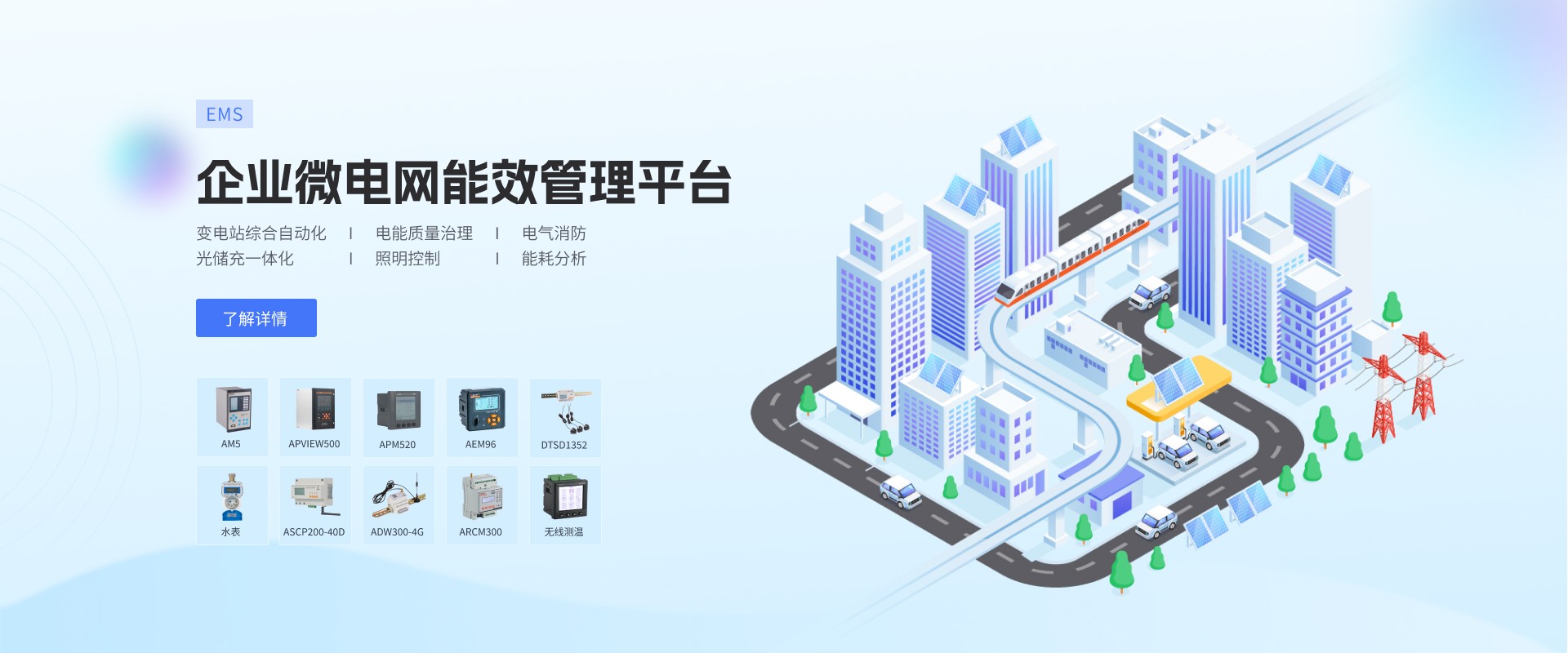
For user substation (generally at 35kV and below), a comprehensive automatic monitoring system is established using equipment such as microcomputer protection devices, integrated control and protection devices for switchgears, wireless temperature measurement products for electrical connections, on-line power quality monitoring devices, distribution room environmental monitoring equipment, and arc protection devices. This system ensures the safe and efficient operation and comprehensive management of substation, distribution, and power usage. The monitoring scope includes user substations, switching stations, transformer stations, and distribution rooms.
The Acrel-2000Z Power Monitoring System is a hierarchical and distributed substation monitoring management system developed by Ankorui Electric Co., Ltd. in response to the requirements of power system automation and unattended operation, specifically for voltage levels of 35kV and below. This system integrates protection, monitoring, control, and communication functions into an open, networked, modular, and configurable system, utilizing power automation technology, computer technology, network technology, and information transmission technology. It is suitable for urban, rural, and user substation grids with voltage levels of 35kV and below. The system enables control and management of substation operations, fulfilling the needs for unattended or minimally attended substation operations, and provides a solid guarantee for the safe, stable, and economic operation of substation facilities.
4.2 Application Locations
Design, construction, and operation and maintenance services for 35kV and below user-end power supply and distribution automation systems, applicable to rail transit, industry, construction, schools, commercial complexes, and more.
4.3 System Architecture
The Acrel-2000Z Power Monitoring System employs a layered distributed design, which is divided into three layers: the station control management layer, the network communication layer, and the field equipment layer. The networking methods can be a standard network structure, an optical fiber star network structure, or an optical fiber ring network structure, with the choice being determined by considering various factors such as the scale of electricity consumption, distribution of electrical equipment, and land area occupied by the user.

4.4 System Features
Real-time Monitoring: Provides a clear display of the operation status of the distribution network, real-time monitoring of electrical parameters in each circuit, and dynamic surveillance of fault and alarm signals related to distribution circuits.
Electrical Parameter Inquiry: Detailed electrical parameters of the circuit can be directly viewed on the primary distribution diagram.
Curve Query: Directly view curves of various electrical parameters
Operational Reports: Query operational parameters for specified circuits or equipment at designated times.
Real-time Alert: With real-time alert functionality, the system can issue alerts for events such as changes in remote signals of distribution circuit, protective actions, and accident tripping.
Historical Event Inquiry: Store and manage event records to facilitate users in tracing historical system events and alarms, enabling query statistics and accident analysis.
Electricity Statistics Report: The system is equipped with a scheduled meter reading and summary statistics function, allowing users to freely query the electricity usage of each distribution node within any time period since the system's normal operation.
User Access Management: The user access management feature has been set up, enabling the definition of login names, passwords, and operational permissions for users of different levels.
Network Topology: Supports real-time monitoring and diagnosis of communication status for all devices, providing a complete display of the entire system's network structure.
Power Quality Monitoring: Continuously monitors the power quality and reliability conditions across the entire distribution system.
Remote Control Function: Allows for remote operation of equipment within the entire distribution system range.
Fault Recording: Automatically and accurately records the changes in various electrical quantities before and after a system fault occurs.
Accident Memoir: Automatically records all real-time steady-state information before and after an accident.
Web Access: The display page showcases an overview of substation counts, transformer counts, monitoring point counts, equipment communication status, electricity consumption analysis, and event logs.
APP Access: The Device Data page displays the electrical parameter data and curves for each device.
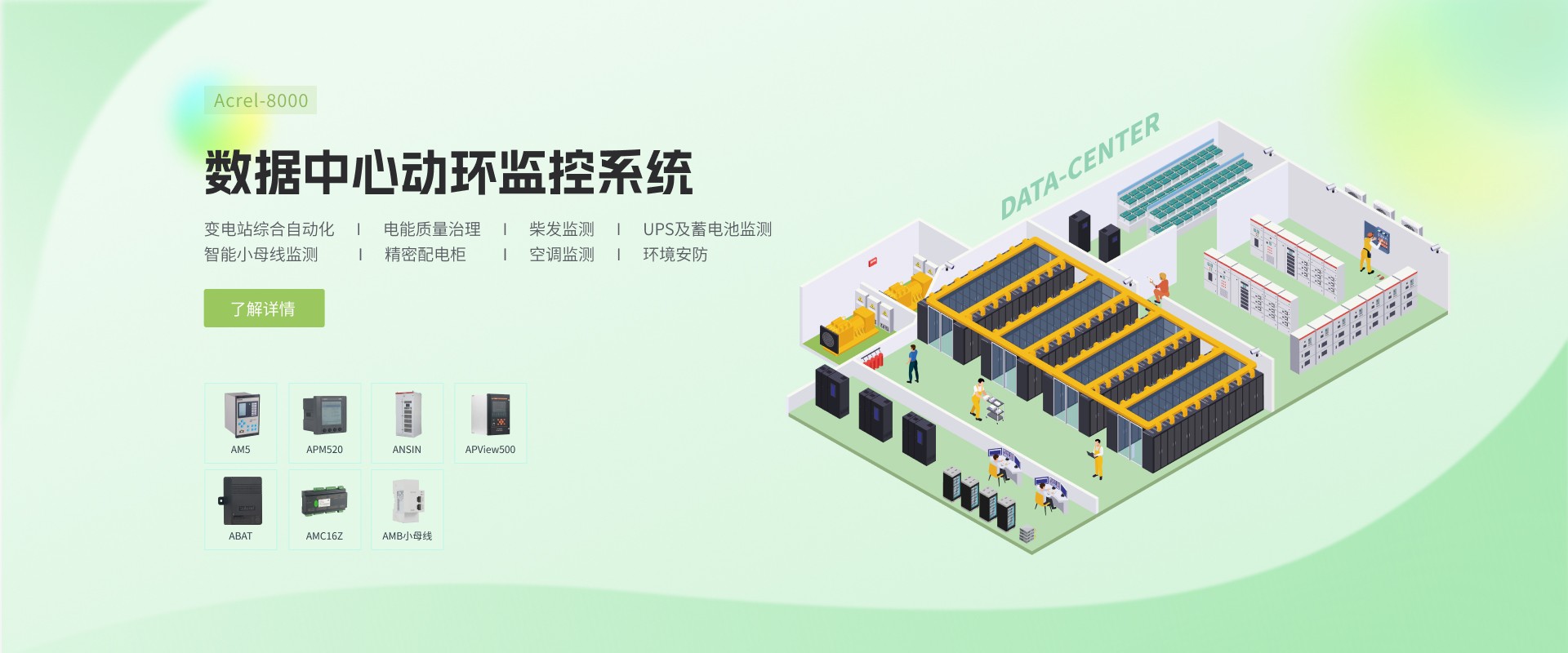
4.5 System Hardware Configuration


5 Conclusion
In summary, with the advancement of technology, power monitoring systems are playing an increasingly vital role in the construction of rail transit. For instance, in China's intelligent rail transit development, the system can generate relevant maintenance management content in real-time based on the monitored data, enabling online information exchange within the system. Therefore, this system still requires improvement and enhancement to meet the demands of modern equipment operation.
Reference
Huang Yumin. The Composition and Optimization of a Comprehensive Metro Monitoring System [J]. Urban Rail Transit Research, 2010, 10.
Luo Hanbin, Gong Peisong, et al. Research and Application of Subway Design Management System [J]. Journal of Railway Engineering, 2013, 9.
Li Peng, Application of Urban Rail Transit Power Monitoring System
[4] Ankerui Enterprise Microgrid Design and Application Manual. 2022.05 Edition
Biography of the Author:
Li Xuewei, female, working at Ankelei Electrical Co., Ltd., specializes in the research and application of power monitoring systems. Mobile: 17821733155 (same as WeChat)
