

Introduction: From the setback in the promotion of the Energy Internet to the rise of the ubiquitous power Internet of Things, and now the resurgence of virtual power plants as a hot trend, the energy sector urgently needs further digital and intelligent development. With the advancement of the construction of the new power system, virtual power plants are poised for rapid growth. Beyond the power information companies under State Grid and South Grid Corporation, the market is sharpening its tools, collectively exploring the new blue ocean.
On June 1st, according to Southern Finance, the Shenzhen Power Supply Bureau of the Southern Power Grid, in collaboration with the South Net Research Institute, validated the frequency regulation technology for virtual power plants using 5G dedicated slicing technology from May 19th to 30th. This marks that the Shenzhen virtual power plant has essentially achieved the functions of a physical power plant, which will help enhance the city's power supply guarantee and the absorption capacity of new energy. It will also contribute the "Shenzhen experience" to the construction and operation of virtual power plants in China.
Despite the fact that China's virtual power plant construction is still in the concept verification and pilot stage, the virtual power plant index has been on a rollercoaster ride upwards in recent years, drawing widespread market attention. At the same time, with the rise of virtual power plants and frequent policy benefits, energy Internet of Things companies have grown against the current in 2023, securing a head start.
The viral Virtual Power Plant heralds a new wind of opportunity.
How hot has it been this year? According to the official microblog of the Shanghai Meteorological Bureau, at 13:09 on May 29th, the temperature at the Xujiahui station reached 36.1°C, shattering the highest temperature record for the local May in over a century. Moreover, high-temperature warnings have been frequently issued in Beijing, Sichuan, Jiangxi, Hunan, Guangdong, Guangxi, and other regions.
With residential electricity consumption soaring and industrial electricity use remaining high, despite the continuous growth in electricity generation, the power supply situation in our country is still worsening. In April this year, the total electricity generation in our country reached 658.35 billion kilowatt-hours, an increase of 8.18% year-on-year. However, according to the National Energy Administration's estimate, the largest power load in the country in 2023 is expected to grow significantly compared to last year, with the power supply in our country remaining in a tight balance. The highest electricity load across the nation may increase by nearly 100 million kilowatts compared to 2022, and ensuring power supply remains a key issue.
In an era of ongoing electricity resource tension, can digitalization provide new impetus to the power system? The answer is undoubtedly yes—the concept of a virtual power plant has emerged as a result. To put it simply, a virtual power plant is not an actual power generation facility (such as a thermal power plant) itself, but rather a management approach or a system. Its core idea is to aggregate various decentralized, adjustable power sources and loads, forming a virtual "power plant" through digital means for unified management and dispatch. At the same time, it acts as a participant in the electricity market.

Virtual power plants have garnered attention for their role in securing stable electricity supply. As intermittent renewable energy sources become more prominent in the power system, the elasticity of electricity demand faces challenges. Virtual power plants, with their functions of resource aggregation, flow regulation, and efficiency enhancement, contribute to improving the stability and safety of the power system during large-scale integration of wind and solar energy. For instance, during peak electricity usage times, virtual power plants can facilitate interaction between large shopping centers and the grid, significantly reducing the air conditioning load by raising the indoor temperature by 1 to 2 degrees Celsius, all while going largely unnoticed by customers, thereby alleviating the pressure on the grid.
Additionally, virtual power plants can participate in power system regulation at a lower cost. According to calculations by the State Grid Corporation of China, to meet 5% of peak load requirements through thermal power plants requires an investment of 400 billion yuan, whereas a virtual power plant would only need an investment of 50-60 billion yuan, making the cost of a virtual power plant just 1/8 to 1/7 of a thermal power plant.
With numerous advantages in place, the concept stocks of virtual power plants have been on the rise. In fact, virtual power plants are no longer a novelty. During the 13th Five-Year Plan period, China had already initiated pilot projects for virtual power plants, deploying multiple such projects and accumulating a wealth of experience and data. The "Implementation Plan for the Construction and Operation Management of Virtual Power Plants," released by the Shanxi Provincial Energy Bureau in June 2022, clearly outlines the types of virtual power plants, market entry procedures, technical specifications, and other requirements, making it a provincial-level implementation plan. Currently, Shanxi is advancing two batches of a total of 10 pilot projects for virtual power plants, with a cumulative adjustable capacity of up to 400 megawatts.
Last August, the Shenzhen Virtual Power Plant Management Center was established, marking a new stage of rapid development for Shenzhen's virtual power plant. The rise of the virtual power plant is not a surprise to the energy and electricity industry. According to Beijing News Hebei Finance reporter, with the large-scale integration of wind and solar power, virtual power plants can enhance the stability and safety of the power system, and are more cost-effective than peak-load adjustment of thermal power. In addition, the Shenzhen virtual power plant has the most diverse load types; the Shandong virtual power plant can participate in ancillary services as well as spot trading; Guangdong has initiated demand response market transactions...
Recently, the National Standardization Administration announced that two national standards, "Management Specification for Virtual Power Plants" and "Technical Specification for Resource Allocation and Assessment of Virtual Power Plants," have been approved for implementation. This signifies that the construction of virtual power plants in our country will be governed by a unified national management standard.
Despite the soaring popularity of virtual power plants, China's construction of such plants is still in the conceptual verification and pilot stage. Currently, China's virtual power plants are primarily invitation-based, with signals issued by government agencies or power dispatching organizations. These signals are then used by load aggregators and virtual power plant organizers to manage peak shaving and valley filling for demand response, earning revenue from grid electricity price subsidies. This indicates that the market size for virtual power plants remains quite limited. Behind this, the energy Internet of Things carried by the new power system represents a much broader market target.
Can Virtual Power Plants Fuel the Resurgence of the Ubiquitous Power Internet of Things?
Since February 2016, our country has been gradually promoting the construction of the energy internet and has conducted pilot projects across the nation. However, the construction outcomes have not met expectations. The lack of complementary business models has resulted in a lack of enthusiasm among various capitals during the actual investment process.
In March 2018, the IEC standard proposal for the "Use Cases" of Virtual Power Plants, led by State Grid Jibeifang Electric Power, was officially approved for implementation, marking a milestone breakthrough for State Grid in the international standardization of virtual power plants. State Grid Jibeifang Electric Power will promote the development of related scientific research and technology by leading the international standardization of virtual power plants, exploring Jibeifang solutions in technology fields such as promoting clean consumption.
In January 2019, State Grid Corporation further proposed the strategic development goal of "three types of networks and two grids," aiming to establish a world-class energy internet enterprise that organically integrates smart grids with ubiquitous electricity internet of things. The background of the ubiquitous electricity internet of things emphasizes the construction of a strong and intelligent grid with coordinated development of all levels of power grids, comprehensive state perception, and efficient information processing. It highlights the pivotal role of the power grid in energy convergence, transmission, and transformation, promoting clean and low-carbon development, facilitating supply and demand alignment, and enhancing system flexibility.
The heart of a virtual power plant lies in aggregation and communication. Different types of distributed resources such as distributed power generation, distributed energy storage, controllable loads, and charging stations are like "sand," which, through virtual power plant technology, are gathered, utilized, and integrated to form a massive "treasure."
Generally, virtual power plants provide scarce balancing services to new power systems, not just simple electricity energy. At their core, they are an advanced mode of market management that can manage electricity supply and demand risks through pricing. As an operational model that leverages market incentive rules, through optimization, coordination, and control, virtual power plants aggregate distributed energy to participate in power market operations and system operation, and will be an effective way to promote harmonious coordination and optimization between distributed energy and large-scale power grids, as well as to promote the greening of the power system.
Excerpted from WeChat Official Account: Shuzhi Ruijiao, "Shenzhen's Experience: Pioneering a Path for the Electric Power Internet of Things," by Bu'er.
Ubiquitous Power Internet of Things, Energy Internet, and Virtual Power Plant
The construction of the ubiquitous power Internet of Things (IoT) has provided strong support for the development of the energy Internet and has also driven the technological advancement of virtual power plants. To some extent, virtual power plants are a specific form and fundamental unit of the ubiquitous power IoT. Since the State Grid Corporation of China released the "Outline of Key Construction Tasks for the Ubiquitous Power IoT in 2020" in 2019, although the progress of the ubiquitous power IoT and energy Internet construction has slowed down at times, it has consistently guided the product ecosystem of enterprises. Now, with the rise of virtual power plants, the importance of the ubiquitous power IoT and energy Internet construction has once again become apparent.
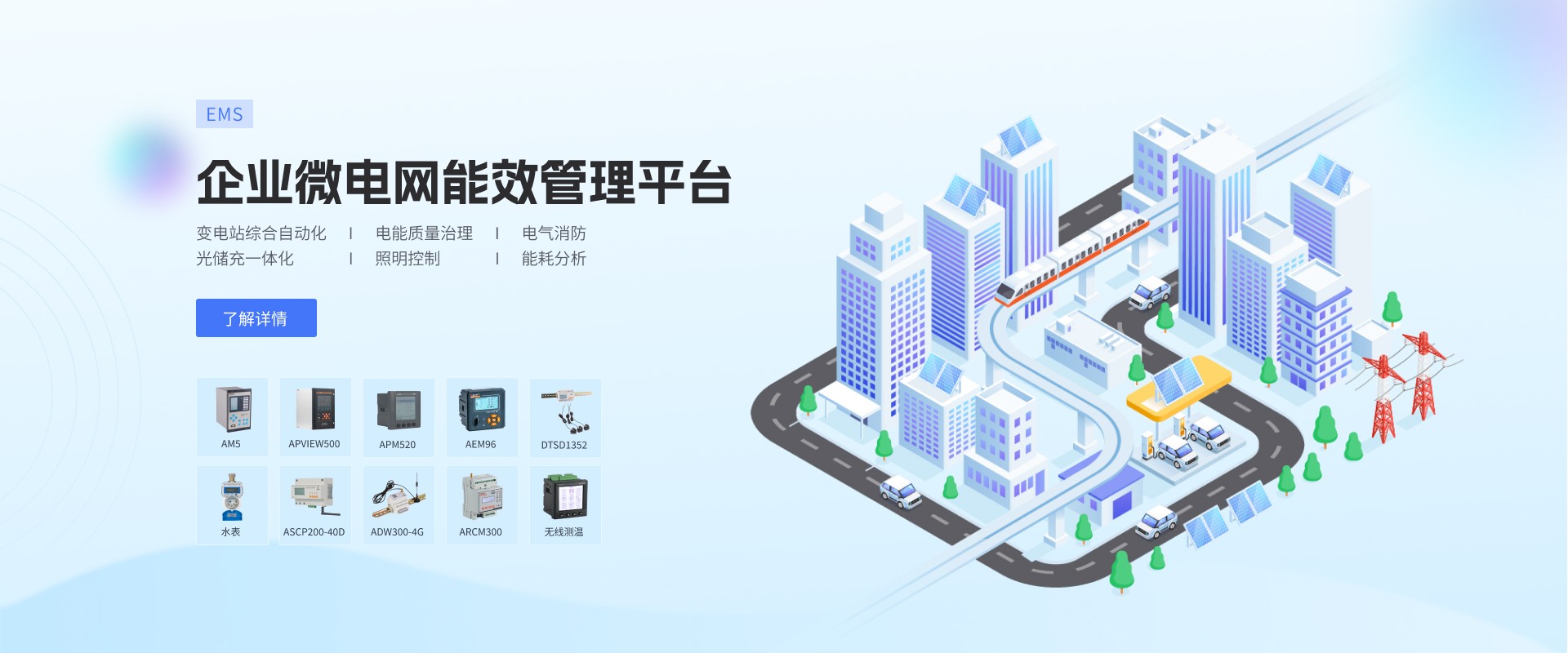
Acrel has been deeply involved in the energy efficiency management of corporate microgrids for many years. In accordance with the requirements of the ubiquitous power Internet of Things, the company has increased its research and development investment in all aspects of the "source-grid-load-storage-charge" of corporate microgrids. The AcrelEMS corporate microgrid energy efficiency management system has evolved from version 1.0 to 3.0, achieving demand and load management for corporate microgrids. By integrating Internet of Things and big data technology, it can offer functions such as power grid monitoring, energy consumption statistics, load forecasting, lighting control, key load monitoring, charging station operation management, photovoltaic power generation monitoring, energy storage management, and demand response, enhancing the intelligence of corporate power distribution and usage. AcrelEMS can serve as a subsystem of a virtual power plant, promoting the rapid development of virtual power plants.

Figure 1 AcrelEMS Corporate Microgrid Energy Management System
AcrelEMS Enterprise Microgrid Energy Management System
- Power Distribution Monitoring
AcrelEMS provides real-time monitoring and control of electrical parameters, operating conditions, and contact temperatures for distribution equipment such as transformers, circuit breakers, DC screens, busbars, reactive compensation cabinets, and cables in low and high-voltage power distribution systems. It also monitors and improves the power quality of the main circuits in the enterprise microgrid, handles faults promptly, and issues alarm information, enhancing the reliability of enterprise power supply.

Figure 2: Power Distribution Monitoring
- Photovoltaic Power Generation Monitoring
Monitor the operation of corporate distributed photovoltaic power stations, including inverter operational data, photovoltaic power generation efficiency analysis, electricity generation and revenue statistics, and power control of photovoltaic power generation.

Figure 3: Photovoltaic Power Generation Monitoring
- Energy Storage Management
Monitor the operating modes, control strategies of energy storage systems (EMS), battery management systems (BMS), and power conversion systems (PCS), track battery current, temperature, SOC/SOH, inspect the insulation condition of DC systems, and set the charging and discharging strategies of the energy storage system based on the company's peak-valley characteristics, electricity price fluctuations, and instructions from the upper platform. Control the charging and discharging of the energy storage system to achieve peak shaving and valley filling, thereby reducing the company's electricity costs.

Figure 4: Energy Storage System Monitoring
- Power Forecast
The system, based on historical load data, integrates weather factors and corporate production plans to forecast the power demand and photovoltaic power generation curve for the next cycle, providing data support for enterprises to schedule energy plans and respond to demand in advance.

Figure 5: Power Generation Forecast
- Energy Consumption Analysis
Collect energy consumption data for electricity, water, gas, and other energy sources, conduct classified and itemized energy consumption statistics, calculate energy consumption per unit area or per product, and analyze trends. Conduct energy efficiency diagnostics for major energy-consuming equipment, calculate corporate carbon emissions, and provide data support for the company to formulate peak carbon dioxide emissions and carbon neutrality pathways.

Figure 6: Energy Consumption Analysis Feature
- Luminaire Control
The smart lighting control feature allows for scheduling, light-sensing, scene-based, and dimming controls tailored to the company's needs. It integrates infrared and ultrasonic sensors to achieve automatic on/off lighting with occupancy detection, and can be centrally managed based on the system's control strategy, helping the company save on lighting energy consumption.

Figure 7: Lighting Control Function
- Electric Vehicle Charging Station Management
Monitor the operational status of corporate charging stations, offering charging station fee management and status monitoring features. Adjust the power of charging stations based on changes in corporate load rates and instructions from the demand-side management platform, ensuring orderly electricity use and responding to the power demands of superior platforms.

Figure 8: Charging Station Management
- Demand Response
Based on the fluctuation data of corporate load and in conjunction with the dispatch instructions from the superior platform, the decision is made on how to participate in the grid's demand response. The platform can adjust charging and discharging times by issuing control strategies to the energy storage system. During the demand response period, the platform adjusts the power of controllable loads, stops supplying power to interruptible loads, and can formulate demand response control strategies based on the corporate controllable load data, achieving one-click response.
Corporate Microgrid Energy Efficiency Management System Hardware Equipment
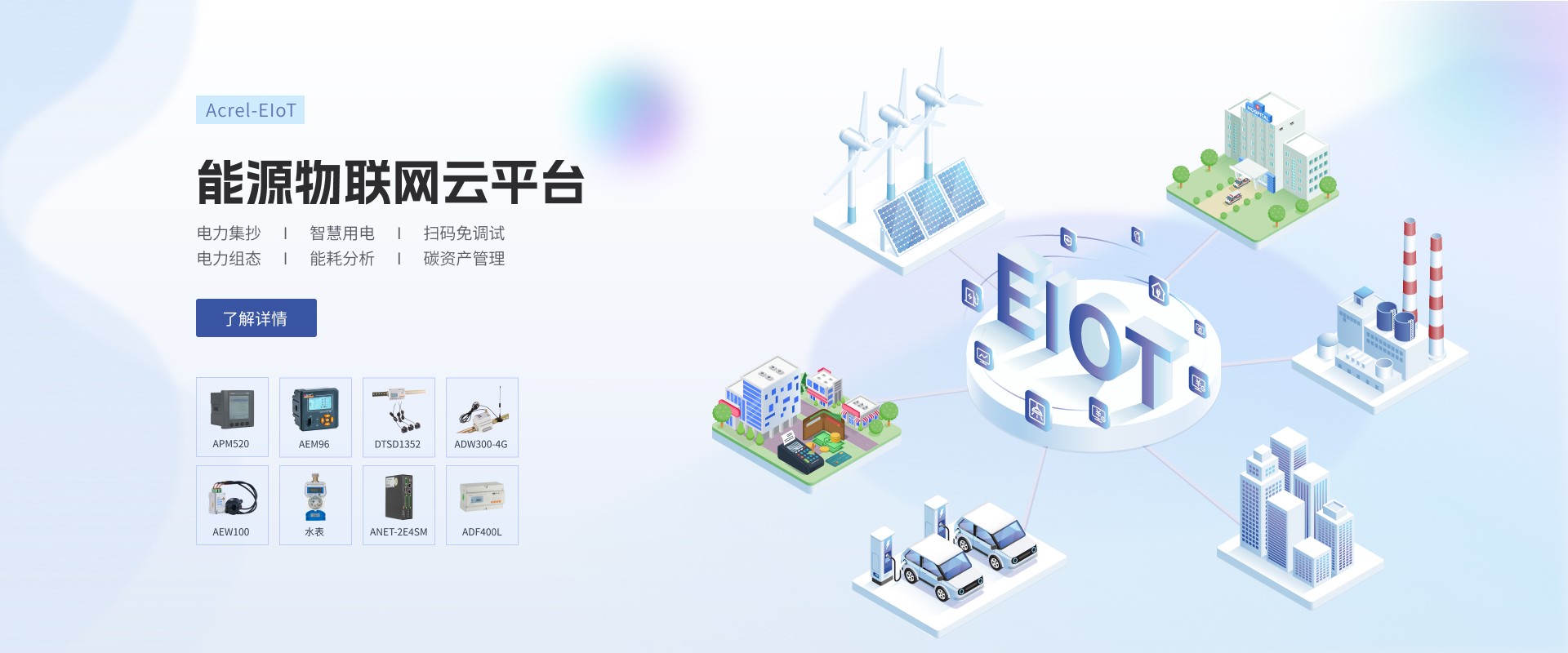
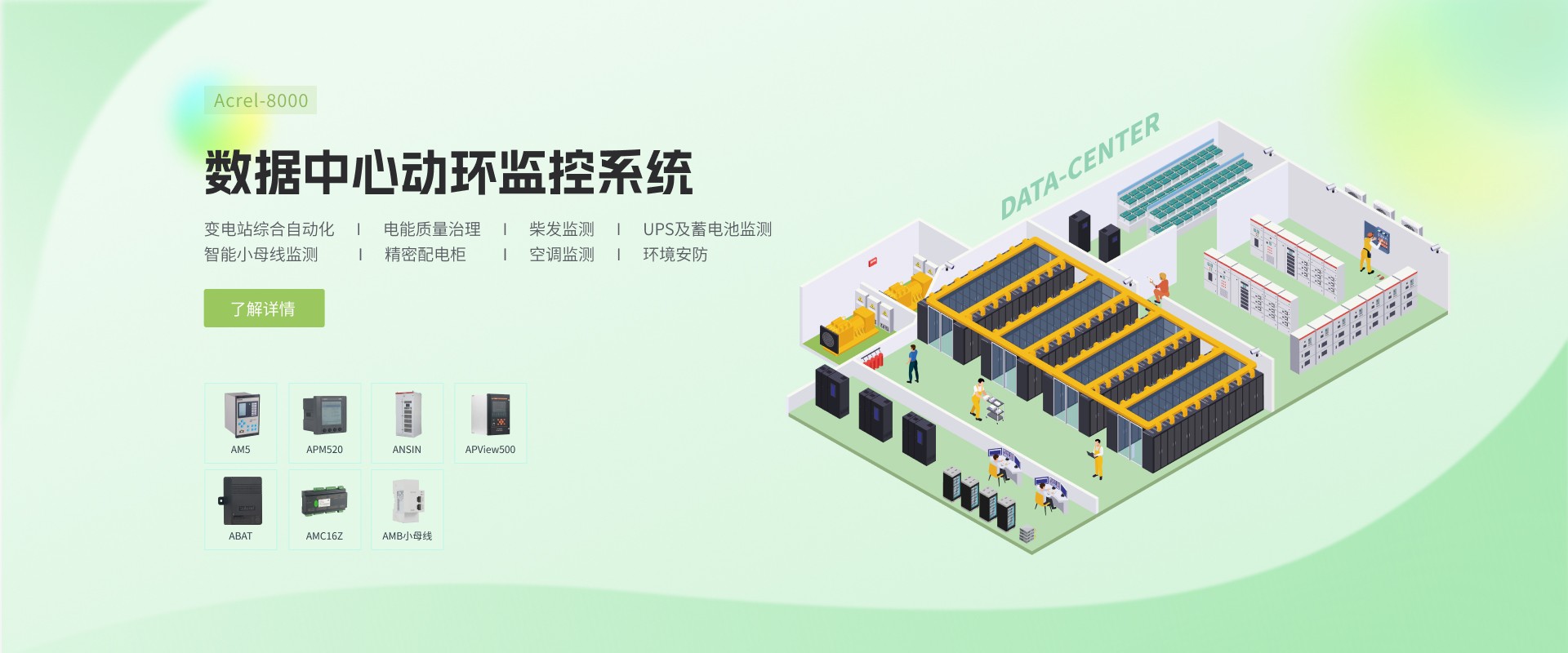
Ankorri boasts a product ecosystem for the "cloud-edge-end" of the energy internet, including terminal devices such as smart gateways, integrated protection and monitoring products for low and high voltage power distribution, online monitoring devices for power quality, power quality management, itemized metering, lighting control, new energy charging stations, and electrical fire protection solutions. This enables us to provide one-stop service capabilities for enterprise microgrid energy efficiency systems.


Closing Remarks
As the concept of the Energy Internet was proposed, from the rise of the Ubiquitous Power Internet of Things to the current surge in virtual power plants, the energy sector urgently requires further digital intelligence development. Now, with the advancement of the construction of new power systems, virtual power plants are expected to see rapid growth, bringing about a new wave of digital energy transformation on the enterprise side.
