

1. Main Content
The "Management Measures for Power Demand Side (Consultation Draft)" is a revision based on the "Management Measures for Power Demand Side" issued in 2017, while the "Management Measures for Power Load (Consultation Draft)" is a revision on the basis of the "Management Measures for Orderly Power Use" released in 2011.
The National Development and Reform Commission pointed out in the revision explanation of the "Management Measures for Power Demand Side (Draft for Comments)" that power demand side management refers to strengthening the management of electricity consumption across the entire society, comprehensively adopting reasonable and feasible technical, economic, and management measures to optimize the allocation of power resources, implementing demand response, energy-saving, energy substitution, green electricity consumption, and orderly electricity use in the electricity consumption process, and promoting the carbon reduction, efficiency improvement, and energy consumption reduction of the power system. Power demand side management will tap into the potential of demand side resources, accelerate the coordinated interaction of power generation, transmission, consumption, and storage, and play a significant role in the construction of new power systems and new energy systems.
Compared to the current "Electricity Demand Management Measures," the "Draft Electricity Demand Management Measures (Seeking Opinions)" introduces a new chapter on demand response. It addresses short-term electricity supply and demand tensions and challenges in the consumption of renewable energy electricity by mainly employing economic incentives to guide electricity users to voluntarily adjust their electricity consumption behavior according to the needs of the power system operation. This aims to achieve peak shaving and valley filling, enhance the flexibility of the power system, ensure stable operation of the power system, and promote the consumption of renewable energy electricity.
The "Management Measures for Demand-Side Electricity Consumption (Draft for Comments)" states that by 2025, the demand response capabilities of provinces will reach 3% to 5% of their electricity load, with provinces having an annual peak-valley difference rate in electricity load exceeding 40% achieving 5% or more. By 2030, a scaled-up real-time demand response capability will be established, enabling the sharing and mutual support of adjustable resources within the grid area through the integration of auxiliary service markets and electricity energy market transactions.
In response to the new situation, requirements, and connotations in the national power load management, the "Power Load Management Measures (Draft for Comments)" has similarly added a chapter on demand response. In addition, the draft has refined the requirements for orderly power use and introduced a new chapter on system support.
The "Management Measures for Electric Power Load (Draft for Comments)" states that "orderly electricity use" refers to the management work of maintaining a stable supply and demand balance for electricity and power under circumstances where the electricity supply is insufficient and predictable. This involves enhancing power generation capacity, organizing the market, responding to demand, and emergency scheduling, among other measures. When it is still impossible to achieve a balance between electricity supply and demand, administrative measures and technical methods are employed to legally control certain electricity loads and ensure the stability of the electricity supply and demand order.
The "Management Measures for Electric Power Load (Draft for Comments)" explicitly states that power rationing measures must not be abused in the orderly electricity use plans, affecting the normal order of social production and life. It is prohibited to implement differentiated orderly electricity use for energy-consuming enterprises and units under the guise of evaluating and assessing the responsibility for national and local energy-saving goals.
The "Power Load Management Measures (Consultation Draft)" specifically highlights that, when formulating orderly electricity use plans, five categories should be given priority in restrictions: including illegal construction or under-construction projects, enterprises in the淘汰 list or restricted list of industrial structure adjustment directories, companies with energy consumption per unit product exceeding the national or local mandatory energy consumption limit standards, landscape lighting, illumination projects, and other high-energy-consuming, high-emission, and low-level enterprises.
The "Power Load Management Regulations (Draft for Comments)" highlights that local power operation authorities, energy regulatory agencies, grid companies, and power users should enhance the construction, operation, and supervision of the new power load management system.
The new electric power load management system encompasses a software and hardware platform for power users, load aggregators, virtual power plants, and more, facilitating load information collection, predictive analysis, testing, regulation, and services. It serves as an IT-assisted system for power demand-side management and is a crucial implementation platform for load management work.
The significance of implementing power demand-side management and power load management
Under the backdrop of the "double carbon" targets, the newly installed capacity on the power generation side is primarily composed of clean renewable energy sources such as wind and solar power. However, under current technological conditions, wind and solar power generation are still difficult to provide stable and adjustable output. To ensure the stability and reliability of electricity supply, demand-side management of electricity has gradually become a necessary means to ensure grid stability and optimize the energy structure. Demand-side management of electricity involves adjusting and controlling consumers' electricity usage behavior to achieve a balance between electricity supply and demand in the power system, and to improve energy utilization efficiency. Implementing demand-side management can change consumer electricity usage behavior to reduce peak loads, increase grid utilization, ensure electricity supply, and alleviate the pressure of new energy integration.
Delay grid investment, enhance grid utilization efficiency
Demand-side management of electricity can be achieved by reasonably arranging users' electricity consumption behavior, regulating electricity load, and optimizing the distribution of grid load, thereby delaying the need for grid investment and reducing operational costs. On one hand, demand-side management can optimize electricity consumption structure and reduce the load pressure on the grid by achieving goals such as energy conservation and clean energy use, thereby reducing the need for grid expansion. On the other hand, demand-side management can also improve grid utilization efficiency, lower grid dispatching costs, and promote grid upgrading and intelligent construction through the establishment of flexible market mechanisms, further enhancing grid utilization and operational efficiency.
Reduce Peak Load, Ensure Power Supply Stability
Demand-side management of electricity can be achieved through time-of-use pricing differences or incentive mechanisms, guiding users to reduce or shift electricity consumption during peak hours, thereby lowering peak loads. Peak loads can easily lead to power supply shortages, voltage instability, equipment damage, and pose a serious threat to the stable operation of the power system. Implementing demand-side management can effectively control peak loads by adopting various methods such as reducing peak electricity consumption, shifting load valley points, increasing off-peak loads, and adjusting load curves, thus avoiding supply-demand imbalances caused by excessively high peak loads, reducing the operational pressure on the power system, lowering the risk of insufficient power supply, and ensuring the reliable and stable operation of the power system.
Enhance system flexibility to alleviate the pressure of new energy integration
Demand-side management of electricity can enhance the flexibility and adaptability of the power system, mitigate the impact of new energy integration on the power grid, reduce the impact of new energy fluctuations on the power grid, and lower dispatching costs. Additionally, demand-side management can further alleviate the pressure of new energy integration by changing the structure of users' energy consumption, encouraging the use of new technologies such as distributed energy and energy storage systems, thereby improving the reliability of the system.
The system advances the deepening and upgrading of power demand-side management, alleviates the pressure of peak electricity load, and achieves energy conservation, environmental-friendly, green, intelligent, and orderly electricity use, promoting the stable operation and high-quality development of the power system. Specifically, the following three aspects of work should be done.
Firstly, we are committed to market-oriented reform and optimizing the power market system, implementing market regulation mechanisms.
By utilizing differentiated electricity prices and peak/off-peak pricing systems, guide users to moderately reduce electricity consumption during peak hours, thereby regulating the electricity load and alleviating the pressure on the power supply system; establish a transparent and fair electricity market environment, promote the market-oriented reform of electricity, improve the market-oriented system and market supervision mechanism, and enhance market competitiveness; establish an electricity trading platform, providing services such as information exchange and transaction matching, to offer more convenient, efficient, and transparent trading services to the electricity market; strengthen market supervision, prevent market monopolies, ensure fair market competition, prevent market failure, and improve the efficiency and fairness of market transactions.
Secondly, we are committed to saving electricity and promoting demand response initiatives.
Extreme promotion of demand response, enhancing top-level design of demand response, clarifying normative requirements, advancing demand response integration into power planning, improving demand response incentive mechanisms, and encouraging large industrial users to participate in real-time demand response upgrades; establishing energy-saving standards, limiting energy-intensive industries' electricity consumption during specific time periods, ensuring enterprises develop comprehensive energy-saving management systems, and formulating independent energy-saving standards and measures; refining peak-valley electricity pricing, aligning with the actual output of new energy sources, adjusting differentiated electricity prices, and guiding users to adjust electricity consumption behavior under significant peak-valley price differences, reducing peak electricity load; intensifying the promotion of energy-saving measures, with the government promoting the use of energy-efficient lighting, appliances, and new energy equipment through fiscal subsidies and other means, and encouraging enterprises, residents, and public institutions to adopt energy-saving technological measures.
Thirdly, we are committed to technological support, enhancing our digital capabilities.
We are promoting the deep integration of information and communication technology, infrastructure, and energy, optimizing and improving the power demand-side management platform. By utilizing big data and artificial intelligence, we analyze electricity usage data to achieve predictions and scheduling, regulating peak and valley loads, and alleviating the pressure on peak electricity demand. We are also establishing an electricity monitoring platform using big data and AI technologies to enable real-time monitoring and control of electricity usage, strengthening regulation and management over electricity consumption. By promoting the "Internet + Power" service model, we aim to provide precise services to customers, enhance their electricity usage experience, and guide them to consciously reduce electricity consumption during peak hours, thereby lowering peak electricity loads.
--Excerpted from "Implementing Demand-Side Management to Alleviate the Peak Pressure of Low-Carbon Power Systems" by Zeng Ming and Wang Yongli, North China Electric Power University
3. Digital Solutions for Power Demand-Side Management and Power Load Management
The issuance of the "Management Measures for Power Demand Side (Consultation Draft)" and the "Management Measures for Power Load (Consultation Draft)" could not have come at a more opportune time. They address practical issues of the new power system, providing policy support and solutions to alleviate the contradiction between power supply and demand. It is reported that in recent months, municipal and county-level power load management centers have been established in many parts of the country, marking a significant and crucial step in the reform of the power load management system. This is of great importance for accelerating the management of power demand and power load. For instance, the Ningbo Energy Big Data Management Center (Power Load Management Center) has connected to the energy consumption data of over 10,000 large-scale enterprises and 3,079 key energy-consuming enterprises in Ningbo, as well as the air conditioning load data of 698 public buildings. It has launched over 20 energy big data products, including public building air conditioning load management, industrial park energy management, and green factory energy monitoring.
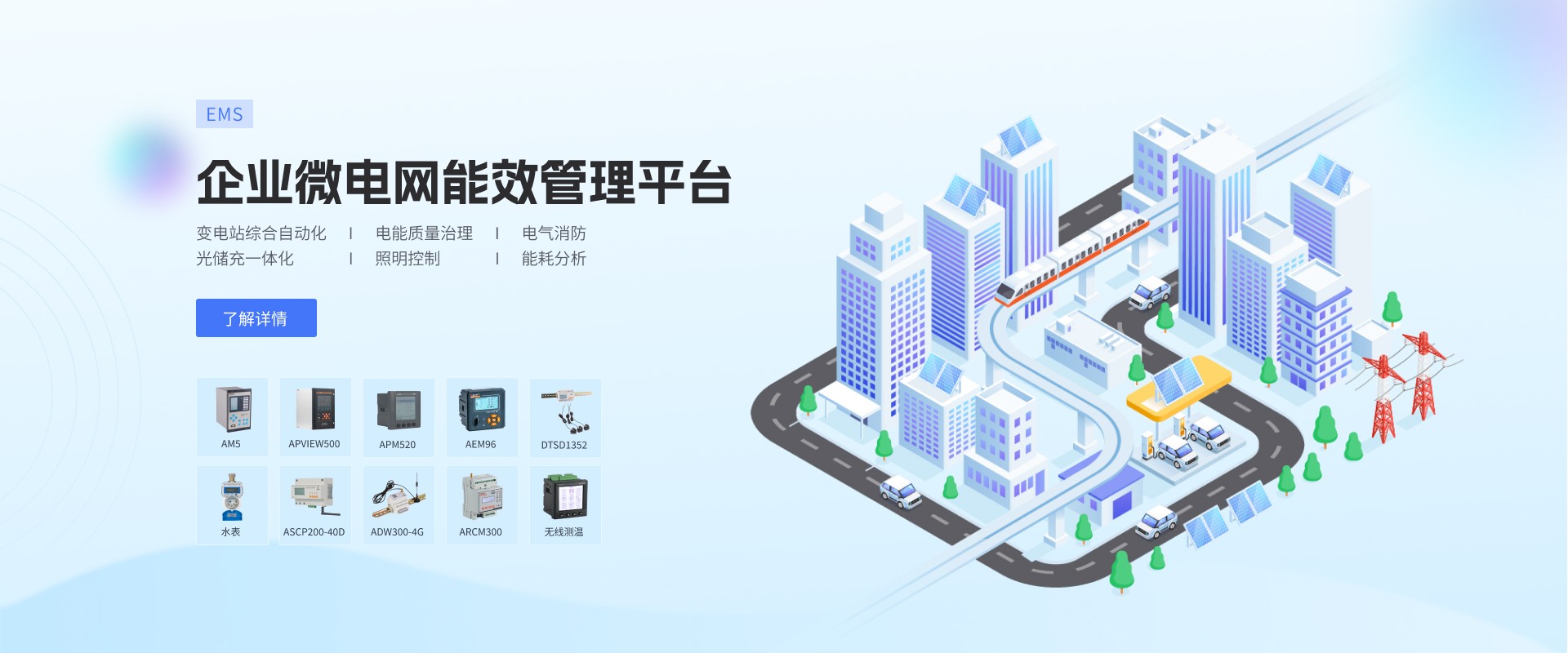
AcrelEMS' Enterprise Microgrid Energy Management System addresses the needs of enterprise-level microgrid demand and load management. By integrating the Internet of Things and big data technology, it offers functionalities such as power grid monitoring, energy consumption statistics, load forecasting, lighting control, key load monitoring, EV charging station operation management, photovoltaic power generation monitoring, energy storage management, and demand response. This enhances the intelligence of enterprise power distribution and usage, helping businesses achieve reliable, energy-saving, and orderly electricity consumption. Additionally, the system can serve as a subsystem for regional electricity demand-side platforms and power load management platforms, receiving demand response instructions from higher-level platforms. It forms the foundation for the construction of electricity demand-side management and power load management systems. As a demand-side management service provider, Acrel has been offering demand-side and load management solutions to enterprises for years.

Figure 1: AcrelEMS Corporate Microgrid Energy Efficiency Management System Network Structure
3.1 Power Monitoring
AcrelEMS provides real-time monitoring and control of electrical parameters, operating status, and contact temperatures for distribution equipment such as transformers, circuit breakers, DC screens, busbars, reactive compensation cabinets, and cables in low and high-voltage power distribution systems. It monitors and improves the power quality of the main circuits of the enterprise microgrid, handles faults promptly, and issues alarm information, enhancing the reliability of the enterprise's power supply.

3.2 Photovoltaic Power Generation Monitoring
Monitoring the operation of corporate distributed photovoltaic power stations, including inverter operating data, photovoltaic power generation efficiency analysis, power generation and revenue statistics, as well as photovoltaic power control.
Monitoring the operation of corporate distributed photovoltaic power stations, including inverter operation data, photovoltaic power generation efficiency analysis, electricity generation and revenue statistics, and photovoltaic power control.
 Figure 4: Photovoltaic Power Generation Monitoring
3.3 Energy Storage Management
Monitor the operation modes, control strategies of energy storage systems (EMS), battery management systems (BMS), and power conversion systems (PCS), and track battery current, temperature, SOC/SOH. Detect system insulation conditions, and set the charging and discharging strategies for energy storage systems based on the company's peak-valley characteristics, electricity price fluctuations, and instructions from the upper platform. Control the charging and discharging of the energy storage system to achieve peak shaving and valley filling, and reduce the company's electricity costs.
 Figure 5: Energy Storage System Monitoring
3.4 Power Forecast
The system, based on historical load data, combines weather factors and corporate production schedules to predict power demand and photovoltaic power generation curve for the next cycle. It provides data support for enterprises to pre-arrange energy plans and respond to demand.
 Figure 6: Power Generation Forecast
3.5 Energy Consumption Analysis
Gather energy consumption data for electricity, water, gas, and other utilities, conduct classified and itemized energy consumption statistics, calculate energy consumption per unit area or per product, and analyze trends. Conduct energy efficiency diagnostics for major energy-consuming equipment, calculate the carbon emissions of the enterprise, and provide data support for the company to formulate peak carbon emission and carbon neutrality routes.
 Figure 7: Energy Consumption Analysis Feature
3.6 Lighting Load Control
The intelligent lighting control feature allows for scheduling, light-sensing, scene, and dimming controls tailored to the company's needs. It integrates infrared and ultrasonic sensors to achieve automatic lighting when people are present and turning off when they leave. The system can also implement centralized control based on control strategies, thereby saving energy on lighting for the company.

3.7 Charging Station Load Management
Monitor the operational status of corporate charging stations, provide charging station fee management and status monitoring features, and adjust the power of charging stations based on changes in corporate load rates and instructions from the demand-side management platform, ensuring the safe and stable operation of the corporate microgrid and responding to the power demands of the superior platform.
 Figure 9: Charging Station Management
3.8 Requirements Management
Based on fluctuating data of corporate load and in conjunction with dispatch instructions from the superior platform, the decision is made on how to participate in the grid's demand response. The platform can issue control strategies to the energy storage system to adjust charging and discharging times. During the demand response period, the platform adjusts the power of controllable loads, ceases power supply to interruptible loads, and can formulate demand response control strategies based on corporate controllable load data, enabling one-click response.
 3.9 Hardware Equipment for Demand-Side Management of Electricity
Energy demand and load management require software integration with various power monitoring and control devices, including products for comprehensive high and low voltage protection and monitoring, power quality monitoring and treatment equipment, smart electricity meters, IoT meters, lighting control sensors, charging stations, junction temperature sensing, and remote control devices. Ankorri can provide a one-stop service for corporate power demand and load management.


4 Conclusion
Electricity Demand-Side Management (DSM) is a digital system for all enterprises using electricity in society. Effective DSM requires starting with the intelligent management of corporate microgrids. DSM is a crucial means to balance electricity supply and demand, serving as the fundamental guarantee for enhancing the management level of social energy use and a key path for achieving the consumption of clean energy and sustainable energy development. In the process of building China's modern energy system, DSM will continue to play a significant role in promoting the transformation and upgrading of China's energy consumption and supply patterns, achieving a win-win situation for economic development and environmental protection.
