


How Industrial Parks Can Reasonably Charge for Water and Electricity Under New Regulations
Policy Background
March 30, 2018, the National Development and Reform Commission issued "The Notice on Reducing Electricity Prices for General Industry and Commerce." It explicitly proposes further standardization and reduction of grid-related charges: first, enhancing the flexibility of the two-part electricity price system; second, clearing and regulating additional fees charged by grid enterprises outside of transmission and distribution prices, including the extra charges imposed by operators of industrial parks and commercial complexes on their customers for the transmission of electricity beyond the state-regulated sales price.
In late June 2022, market supervision bureaus in various provinces and cities successively issued a notice on the Provisional Measures for Publicizing the Collection of Power Fees for Non-grid-Supplied Power. The notice requires that power suppliers such as commercial complexes, industrial parks, property management, and office buildings should charge electricity fees according to the catalog electricity prices corresponding to the voltage levels of terminal users' electricity consumption, and should not add any additional fees to the electricity bills. For terminal users who install non-peak-valley time-of-use electricity meters, the electricity price for terminal users is determined based on the "catalog electricity price for terminal users' electricity voltage level + the floating margin." The floating margin should not exceed 15%, and it is encouraged for power suppliers with conditions to not increase or only slightly increase the price. Any violations of overcharging or non-compliance with the national electricity price policy by power suppliers are in violation of Article 12 of the "Price Law of the People's Republic of China," which constitutes illegal acts of not complying with government pricing. In cases of such violations, according to Article 39 of the "Price Law of the People's Republic of China" and Article 9(II) of the "Administrative Penalty Regulations for Price Illegal Acts," the violators shall be ordered to make corrections, seize illegal gains, and be fined an amount not exceeding five times the illegal gains. The "Electric Power Law" stipulates that any additional fees charged in electricity bills shall be returned, and fines of up to five times the amount of the illegal charges may be imposed.
II. Pain Points of Property Management Fees in the Park
1. The park offers a variety of zones with diverse pricing structures.
Industrial parks are designated areas planned and constructed to promote the development of certain industries, typically encompassing a series of activities such as production, R&D, and sales. Based on the characteristics and purposes of industrial parks, they can be categorized into several types: science and technology parks, industrial parks, commercial and trade parks, cultural and creative parks, ecological parks, and special parks. Tenants in different types of parks vary in nature, including private individuals and enterprises, with payment structures ranging from private to public and public to public. The methods of payment include card recharge, offline remote recharge, WeChat, Alipay, and bank transfers, making the financial coordination process complex.
2. The meter-reading method is outdated, inefficient, and time-consuming.
In the survey, it was found that most property departments still assign maintenance staff to handle meter-reading tasks. Currently, the majority of parks, including many high-tech industrial parks, still rely on manual meter-reading methods. With a high number of buildings and varying company sizes within the parks, electricity charges are calculated for each specific enterprise, resulting in varying complexities in the meter-reading process. Meter readers need to read data from each enterprise individually based on pre-printed lists, which leads to a time-consuming meter-reading process.
3. Various electric metering billing methods
Due to the diverse types of parks, there is a coexistence of commercial and industrial electricity usage. The pricing methods for commercial single and compound tariffs, as well as the two-part industrial electricity pricing, are significantly different, making it difficult for standard billing software to accommodate both.
4. Difficulty in calculating and collecting electricity fees
After recording electricity consumption data, it must be aggregated and compared with the total meter readings from the power supply company to allocate common electricity usage and calculate the payment amounts due for each enterprise. Furthermore, as enterprises receive notices for electricity payment, there are instances of delayed payments and defaults, necessitating repeated follow-ups for payment collection.
5. Energy loss is hard to quantify, and pre-paid expenses are difficult to fully recover.
During the process of power transmission, losses occur due to factors such as resistance, inductance, and capacitance in equipment like cables and transformers. As a result, the property's advance payment for electricity exceeds the total amount collected from tenants. How to reasonably calculate and charge each tenant for their share of the electricity costs is a pain point for many property management companies. Many have been penalized heavily for arbitrarily raising electricity prices due to their inability to fairly allocate the costs.
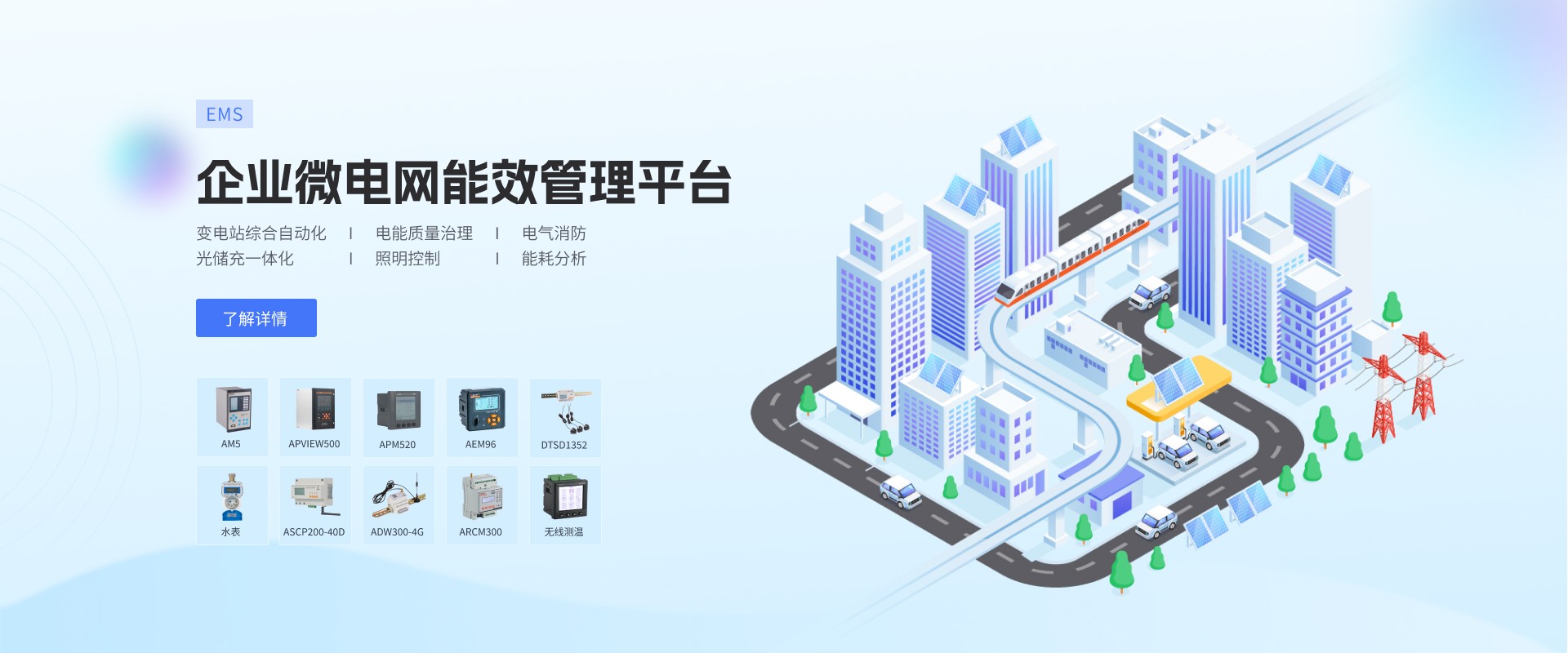
Acrel Industrial Park Comprehensive Energy Management Platform
1. Solution Architecture
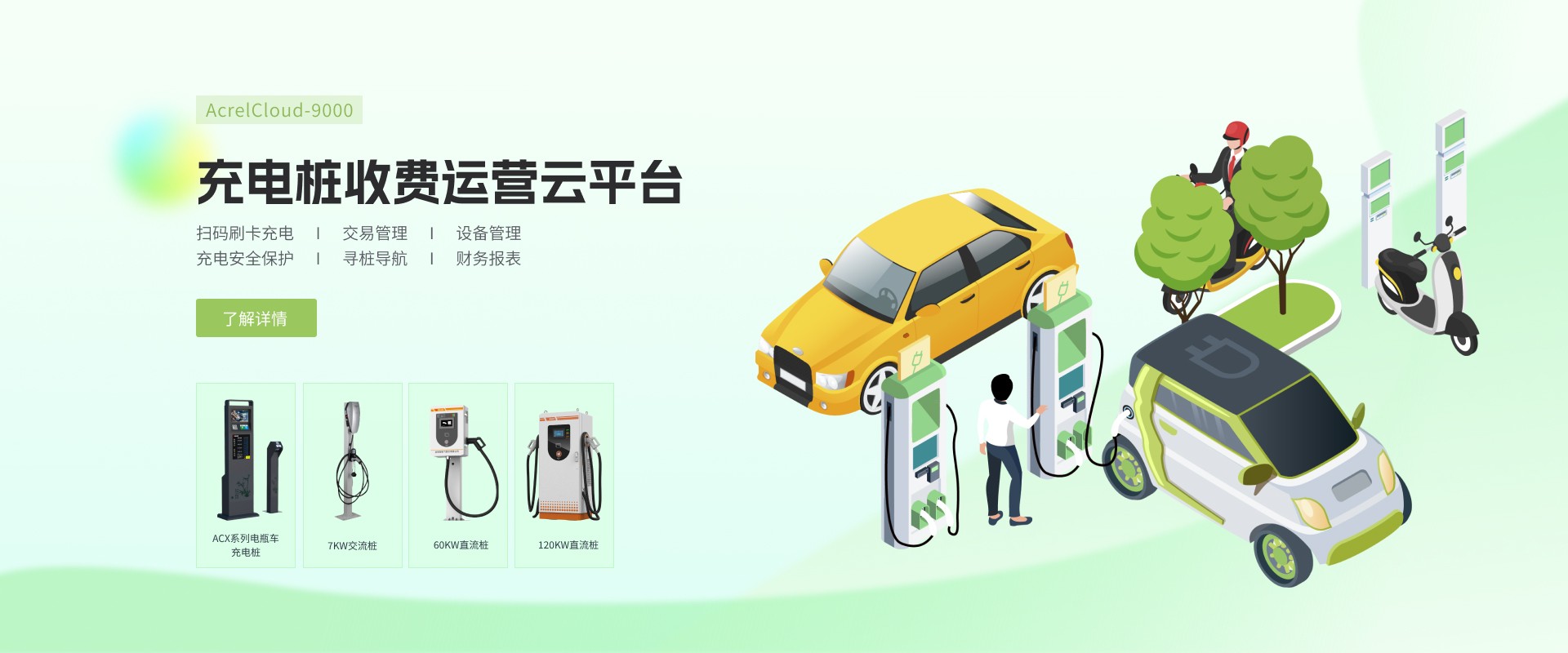
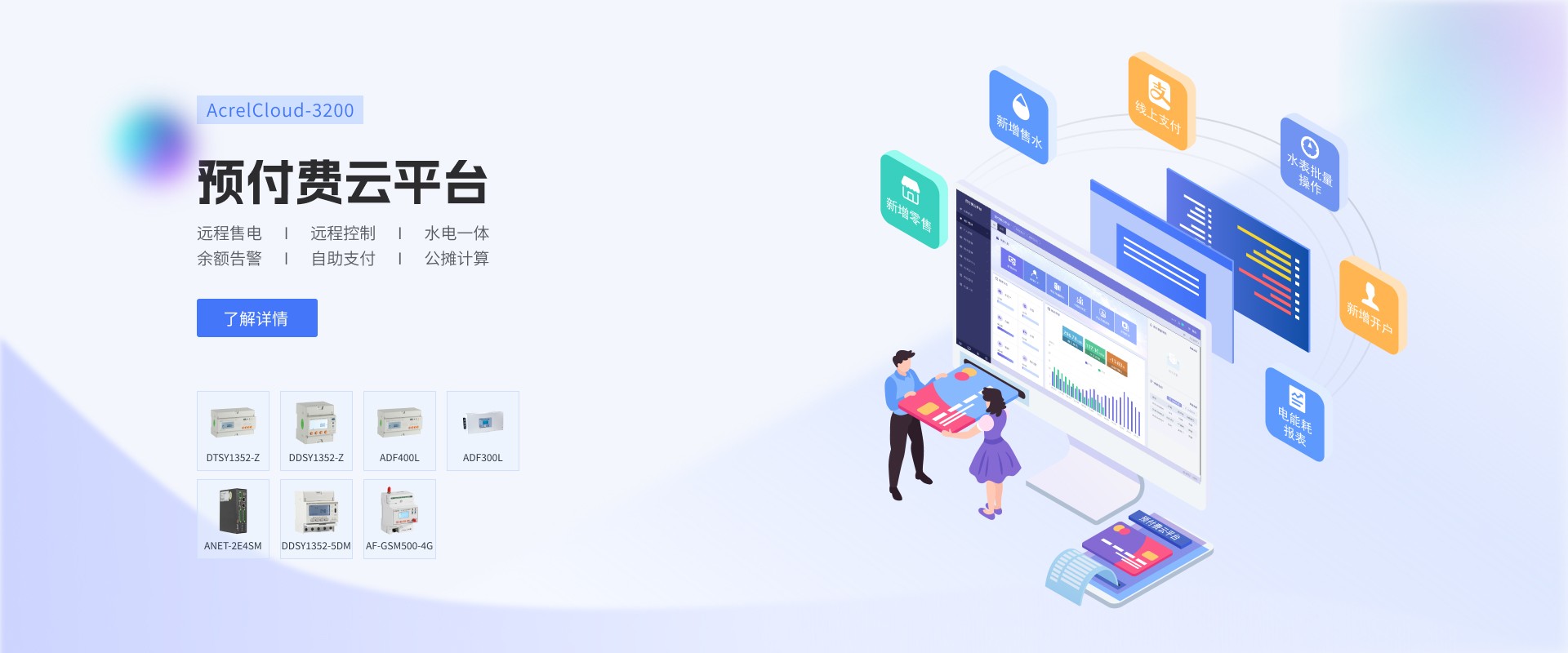
The Acrel Industrial Park Comprehensive Energy Management Platform is an IoT data platform that implements unified upstream and downstream data standards, providing energy IoT data services to internet users. It can real-time monitor various sensor devices within the park, such as multi-functional meters, pre-paid electricity meters, multi-loop meters, IoT electricity meters, IoT water meters, electric scooter charging stations, car charging stations, and streetlight controllers, ensuring the safety of energy supply within the park and enabling functions such as energy consumption analysis, energy billing, and equipment management.

2. System Features
The Acrel Comprehensive Energy Management Platform integrates five key functions: energy supply, energy management, equipment management, energy consumption analysis, and operational services. It offers a complete set of energy management and billing features for park management committees, corporate properties, chain supermarkets, system integrators, and total energy service providers.

2.1 Energy Supply
Achieve the functions of power data collection and energy operation and maintenance management in the park. Monitor power parameters of primary and secondary nodes, as well as terminal meters in the power distribution system, to enable remote signaling, measurement, and control. Develop inspection plans through the platform, perform check-ins, inspections, and defect rectification on mobile devices, and have the responsible person review and close the loop.

2.2 Energy Analysis
Achieve energy consumption monitoring for various types within the park, including electricity, water, gas, cooling, and heating. Establish a comprehensive measurement system to grasp complete energy flow and loss. Trigger an alarm when energy consumption exceeds the standard. Conduct trend and year-on-year analysis for each type of energy use. Display the flow of various energy types within the park.

2.3 Energy Fees
The platform supports multiple electricity billing methods and various collection services for fees, including rent, property management fees, and service charges.

2.3.1 Public Area Energy Consumption Allocation
The common electricity fee specifically refers to the electricity costs incurred during the operation of public facilities such as elevators, water pumps, air conditioners, and fire monitoring systems in the community. It also includes other public water and electricity costs, such as lighting in public areas. Unless otherwise agreed in the service contract of the community property management, these should be included in the collection and payment of proxy fees, with the community property management company keeping separate accounts. Then, the electricity fees should be fairly distributed based on the actual electricity expenses and the agreed-upon terms in the contract.
Under the "Notice on Reducing General Industrial and Commercial Electricity Prices" (Development and Reform Commission Price No. 500 of 2018), operators of commercial complexes and similar establishments are required to charge tenants for electricity at the national sales price. The electricity consumption and losses of common facilities are to be settled through negotiations on rent, property management fees, and service fees, or by paying electricity fees to the grid enterprise at the national sales price, with all users fairly sharing the electricity consumption based on their individual meters.
The average distribution: The calculation formula for monthly electricity expenses is: The electricity expense allocated to each household = The unit's metered electricity cost ÷ The number of households already occupied in the unit + (The number of unoccupied units × 70%)
Our country's "Property Law" Article 72 stipulates: "The owner has the right and assumes the obligation for the common parts of the building that are not exclusively owned; one may not放弃 rights while failing to fulfill obligations." Article 80 states: "The allocation of costs for the building and its附属 facilities, as well as the distribution of income, shall be as agreed upon; if no agreement is reached or the agreement is unclear, it shall be determined according to the proportion of the owner's exclusive part to the total floor area of the building."
Electricity Sharing: The electricity fee to be allocated = (Electricity consumption of a household / Total residential electricity consumption) × Allocated electricity fee.

2.3.2 Two-Tier Electricity Pricing Calculation
For transformers with a capacity of 315KVA or more, the "two-tier electricity price" system is applied. In addition to the cost for using and delivering one kilowatt-hour of electricity, a "basic electricity charge" based on the transformer's capacity must also be paid. For large industrial electricity consumption (not applicable to general commercial and agricultural electricity), the basic electricity charge calculation methods are divided into two: fixed capacity and actual demand.
As per fixed capacity: Transformer capacity * unit capacity price.
As-Needed Quantity: Actual Demand Last Month * Unit Price of Demand

2.3.3 Time-based billing
The time-of-use electricity pricing mechanism is designed based on the time value of electricity and serves as an important arrangement to guide power users to reduce peak demand and fill valley demand, ensuring the safe, stable, and economic operation of the power system. The time-of-use electricity pricing mechanism can be further divided into peak-valley electricity pricing mechanism and seasonal electricity pricing mechanism. The peak-valley electricity pricing mechanism divides a day into peak, off-peak, and valley periods, while the seasonal electricity pricing mechanism further differentiates peak, off-peak, and valley periods into summer and non-summer seasons. Different electricity price levels are set for each period, making the time-of-use electricity price levels closer to the supply costs of the power system. This fully utilizes the role of electricity price signals, guiding power users to reduce electricity consumption during peak periods and increase it during valley periods, thereby ensuring the safe and stable operation of the power system, enhancing the overall utilization efficiency of the system, and lowering the overall electricity consumption costs of society.

2.3.4 Tiered Electricity Pricing
Tiered electricity pricing, also known as progressive electricity pricing, refers to a pricing system that sets different price levels or brackets based on the average electricity consumption of households. Implementing a progressive electricity pricing for residential use can enhance energy efficiency. By segmenting electricity consumption, it enables differential pricing for niche markets, thereby improving electricity usage efficiency. On June 14, 2012, the National Development and Reform Commission announced that the residential "tiered electricity pricing" would be implemented nationwide starting July 1, 2012.

2.3.5 Line Loss Electricity Charge
Theoretical total and split tables do not match; the difference between them is the line loss. There is no fair method, as fairness is relative; people usually distribute it evenly, either by power consumption capacity or by actual usage. The first method is to bear the proportion of loss according to the amount of electricity used in each household.
The second approach apportions loss based on the proportion of electricity usage (by equipment) to the total electricity usage (by equipment); the third approach is to allocate loss based on the proportion of electricity usage by a specific company within the park. Generally, the first method is easier to implement, while the third method is relatively more equitable.
Energy Loss = Total Meter Reading - Sub-meter Total Reading
Average allocation
Loss of electricity cost = Loss of electricity / Number of sub-metering units * Electricity price
2. Allocate by capacity distribution
Loss of electricity cost = (Consumer's electricity capacity / Total electricity capacity of lower-level meters) * Loss of electricity * Electricity price
3. Allocation based on electricity consumption
Loss Electricity Cost = (Electricity Consumption of a Household / Total Electricity Consumption of Sub-metering) * Loss Electricity * Electricity Price
4. Allocate according to loss coefficient
Loss coefficient = Loss of electricity / Total metered electricity
Loss Electricity Cost = Loss Coefficient * Customer's Electricity Consumption * Electricity Price

2.3.6 Energy Adjustment Fee
Power Adjustment Fee refers to the electricity charges levied by the power supply company based on the customer's average power factor calculated from the active and reactive electricity consumption over a certain period (such as a month or a year).
For users with 100KW or more, we will implement adjustments to the electricity rate based on power factor. Users whose power factor does not meet national standards will be subject to rewards and penalties.

3. Typical Hardware


Four, closing remarks.
In the daily management of the park's properties, there are actual expenses for daily operations, power line losses, public equipment electricity usage, and maintenance of electrical equipment. Our platform not only assists properties in collecting electricity fees from enterprises and tenants in a reasonable, compliant, and timely manner, but also ensures the property's own interests by reasonably charging intermediary fees, thereby creating operational value for power supply units like the property.
