


Summary: As the scale of new energy vehicle development expands, the pain point of inconvenient charging becomes more pronounced. In the future development of the new energy vehicle industry, the contradiction of charging will far exceed that of vehicle manufacturing, making the resolution of charging issues a prominent problem for the EV industry. One key method to address the charging and energy补给 problem is high-power charging, but the construction of charging stations faces challenges such as land resource scarcity and capacity limitations. Compared to building and operating charging stations by new car manufacturing forces or third-party charging service providers, converting gas stations into charging stations is more convenient. This article mainly discusses the significance and methods of converting gas stations into charging stations.
Gas stations are easily transformed into charging stations.
In the Chinese market, quick-charge stations are generally categorized into four types: One type is constructed by State Grid Corporation of China, primarily located in highway service areas or fixed charging stations, with fewer urban outlets, and currently serving mainly buses. The second type is built by car manufacturers, the third by third-party new energy vehicle charging service companies, and the fourth involves conversions of various gas stations. Compared to others, the transformation of gas stations into quick-charge stations offers convenience and significant potential.
It's widely known that urban land is scarce, especially in first-tier cities, where the demand for charging is often high. With a widespread network of gas stations already having land resources along key transportation routes, the development of fast-charging technology has made recharging speeds increasingly rapid. For electric vehicle owners, the habit of refueling at gas stations they've cultivated will continue in the era of electrification, now facilitated by these stations. According to calculations by CITIC Securities, the long-term market space for the charging industry reaches over 100 billion yuan. Once the majority of domestic gas stations successfully transform into fast-charging stations, the impact will be significant.
In 2022, China's total number of gas stations reached 115,000, with the majority capable of conversion to charging stations. In fact, both China National Petroleum Corporation (CNPC) and China Petrochemical Corporation (Sinopec) are highly proactive in this transformation. For instance, both companies have indicated in their financial reports that with the development of the new energy sector, they have decided to embrace the new trend of development, transforming their gas stations from mere retail fuel businesses into comprehensive energy service providers. Sinopec has stated that by 2025, they aim to establish fast-charging stations at over 5,000 gas stations, with over 2,000 stations already built. CNPC, on the other hand, established Sinopec Green Energy New Energy Co., Ltd., targeting the charging and swapping market, in the latter half of 2022.
With the acceleration of charging speeds, fast-charging stations share many similarities with gas stations, making the transition to fast-charging stations quite seamless. Moreover, in ultra-large cities like Shanghai and Beijing, the sales of gas stations are decreasing, necessitating a transformation. Fast-charging stations represent a significant direction for this shift.
Issues Faced in the Transformation of Gas Stations into Fast-Charging Stations
One of the issues with building fast-charging stations is the scarcity of land resources. However, if gas stations transition to fast-charging stations, this problem can be easily resolved. What other obstacles remain?
Currently, the transformation of gas stations into fast-charging stations in our country is still just a trend and has not seen large-scale development due to the key constraint of economic interests. The cost and efficiency of fast-charging are not yet sufficient to support the development of gas stations. However, with the increasing number of fast-charging vehicles, within three to four years, it will be completely capable of supporting the enhancement of corporate profitability. It can be predicted that in the process of new energy vehicles gradually replacing fuel vehicles, most gas stations will be able to rapidly transform into fast-charging stations.
The challenge of transforming gas stations into fast-charging stations lies in the power source issue. The power demand for fast charging poses a significant challenge for many enterprises' power distribution networks, especially during peak electricity consumption periods. The current solution is to equip charging stations with a photovoltaic, storage, and charging system. This system, known as "photovoltaic storage," consists of a power supply and distribution network comprising municipal electricity, distributed photovoltaics, energy storage systems, charging equipment, and conventional loads. The key to this system is the involvement of energy storage, enabling fast-charging stations to implement peak shaving and valley filling within local microgrids, and effectively address the impact of high loads on local distribution networks, resolving the contradiction of power expansion and capacity increase for charging stations.
Ankorui Charging Solutions
Traditional gas station power loads are minimal, primarily consisting of fuel pump operation, image lighting, and lighting. Typically, the load of a single traditional gas station does not exceed 50kW and is powered by a 0.4kV supply. However, if converted into a fast-charging station, the load could increase by dozens of times. If fully reliant on the grid, there are two main concerns: first, whether the local power department can meet the supply requirements, which would impose a significant impact on the regional power grid; second, the high costs would reduce profit margins. By combining municipal power, photovoltaic, and energy storage, the supply capacity can be expanded, significantly reducing electricity costs, and enhancing the operational flexibility of the charging station.
The charging station power supply system primarily provides power to charging equipment, consisting of primary equipment (such as switch cabinets, transformers) and photovoltaic components, photovoltaic inverters, and energy storage devices, as shown in Figure 1. The charging equipment and photovoltaic, energy storage devices are the core components of the entire charging station's electrical system. Generally, charging equipment uses high-power DC charging stations, while energy storage devices can be in the form of energy storage containers or distributed storage cabinets. They can be expanded in phases according to the situation, enabling functions such as fast battery charging, peak shaving, valley filling, photovoltaic charging, surplus electricity online, grid balancing, and emergency power supply. This method, in addition to its application at gas stations, can also be extensively used in residential communities, commercial buildings, industrial parks, and more.

Figure 1: Charging Station with PV Storage and Charging Mode
3.1 Charging Equipment
The Ankerui AEV200-DC160S integrated non-vehicle DC charger is a DC charger that complies with the national standard charging interface and delivers an output power of 160kW, meeting the requirements for rapid charging. The charging station features a high-efficiency conversion module, achieving a conversion efficiency of up to 96% during charging and passing the national standard test in 2018. The equipment is equipped with a fault diagnosis system and supports remote upgrades, enabling remote resetting of the device by the platform, reducing operational costs. It also has a standby power-off function, with multiple protections, including overcurrent, overvoltage, leakage, short circuit, surge protection, and grounding continuity detection. The performance parameters are shown in Table 1.

Figure 2 AEV200-DC160SS Integrated Non-Portable DC Charging Station

Table 1: Performance Parameters of AEV200-DC160S Integrated Non-Carried DC Charger
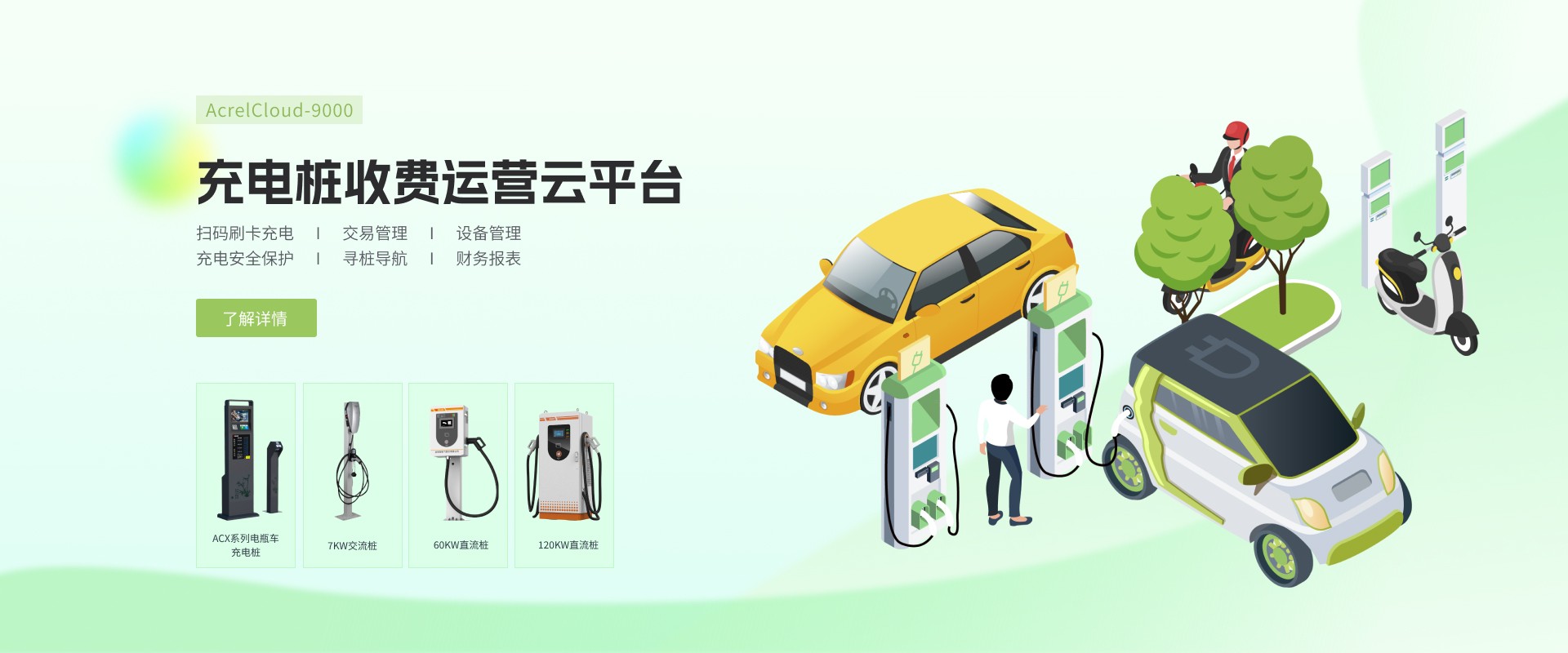
In addition to the 160kW fast DC charging stations, the company offers 120kW, 80kW, 60kW DC charging stations, and a 7kW AC charging station to meet various charging needs. The selection is as shown in Table 2.


Table 2: Ankeray Charging Station Selection Table
3.2 Charging Operation and Management Platform
The Ankelei Charging Operation and Management Platform is an intelligent charging facility management system based on IoT and big data technology. It enables monitoring, dispatching, and management of charging stations, enhancing utilization rates and charging efficiency, and improving user charging experience and service quality. Users can pre-book charging sessions through the APP or mini-program, avoiding long queues at charging stations. It also provides more accurate charging demand data for stations, facilitating subsequent scheduling and management. The platform allows for real-time monitoring of parameters such as power, voltage, and current, promptly identifying and addressing faults and anomalies. It controls and manages the power of charging stations to ensure they charge within a reasonable power range, preventing excessive load on the power grid.
The platform not only monitors charging桩 but also centrally supervises and coordinates the photovoltaic power generation system, energy storage system, and power supply system of charging stations, preventing overloading and enhancing the operational reliability of charging stations while reducing operational costs. The system architecture is illustrated in Figure 3.

Figure 3: Charging Station Operation and Management Platform System Architecture
Large Screen Display: Features data on charging station equipment statistics, usage rate rankings, operational statistics charts, carbon emission reduction statistics, and more.

Figure 4: Large Screen Display Interface
Site Monitoring: Features include real-time status of devices, device list, device logs, and device status statistics.

Figure 5: Site Monitoring Interface
Equipment Monitoring: Displays real-time device information, auxiliary equipment status, real-time device curves, associated order information, charging power curves, etc.

Figure 6: Equipment Monitoring Interface
Operational Trend Statistics: Demonstrates features such as operational information inquiries, site comparison curves, monthly, quarterly, and annual reports, as well as site comparison lists.

Figure 7: Operations Trend Interface
Revenue Inquiry: Offers features such as revenue summaries, actual revenue reports, revenue trend curves, and payment method proportions.

Figure 8: Revenue Inquiry Interface
Fault Analysis: Offers features such as fault summary, fault status pie chart, fault trend analysis, and fault type pie chart.

Figure 9: Fault Analysis Interface
Order Records: Offering real-time and historical order inquiries, order termination, order details, order export, carrier receivables information, charging details, transaction record inquiries, and recharge balance details.

Figure 10: Order Inquiry Interface
Conclusion
As it was widely believed that gas stations and similar businesses belong to traditional industries, with the gradual phase-out of fuel vehicles, these stations were thought to be on the decline. However, with the rapid development of fast charging, gas stations have transformed into fast-charging stations, embracing the era of new energy vehicles. They may take a significant position in the new energy sector, successfully transitioning into high-growth enterprises. This is more promising than the current new energy vehicle manufacturing, which is highly anticipated.
