

[Summary]:With the rapid development of industrial and IoT technology, intelligent lighting control systems have gradually become an indispensable part of modern factory facilities. Traditional lighting systems often suffer from high energy consumption,不便的管理, and poor flexibility. Intelligent lighting control systems, through automated and intelligent management methods, not only significantly improve energy efficiency but also enhance the comfort and safety of the work environment. This article will discuss the application of intelligent lighting control systems in factories and their带来的 advantages.
[Keywords]:Smart Lighting; Lighting Systems; Factory Lighting
Introduction
In modern industrial production, the factory building serves as the core operational space, and the efficiency of its lighting system is crucial. Traditional factory lighting often relies on conventional lamps and simple control methods, which not only struggle to meet the precise needs for brightness and differentiated area lighting in complex production environments, but also tend to consume significant amounts of energy. With the rapid development of technology, intelligent lighting control systems have emerged, bringing about a new revolution in factory lighting. Thanks to advanced sensor technology, automation control, and energy-saving features, these systems precisely meet the dual demands of efficient lighting and energy-saving management in factories. They have shown immense potential in improving the quality of the production environment and reducing operating costs, and are increasingly becoming a key consideration in modern factory construction and renovation.
1. Smart Lighting Control System
1.1 The intelligent lighting control system typically consists of the following components:
Sensors: Including photoelectric sensors, human infrared sensors, and temperature and humidity sensors, which are used for real-time monitoring of environmental changes.
Controller: The central control unit, responsible for processing sensor data and issuing control commands.
Actuators, such as dimmers and switches, adjust the brightness and on/off status of lighting equipment according to the controller's instructions.
Telecommunications Network: Connects various components through wired or wireless means to facilitate data transmission and the issuance of control commands.
User Interface: Includes mobile apps, computer software, or touchscreens, for convenient system setup and monitoring.
1.2 Energy Conservation and Consumption Reduction
Factory buildings are typically large with numerous lighting fixtures, leading to the common issue of "always-on" lights in traditional systems, resulting in significant energy waste. Smart lighting control systems, equipped with photo-sensing sensors and human infrared sensors, can automatically adjust the brightness and on/off status of lighting fixtures based on natural light intensity and human activity. For instance, during daylight hours with ample natural light, the system can automatically dim or turn off some lighting fixtures; at night or in unoccupied areas, the system can automatically turn off the lights, significantly reducing energy consumption.
Increased efficiency by 1.3%
A well-lit environment is crucial for workers' efficiency and safety. Smart lighting control systems can automatically adjust lighting brightness and color temperature according to the different needs of work areas, providing the most suitable light environment. For instance, in precision machining areas, the system can provide high-brightness, high-color-rendering lighting to ensure workers can clearly see every detail; in rest areas, the system can offer soft lighting to help workers unwind and relax.
1.4 Enhanced Security Management
The intelligent lighting control system can be integrated with other safety systems in the factory (such as surveillance and fire systems) to enhance overall safety management. For instance, in the event of a fire, the system can automatically turn on all lighting fixtures to ensure well-lit and visible evacuation routes; during nighttime or when unattended, the system can simulate the presence of people by using timed switches or motion sensors, thereby acting as a deterrent against theft.
1.5 Simplified Management and Maintenance
Traditional lighting systems are complex to manage and have high maintenance costs. Smart lighting control systems greatly simplify management and maintenance through centralized control and remote monitoring. Managers can monitor the operational status of lighting equipment in real-time via a user interface, allowing for the timely detection and resolution of faults. Additionally, the system records energy consumption data and equipment operation for data-driven energy savings optimization and maintenance support.
1.5 Flexibility and Scalability
The intelligent lighting control system boasts high flexibility and scalability, allowing for customization and expansion based on the actual needs of the factory. For instance, when expanding or renovating the factory, simply adding the corresponding sensors and control devices can easily expand the system's functionality. Moreover, the system can be integrated with other intelligent systems (such as HVAC systems, security systems) to achieve a higher level of intelligent management.
2 Application Cases
A major manufacturing company has introduced an intelligent lighting control system in its newly constructed factory. The system, equipped with photoelectric sensors and human infrared sensors, automatically adjusts lighting equipment. In operation, the company's energy consumption has been reduced by 30% compared to traditional lighting systems, while workers' efficiency has increased by 15%, with no safety incidents caused by lighting issues. Additionally, the centralized control and remote monitoring features of the system have made management and maintenance more convenient and efficient.
AnkoRui Smart Lighting Control System
3.1 Overview
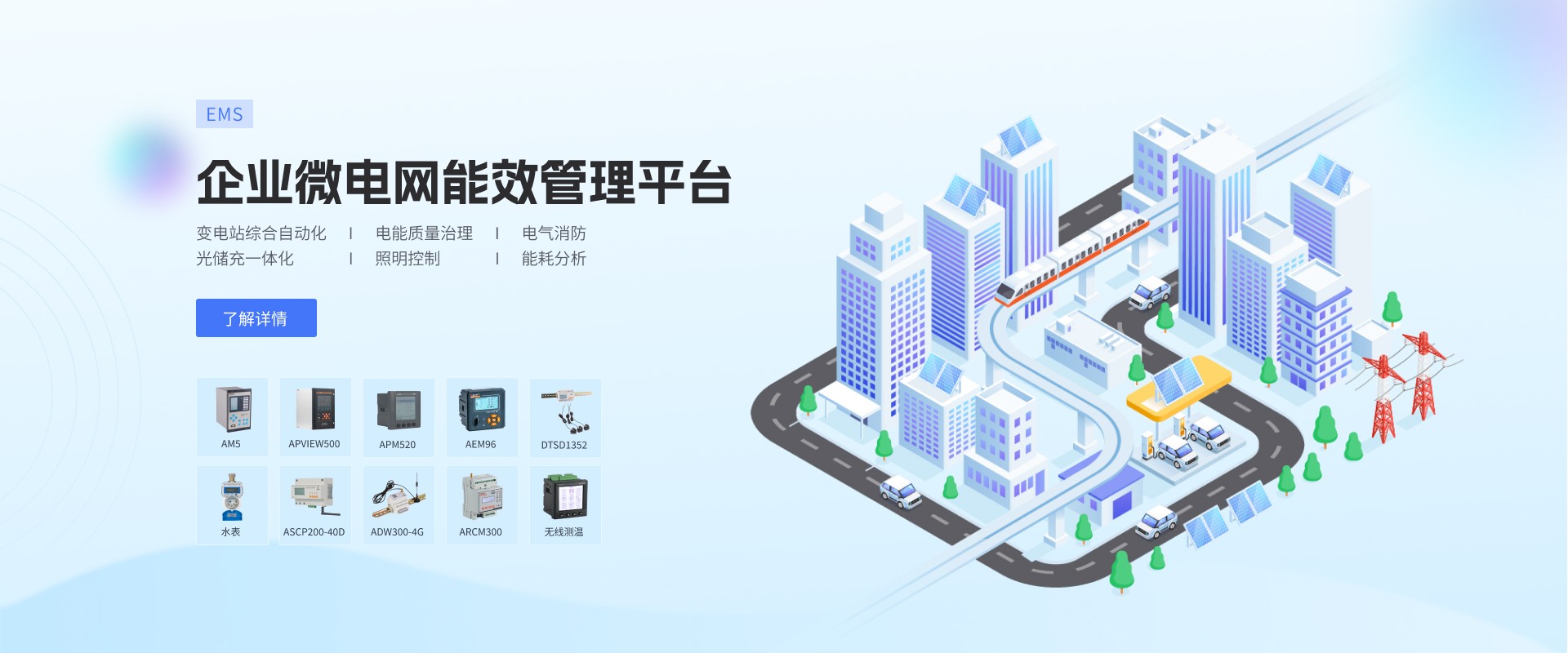
The ALIBUS intelligent lighting products utilize RS485 bus technology, offering mature, reliable, and secure performance. The switch driver features independent operation capabilities, suitable for small to medium-sized projects. The modular design allows for flexible expansion and connection, with预留 I/O ports and Modbus interfaces, enabling data exchange with the AcrelEMS corporate microgrid management cloud platform.
3.2 Application Locations
Suitable for lighting control needs in various smart communities, hospitals, schools, hotels, as well as large public infrastructure projects such as sports venues, airports, tunnels, and train stations.
3.4 System Feature
1) Real-time detection and display of the online status of each module, feedback on the switch status of the on-site controlled circuit, and monitoring interface browsing by floor and circuit list layout.
2) Fault alarms occur when there is a module offline, a gateway device goes offline, or when there is a discrepancy between the status feedback and the下发 control commands. Fault alarm information is then recorded and displayed on the interface.
3) Individual circuit controls for lighting can be achieved; each module and floor has corresponding module control switches and floor control switches, allowing for either single module or entire floor control activation.
4) The switch driver supports zero-crossing triggering function, with load (lighting) switching operations only occurring at the zero-crossing point of AC power; this effectively reduces electromagnetic interference and impact on the power grid, thereby extending the lifespan of lighting fixtures and control devices.
Each lighting circuit can be pre-set for a power failure state, so when the lighting power is interrupted, the switch driver automatically switches to the pre-set power failure state; ensuring that the lighting switch state is determined and controllable upon re-powering.
6) By dragging the dimming control, lighting equipment can be adjusted from 0% to 100%. It allows for dimming control of individual lighting circuits. The master dimming control can dim lighting circuits within a module or across multiple circuits, with the status of the on-site switches indicated by the on/off state of icons.
7) Click the scene control to toggle the corresponding scene settings on or off. The software interface displays different scene modes and features, with icons lighting up or dimming to indicate whether the scene is open or closed.
8) Set the timing schedule, confirm the time point, and then configure the action to be executed at that event point. Set the lights to turn on or off at the specified time.
9) The system can automatically calculate daily sunrise and sunset times using pre-set local latitude and longitude information; it controls lighting switches based on an astronomical clock, enabling lights to turn on at sunset and off at sunrise.
All timing control plans can be downloaded and saved to the driver module; in the event of an upper machine system failure or module offline, the driver module can utilize its built-in RTC clock to maintain the normal execution of timing control plans, ensuring there is no impact on daily lighting control effects.
11) The system architecture is a distributed bus structure; each component within the system operates independently without reliance on other components; and the functionality of the components can be diversified through program settings.
预留 BA or third-party integration platform interfaces, utilizing Modbus, OPC, and similar methods.
4. Closing Remarks
The application of intelligent lighting control systems in factories not only significantly reduces energy consumption and enhances work efficiency but also strengthens safety management and simplifies maintenance tasks. As technology advances and costs gradually decrease, intelligent lighting control systems are expected to be widely adopted in more factories, providing robust support for the intelligence and sustainable development of industrial production.
In the future, as artificial intelligence and big data technologies continue to evolve, intelligent lighting control systems will become more intelligent and personalized. For instance, the system can automatically adjust lighting strategies by learning workers' behavioral habits; by analyzing energy consumption data, it provides more precise energy-saving suggestions. Additionally, intelligent lighting control systems can integrate with more smart devices and systems, building a more intelligent and efficient industrial ecosystem.
Reference:
Ankorui Enterprise Microgrid Design and Application Manual. 2022 May Edition.
Application of Smart Lighting Control Systems in Factory Buildings.
Author Introduction: Li Xuewei, female, currently employed at Ankelei Electrical Co., Ltd., primarily focusing on the field of intelligent lighting control systems. Phone: 17821733155.
