


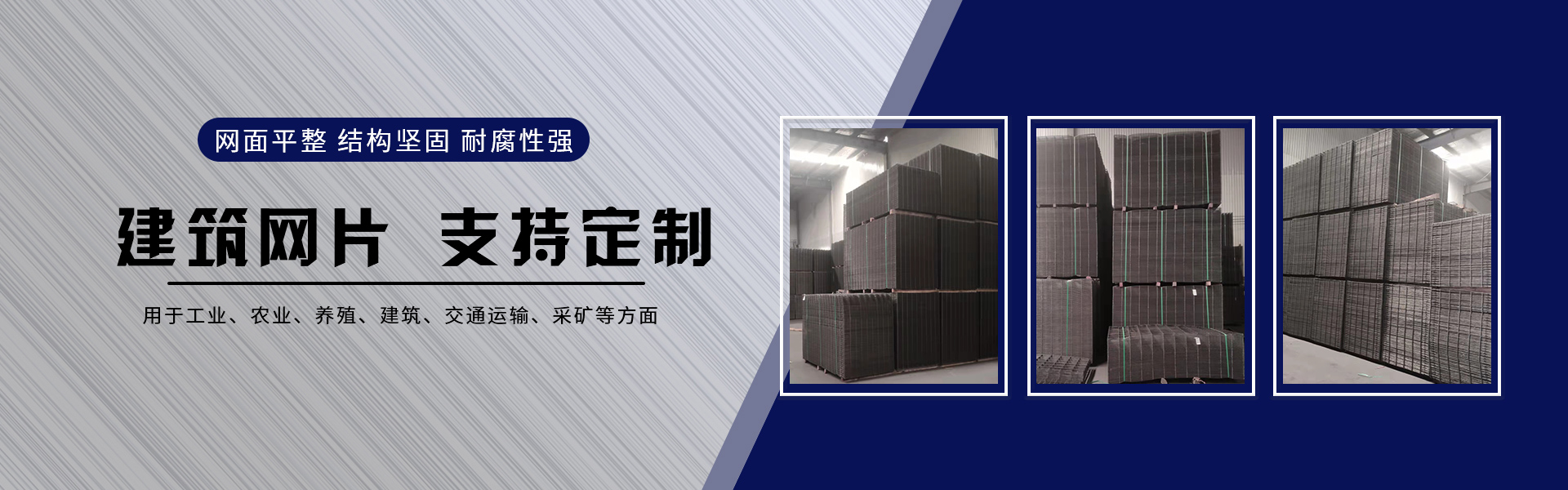

The application of steel mesh in bridge deck cement concrete construction: The minimum diameter and maximum spacing of the cold-rolled ribbed steel bars used in reinforced concrete should comply with the regulations of the current industry standard "Design Code for Highway Cement Concrete Pavement" JTG D40. When cold-rolled ribbed steel bars are selected, the diameter of the steel bars should not be less than 8mm, the longitudinal spacing of the steel bars should not exceed 200mm, and the transverse spacing should not exceed 300mm. The longitudinal and transverse steel bars of the welding mesh are preferably of the same diameter, and the thickness of the protective layer of the steel bars should not be less than 50mm. The welding mesh used for reinforcing the reinforced concrete pavement can be implemented in accordance with the relevant regulations for the welding mesh used in the reinforced concrete pavement.
When it's impossible to set a force transfer rod in the expansion joint where the concrete pavement connects with a fixed structure, a double-layer cold-rolled ribbed steel wire welding mesh can be equipped at the end of the adjacent structure's slab; or gradually increase the slab thickness by 20% within a planned area of approximately 6 to 10 times the slab thickness.
When the concrete pavement connects with a bridge and a transition slab is set at the bridge head, the steel mesh manufacturer advises that a reinforced concrete transition slab with a length of 6-10mm should be placed between the transition slab and the concrete surface layer. When the bridge is diagonal, some of the sharp angles of the reinforced concrete panels should be reinforced with a cold-rolled ribbed steel wire焊接 mesh.
(3) When there is a box-like structure crossing under the concrete surface layer, with a distance between the top of the structure and the bottom of the surface layer less than 400mm, or embedded in the sub-layer, a double-layer cold-rolled ribbed steel wire mesh should be installed within the concrete surface layer at the top width and both ends of the structure. The upper layer cold-rolled ribbed steel wire mesh should be placed at a distance of 1/4 to 1/3 of the thickness from the top and bottom surfaces of the surface layer.
(4) When circular tubular structures cross horizontally beneath the concrete surface layer, and the distance from the top of the structure to the bottom of the surface layer is less than 1200mm, a single-layer cold-rolled ribbed steel焊接 mesh should be installed within the concrete layer at both ends of the structure. The mesh should be positioned at 1/4 to 1/3 of the thickness from the top of the surface layer.
What are the primary applications of bridge reinforcing mesh?
Since the 20th century, steel welding mesh has been widely used in the construction industry. The steel mesh manufacturers point out its application scope: bridges, subways, highways, airport runways, high-rise building floors, dam foundations, and the construction of reinforced concrete components for ports.
Primarily used for bridge deck paving, old bridge deck renovation, pier crack prevention, etc. Quality inspections on over a thousand bridges across the country have indicated that the use of reinforced steel welding mesh significantly improves the quality of the bridge deck paving layer, with the thickness of the protective layer meeting standards over 97%. The level of flatness on the bridge deck is enhanced, with almost no cracks, and paving speed is increased by over 50%, reducing the cost of bridge deck paving construction by approximately 10%.
