


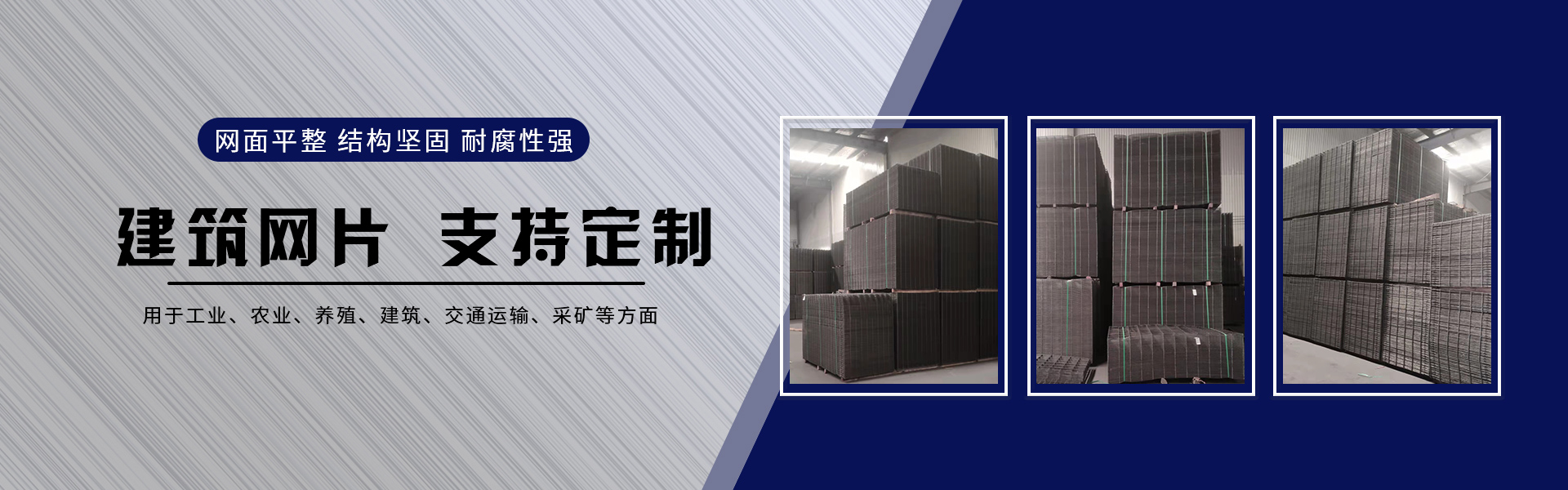

Construction Notes for Reinforcement Mesh and Mesh Sheets. In residential construction, the cast-in-place slabs often use the flat lapping method for reinforcement mesh installation. During construction, attention should be paid to ensure that one of the two mesh sheets in the lapping area has a transverse reinforcement lap length that meets the standard requirement of 1.3 times and should not be less than 300 millimeters.
When a mesh is joined without a main reinforcing bar in the junction area, the overlap length should not be less than 20d, and it should not be less than 200 millimeters. For the double-sided reinforced mesh overlap, the overlap should be set beyond 1/4 of the clear span from the beam edge, with the overlap length not less than 30d, and not less than 250 millimeters.
Reinforcement mesh sheets do not overlap; the distance between the two sheets is the distance of the reinforcing steel in that direction. When laying, the ends of the reinforcement mesh sheets are directly anchored to the beam to ensure the anchoring length. For the edge boards of cast-in-place floor slabs and ceilings, for slabs with circular beams, the reinforcement mesh should meet a shorter anchoring length in the beam, and if the edge beam width is insufficient for the anchoring length, it can be bent to a 90-degree angle. The bending point is 90 degrees; for slabs without circular beams, the length of the welding wire reinforcement extending into the support should not be less than 110 millimeters, and there should be a transverse reinforcement or a downward 90-degree bend of the upper tensile reinforcement at the end of the mesh to meet the anchoring requirements. For cold-rolled ribbed reinforcement mesh installed on slabs with a high difference between the top and bottom, if the high difference is greater than 30 millimeters, the surface mesh should be broken at the high difference, and separately anchored into the beam and wall, with the anchoring length meeting the standard requirements.
Field equipment for reinforcing mesh, choose to use tie and overlap and fixation, to prevent on-site welding. Pre-embedded pipes, electrical conduits, junction boxes, etc., embedded in the plate, are required to use tie, to prevent spot welding fixation.
When placing orders with manufacturers, it is essential to provide the capability for large-scale hoisting to ensure the weight of the mesh packaging is taken into account during the factory's packaging process, thus avoiding unnecessary inconvenience at the construction site.
On-site hoisting of steel mesh requires the use of specialized hoisting equipment and methods (such as wire ropes, shackles, etc.), to prevent direct hoisting of the steel mesh. This is to avoid accidents caused by excessive packaging weight, which may lead to welding failure of the mesh, resulting in product damage and personal injury. Special attention must be given to not having personnel standing below during the hoisting of steel mesh panels and aerial work. Proper methods should also be employed to protect the products during on-site storage, to prevent deformation of the steel mesh panels, cracking of welding points, and rusting during storage.
