
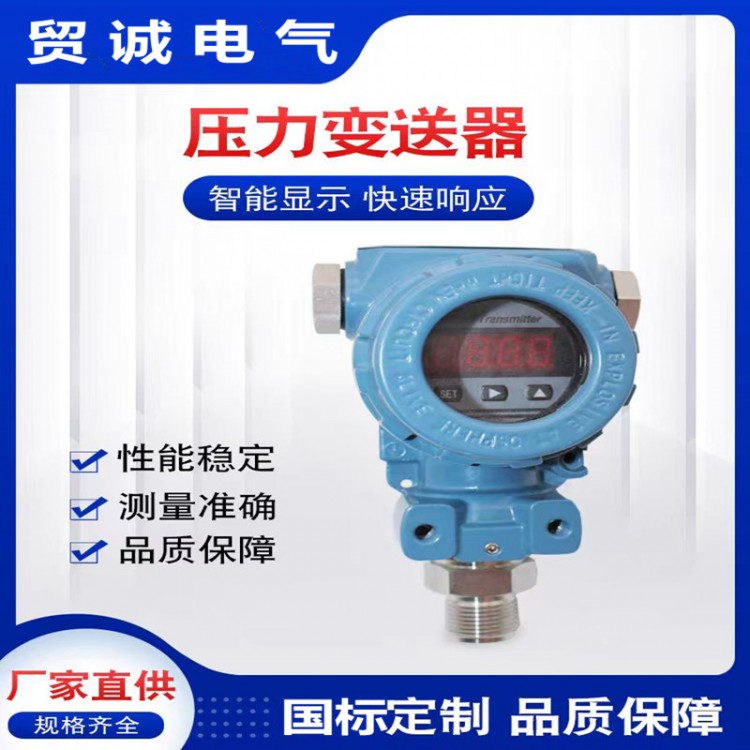
 Transmitter with Remote Transmission, Model 3351DP/GP Vacuum Pressure Sensor
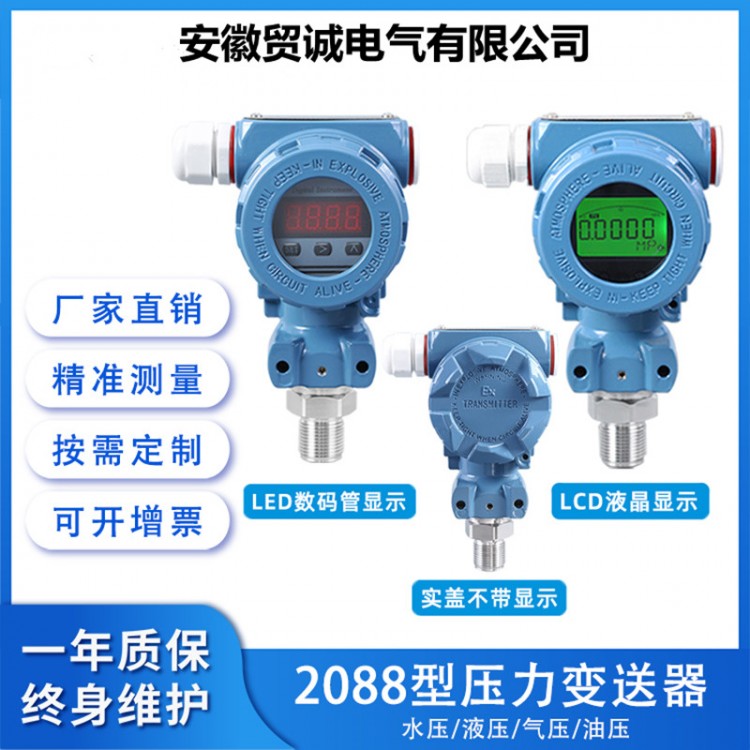 Diffused Silicon Transmitter 2088 Smart Differential Pressure Transmitter, 0-6 MPa High Temperature Explosion-Proof with Display
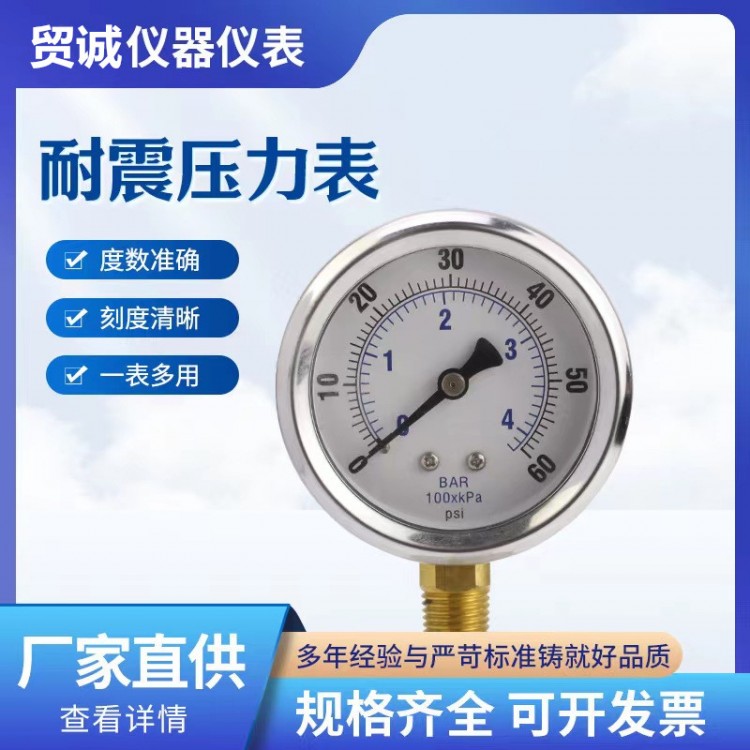 YN-60/YN-100/ZT General Type Vibration-Resistant Pressure Gauges
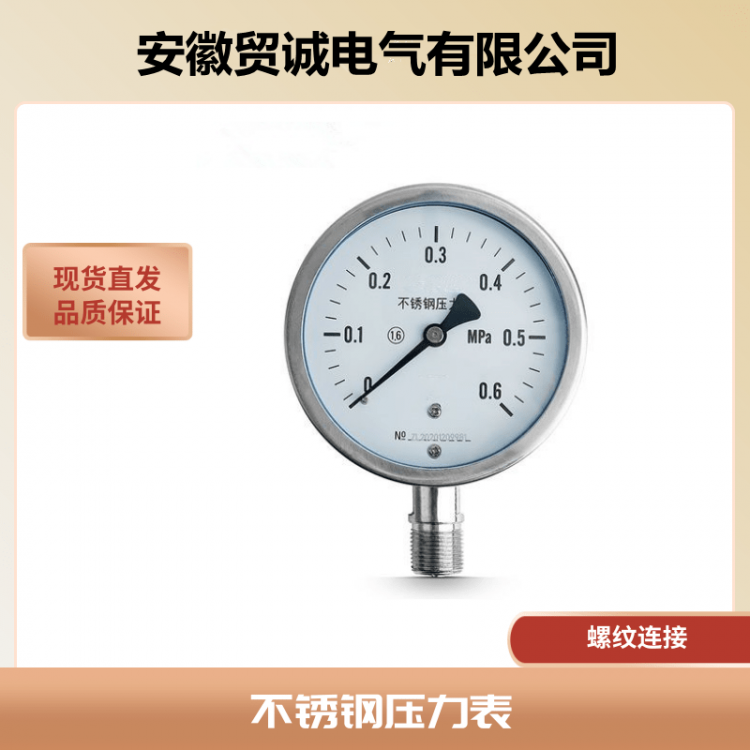 YXC-100 Magnetic-Assisted Electrical Contact Pressure Gauge, Negative Pressure Vacuum Gauge
Product Details







产品Price 2.90/Rice
最小起订Quantity:1 Rice 供货总Quantity: 10000 Rice


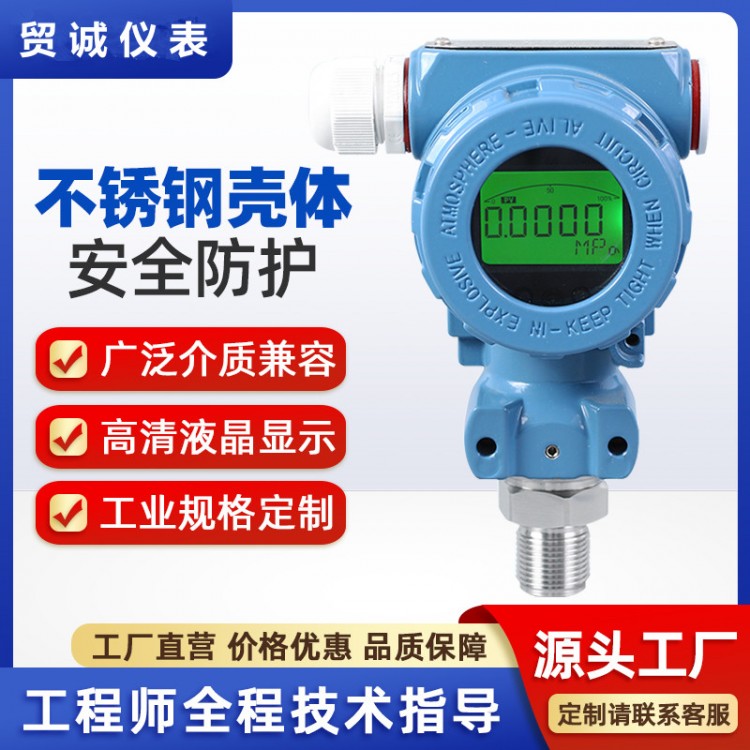 Maocheng Instrument Pressure (including Negative Pressure) Transmitter 3351GP High-Precision Instrument
¥1060.00
Maocheng Instrument Pressure (including Negative Pressure) Transmitter 3351GP High-Precision Instrument
¥1060.00
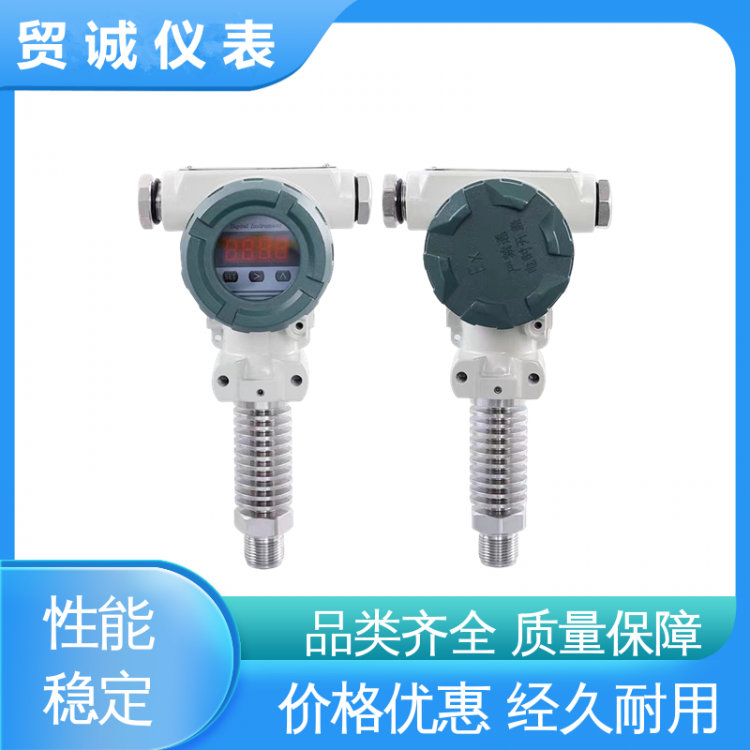 3051 Pressure Transmitter with Hart Protocol Local Display High Precision Sensor
¥1120.00
3051 Pressure Transmitter with Hart Protocol Local Display High Precision Sensor
¥1120.00
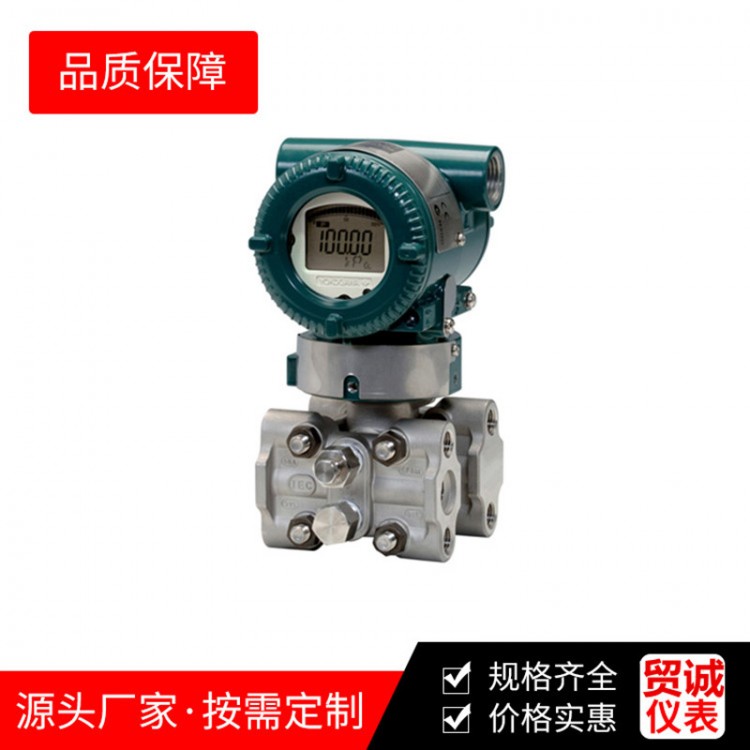 High-Temperature Pressure Transmitter 3051H Digital Display Explosion-Proof 4-20mA Pressure Sensor
¥1380.00
High-Temperature Pressure Transmitter 3051H Digital Display Explosion-Proof 4-20mA Pressure Sensor
¥1380.00
K-Type Thermocouple Compensation Wire KX-HS-YVR-2*1.0 Glass Fiber Cable; Section 1: Principle of Compensation Wires Compensating wires, which have thermoelectric properties similar to thermocouple wires within a certain temperature range, are called compensating wires for thermocouples. According to the intermediate temperature rule for thermocouples, the total electromotive force value of the thermocouple temperature measurement circuit is only related to the temperatures of the hot junction and the reference junction, and is not affected by changes in the intermediate temperature. Therefore, compensating wires that match the thermocouple material can be used to replace the expensive thermocouple material that needs to be extended, extending the reference junction from the thermocouple terminal box to the instrument terminal, and compensating for the original reference junction temperature with the compensating wire. In addition to reducing measurement errors, compensating wires offer the following advantages: they can improve the physical and mechanical properties of the thermocouple temperature measurement circuit, such as using multi-strand cores or small-diameter compensating wires can increase the flexibility of the circuit, making connections easier and more shielded against external interference; they can also reduce the cost of the measurement circuit. II. Compensation Wire Classification Extended and compensating types are differentiated based on principle. The nominal chemical composition of the alloy wire in the extended type is identical to that of the thermocouple it is paired with, hence the thermoelectric potential is also the same, indicated by "X" in the model. The compensating type has a different nominal chemical composition from the thermocouple it is paired with, but within its operating temperature range, the thermoelectric potential is nearly the same as the nominal value of the thermocouple's thermoelectric potential, indicated by "C" in the model. In terms of compensating accuracy, there are general-grade and precision-grade. The precision-grade error after compensation is generally only half that of the general-grade, commonly used in high-precision measurement applications. For example, the compensating wires with S, R scales have a precision-grade tolerance of ±2.5℃, and a general-grade tolerance of ±5.0℃; for K, N scales, the precision-grade tolerance is ±1.5℃, and the general-grade tolerance is ±2.5℃. In the model, the general-grade is not marked, while the precision-grade is indicated by adding an "S". In terms of operating temperature, general-use types have an operating temperature of 0 ~ 100℃ (some are 0 ~ 70℃), while heat-resistant types have an operating temperature of 0 ~ 200℃. Additionally, compensating wires can be categorized by the number of cores (single-core or multi-core, soft wire), by whether they have a shielding layer (standard or shielded types), and there are also compensating wires specifically designed for explosion-proof circuitry. III. Several Issues in Application 1. Matching Compensation Wires with Thermocouples: Compensation wires of various types can only be paired with thermocouples of the same type. Otherwise, there may be undercompensation or overcompensation. The thermal electromotive force (EMF) values required for commonly used thermocouples at 100℃ and 200℃ are listed in Table 1: Table 1 Thermal EMF values of commonly used thermocouples at 100℃ and 200℃. Thermocouple Name Thermocouple Type Number Reference End at 0℃ Thermoelectric Potential mV at 100℃ 200℃ Platinum Rhodium 10—Platinum S 0.646 1.441 Platinum Rhodium 13—Platinum R 0.647 1.469 Platinum Rhodium 30—Platinum Rhodium 6 B 0.033 0.178 Nickel Chrome—Nickel Silicon K 4.096 8.138 Nickel Chrome Silicon—Nickel Silicon N 2.774 5.913 Nickel Chrome — Nickel Copper E 6.319 13.421 Iron — Nickel Copper J 5.269 10.779 Copper — Nickel Copper T 4.279 9.288 When using compensation wires with a K degree of accuracy with thermocouples of an N degree of accuracy, overcompensation will occur, showing a higher temperature reading; conversely, using compensation wires of an N degree of accuracy with thermocouples of a K degree of accuracy will result in undercompensation, showing a lower temperature reading. K-type temperature measuring wire KX-HS-YVR-2*1.0 fiberglass compensating cable


Phone Consultation
QQ Service