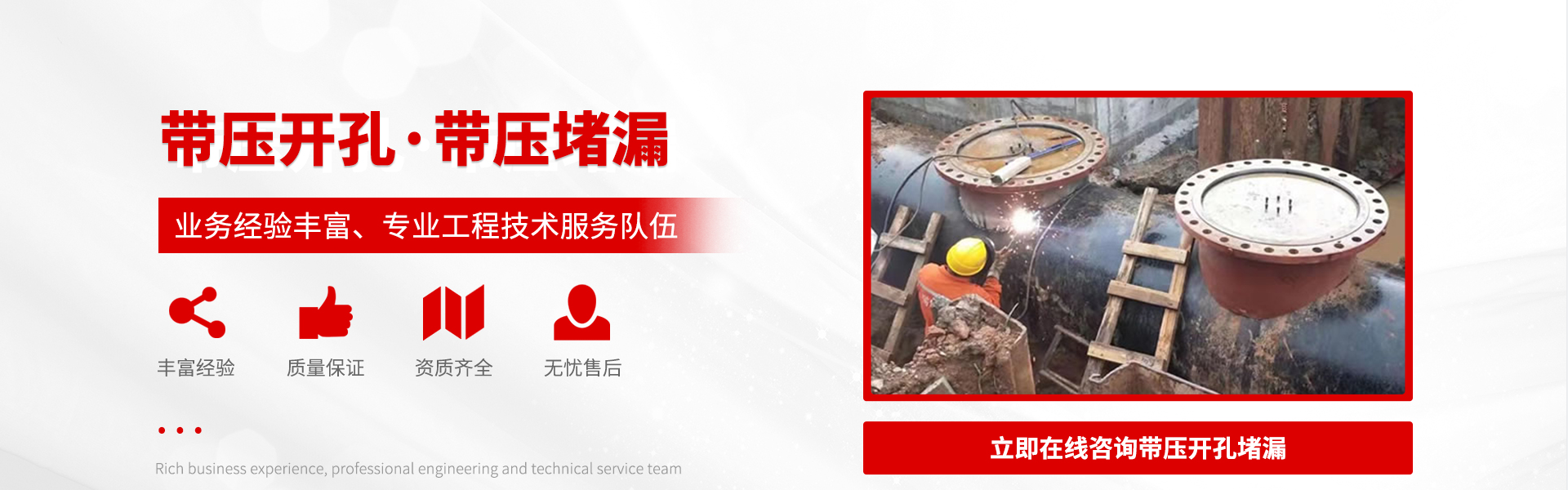


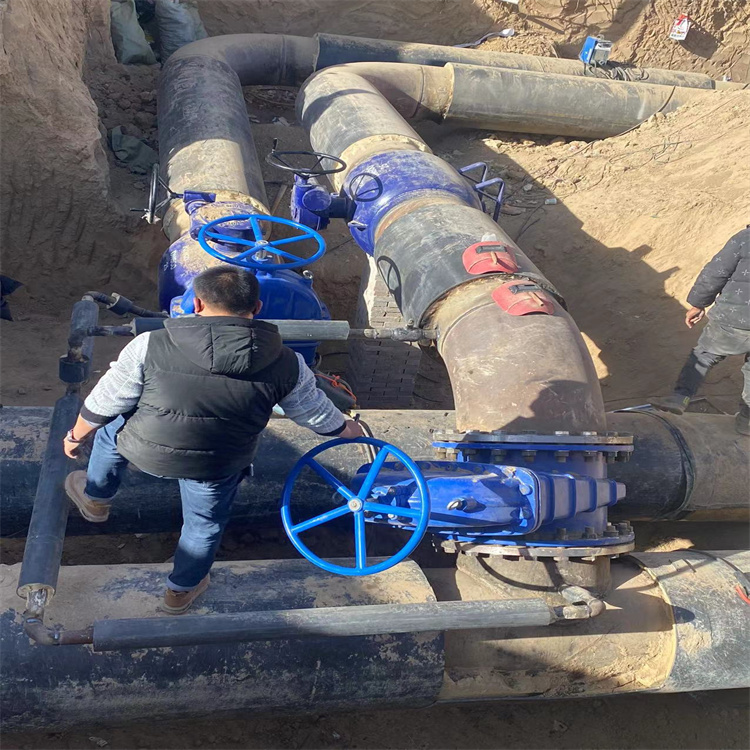
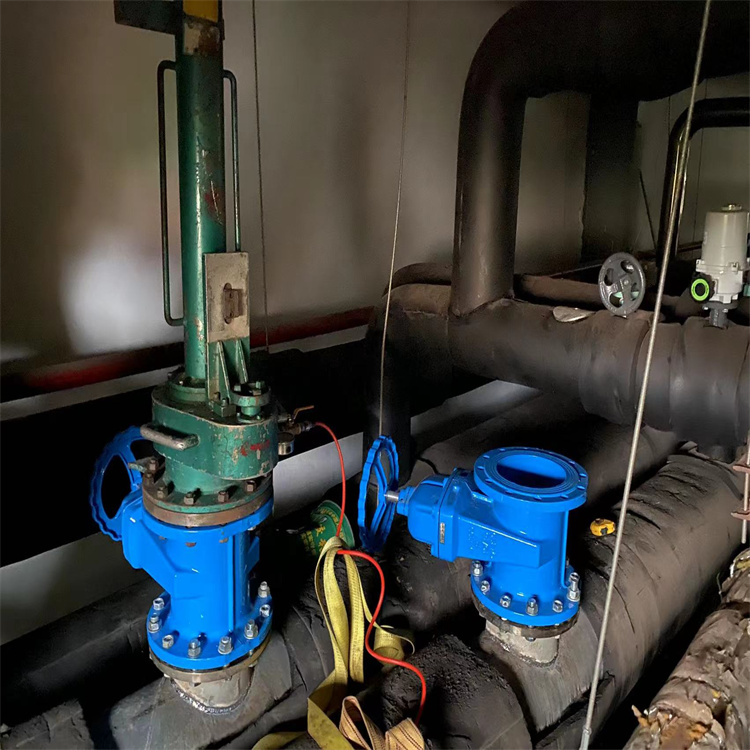
The pressure rating, leak location, cause of the leak, medium being transported, and temperature of oil and gas pipelines determine the sealing level of the corresponding leak prevention products, the structural methods of the leak prevention products, the maintenance methods for the pipeline itself, and the construction methods.
To date, we have developed 7 pressure sealing techniques, including steel strip tensioning, quick binding, low-pressure bonding, injection sealing, rapid anti-theft, plug welding, and pipeline pressure correction.
1. Steel tape tensioning technique. For leaks at pressure levels below 1.6 MPa, the grommet sealing method has been commonly used in the past. However, this method's drawback is the long预制 time and poor adaptability to site conditions. The composite leak sealers and shaped steel tape in the steel tape tensioning technique can better overcome the drawbacks of the grommet sealing method.
2. Rapid Binding Skills. Leak-sealing products can be divided into two structural parts: retention and sealing. The binding tape is a leak-sealing product that integrates both parts. During binding, as the tape thickens, it continuously generates compressive force, ultimately achieving the goal of rapid binding and leak sealing.
3. Low-pressure bonding skills, also known as chemical bonding skills. Existing adhesives are not suitable for direct bonding under pressure, necessitating a flow guide device to achieve this. The 'flow guide cap' can tackle this challenge.
4. Injection Sealing Technology. Managing leaks in oil and gas pipelines with pressures above 2 to 3 MPa, as well as leaks in flanges, valves, and other suspect areas, typically involves injection sealing technology. However, it can easily cause impact damage to the leak itself. Patent-pending high-pressure sealing agents can include various types of leaks, such as those at different pressure levels below 35 MPa, different leak locations, and different leak media.
5. Rapid Anti-Theft Technique. In recent years, due to the installation of valve theft of oil and gas by criminals on pipeline networks, significant losses have been incurred by production units. How to safely remove the stolen oil and gas valves without halting production and restore the pipeline to its original state? The newly developed patent product, the expansion-type plugging device, addresses this challenge.
6. Welding Plug Technique. Traditionally, for leaks in oil and gas pipelines, a method of inserting wooden plugs followed by welding was commonly used, which posed significant safety hazards. By using a pipeline plug wrench in conjunction with a high-temperature sealing pad, welding can be performed under conditions of successful sealing, significantly reducing safety risks.
7. Pipeline Pressure Maintenance Skills. Leaks caused by corrosion in oil and gas pipelines are quite common. The two most common technical countermeasures are emergency plugging and pipeline replacement. If it's possible to build a new pipeline on the existing one, considering aspects such as safe production, cost reduction, and social benefits, it is superior to the aforementioned methods. The pipeline pressure maintenance technique involves installing pre-fabricated pipe sections onto the pipeline requiring repair, then using a pressurization process to inject epoxy resin into the gap between the pipe sections, curing it to form a pipeline, thus achieving the goal of pressure maintenance without halting production.