

Sector of Wastewater Treatment Technology
Currently, China's wastewater treatment employs various technologies such as oxidation ditch process, SBR method, CASS process, contact oxidation method, aeration biological filter (BAF) process, MBR technology, and rapid separation biological treatment. Each method has its own advantages and disadvantages. The following describes the main methods:
CASS process
The CASS (Cyclic Activated Sludge System) process is one of the internationally recognized advanced technologies for treating domestic wastewater and sewage in recent years. Its basic structure is as follows: based on the Sequential Batch Reactor (SBR) method, the reaction tank is designed into two sections along the tank's length, with the front section being the biological selector area, also known as the pre-reaction zone, and the rear section being the main reaction zone. The main reaction zone is equipped with a liftable automatic skimming device. The aeration, sedimentation, and drainage processes of the entire system cycle continuously within the same tank, eliminating the secondary sedimentation tank and sludge回流 system of conventional activated sludge processes; at the same time, it allows for continuous inflow and intermittent drainage.
MBR Process
The Membrane Bio-Reactor (MBR) is a novel water treatment technology that combines membrane separation with biological treatment units, experiencing rapid development over the past few decades. This process utilizes hollow fiber membranes in place of the secondary sedimentation tank in the activated sludge process, effectively separating solid and liquid phases. The membrane's retention function can effectively trap nitrifying bacteria, ensuring they are completely retained within the bio-reactor, allowing for smooth nitrification reactions, effectively removing ammonia nitrogen, preventing sludge loss, and simultaneously retaining large, non-degradable organic molecules, extending their residence time in the reactor to facilitate decomposition.
However, the MBR process still has the following drawbacks: high membrane cost, short lifespan of membrane components, requiring replacement within 2-3 years; membrane contamination is prone to occur; high energy consumption, as increasing the flux and reducing membrane fouling necessitates higher flow rates to scour the membrane surface, resulting in higher energy consumption for MBR compared to traditional biological treatment processes.
Speedy Separation Bio-Treatment Technology
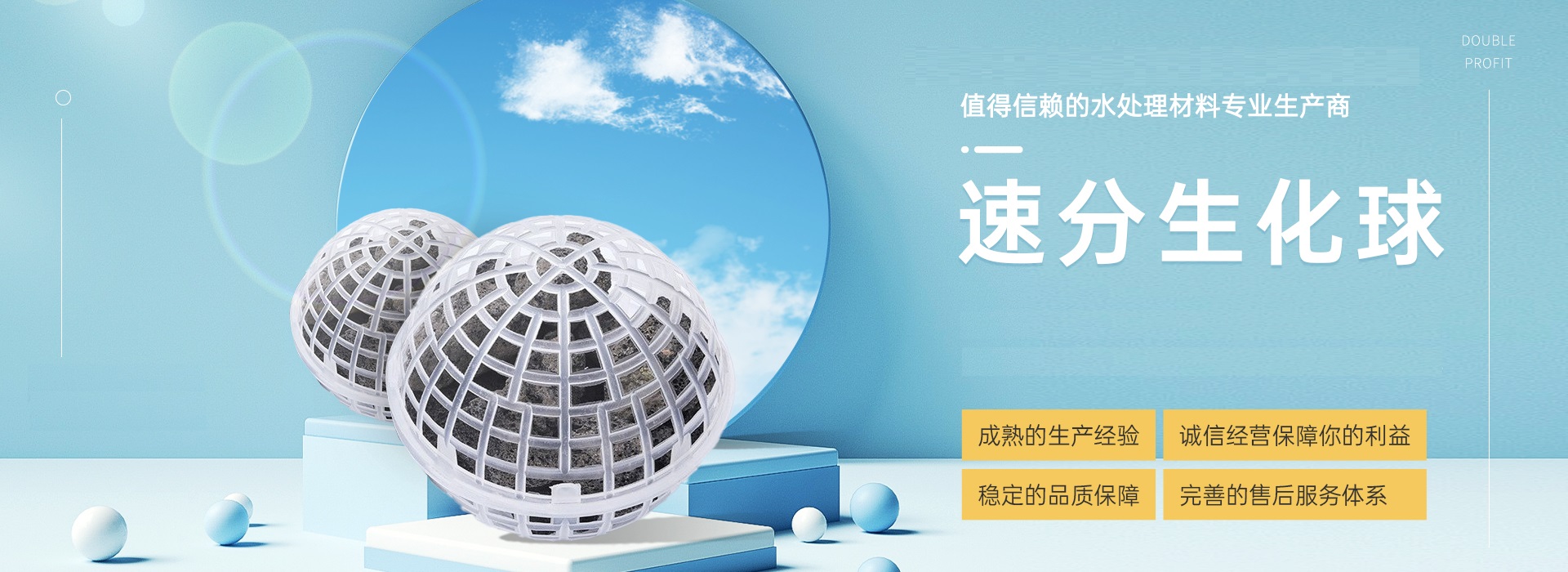
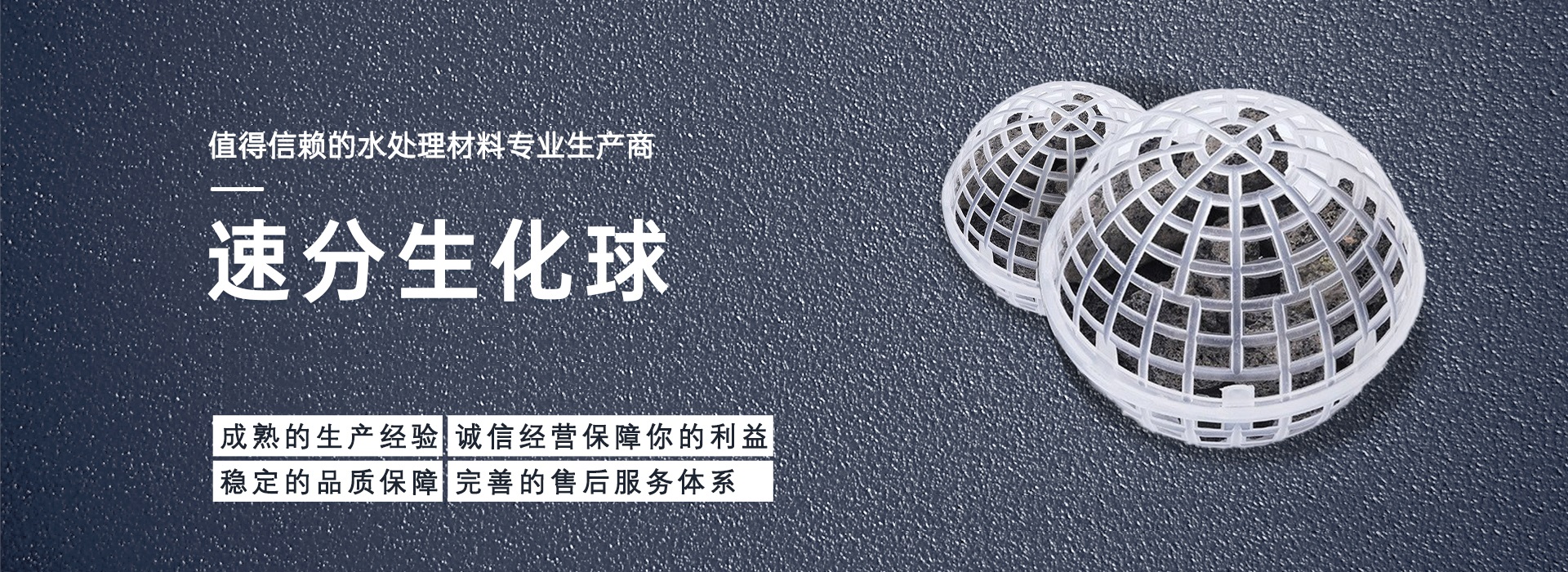
The Speedy Separation Bio-treatment Technology is a novel wastewater treatment technique. It operates on the principle of "flow separation" from fluid mechanics, breaking through traditional bio-treatment methods to transform the single-biological environment in the treatment system into a variable one. This allows wastewater to undergo multiple anaerobic and aerobic reactions within the collection body, without the need for sedimentation ponds, backwashing, or sludge treatment systems. The core of the Speedy Separation Bio-treatment Technology is the "Speedy Separation Bio-sphere," which serves as a biological carrier filled within specially designed Speedy Separation Bio-treatment Pools. The biofilm attached to it is the main active substance in the biochemical treatment system. The Speedy Separation Bio-sphere can be used for up to 30 years without replacement, saving a significant amount of replacement and maintenance costs compared to traditional bio-fillers.
Trend of Sewage Treatment Technology Development
1. Treatment processes with denitrification and phosphorus removal functions will still be a key focus for future development.
The "Urban Sewage Treatment Plant Emission Standard" (GB18918-2002) specifies clear requirements for the nitrogen and phosphorus content in effluent. As a result, existing urban sewage treatment plants require renovations to increase facilities for removing nitrogen and phosphorus pollutants from wastewater, in order to meet the national emission standards. New sewage treatment plants must be constructed in accordance with the GB18918-2002 standard. Currently, research on the mechanisms, influencing factors, and processes of biological nitrogen and phosphorus removal from wastewater has become a hot topic, with some new processes and process reforms having been proposed.
The company has been actively adopting advanced technologies such as MSBR, inverted A2/O, and UCT, and is also introducing new processes from abroad.
OCO, OOC, AOR, AOE, and other processes. For denitrification and phosphorus removal technologies, future development requires not only high removal rates of nitrogen and phosphorus but also stable, reliable treatment effects, flexible process control and adjustment, and cost-effective investment and operation. Currently, the biological phosphorus and nitrogen removal process is heading towards this simple and economical direction.
2. Low investment, low operating costs, and mature, reliable wastewater treatment technology will be the process for future wastewater treatment plants.
Our country is a developing nation with relatively low levels of economic development. Faced with the increasingly severe environmental pollution, the government is intensifying efforts to tackle wastewater treatment. The fundamental measure to address urban wastewater pollution is to construct secondary wastewater treatment plants with biological treatment as the main process. However, building numerous secondary plants requires substantial investment and high operational costs, which pose a heavy burden on our nation. Currently, the construction of wastewater treatment plants in our country is hindered by a lack of funding. Some existing plants have been unable to operate normally due to high operational costs or a lack of professional management staff. Therefore, research into low-input, low-operational cost, and mature and reliable wastewater treatment technologies will be a key focus in the future.
3. Research on Treatment Technologies for Small-Town Sewage Treatment Plants
Developing small towns is a crucial path in China's urbanization process, a strategic choice for a Chinese-style urbanization path. From 1978 to 2000, the number of towns in China increased from 2,178 to 20,312, and currently, there are nearly 48,000 small towns of various sizes and natures. If we only focus on the construction of wastewater treatment projects in large and medium-sized cities and neglect the wastewater treatment of such a large number of small towns, China's wastewater treatment goals cannot be achieved. Moreover, the treatment of small town wastewater faces a series of challenges: the characteristics of small town wastewater differ from those in large cities; there is a lack of funding; and a shortage of operation and management personnel. Therefore, the wastewater treatment process for small towns should be one with low infrastructure investment, low operation costs, relatively easy operation and management, and high reliability. The current research direction for wastewater treatment plant processes suitable for small towns is: selecting suitable processes for small town wastewater treatment plants from existing technologies, while also developing new processes tailored for small town wastewater treatment plants.
4. Research on wastewater treatment processes with low sludge production and stable sludge levels
Currently, the treatment of sludge produced by wastewater treatment plants is also a key and challenging aspect of China's wastewater treatment industry. In 2003, the total wastewater treatment volume of urban sewage treatment plants in China was approximately 95.9562×10^8 cubic meters per year, with an average solid content of 0.02% in urban wastewater. This results in a wet sludge production of 965.562×10^4 tons per year. The composition of the sludge is complex, containing various harmful and toxic substances. If such a large volume of sludge, rich in toxic and harmful materials, is not effectively treated and released into the environment, it can cause significant environmental damage.
The current situation of sludge treatment in our country is not optimistic: According to statistics, only 25.68% of the urban sewage treatment plants in our country have constructed and operated with sludge thickening, digestion, stabilization, and drying and dewatering processes. 55.70% of the plants do not have sludge stabilization treatment, and approximately 48.65% do not have sludge drying and dewatering treatment. This indicates that more than 70% of our sewage treatment plants lack a complete sludge treatment process. An effective way to address this issue is for sewage treatment plants to adopt treatment technologies with low sludge production and stable sludge, such as controlling the sludge generation at the source. This not only reduces the amount of sludge produced but also provides stable residual sludge, thereby alleviating the burden of subsequent sludge treatment. Currently, some processes in our country can achieve this, such as the biological contact oxidation process, BIOLAK process, and hydrolysis-aerobic process, but systematic research on treatment technologies with low sludge production and stable sludge has not yet commenced.
Section 3: Trends in the Wastewater Treatment Industry
1. Market Trend Development
Currently, in the Chinese water market, although capital-driven and administrative factors remain prominent, the market-oriented reform trend is irreversible. As China's public utility system reform deepens, the marketization of the water industry will continue to increase, thereby providing momentum for industry integration and cross-regional development. Companies that seize the opportunity will further solidify their position in the industry. The upward price momentum brought about by water price reform will further boost the growth of water utility companies, while also attracting more industry competitors.
The Chinese water industry is still in its growth phase, characterized by low market concentration and a lack of industry and regional monopolies. Extending vertically along the industrial chain based on industry attractiveness and technological correlation, as well as the integration of water services becoming the primary development direction, are key factors. Operational management, capital operation, market expansion, technology application and development, and risk control have become crucial success factors for water industry enterprises. Balancing market share and investment returns is the focus of Chinese water companies during their growth phase.
Based on predictions of China's wastewater discharge, as well as the country's environmental treatment plans and the 2010 long-term vision, China's wastewater treatment rate is expected to reach 45% by 2010. China's wastewater discharge is projected to reach 76.3 billion cubic meters in 2010, with 45% treated, totaling 34.38 billion cubic meters, or 94.07 million cubic meters per day. Subtracting the daily treatment capacity already achieved by 2000, which is 2.685 million cubic meters, an additional wastewater treatment plant with a daily capacity of 6.722 million cubic meters is needed, costing approximately 13.44 billion RMB.
2. Industry Competition Trends
Funding emerges as the core driving force and industry link for wastewater treatment development.
Under the backdrop of internationalization and marketization, the severe water pollution and outdated treatment equipment in the industry have led to a huge capital demand in the wastewater treatment sector. The development of industrial wastewater treatment has shifted from technology-driven under the planned economy to investment-driven. Investments are not only the decisive weight for opening up the wastewater treatment market but also an effective means to link the technology, engineering, product, and operation value chain. The investment-driven nature of wastewater treatment under the backdrop of significant demand has allowed international, private, and other social capital to quickly enter the industrial wastewater treatment industry and become the main players. The relaxation of the state's capital entry into the urban infrastructure sector, the richness of market financial tools, and the implementation of the diversification of ownership in traditional enterprises will further strengthen the weight of capital in the industrial wastewater treatment industry.
Strategic alliances motivated by market acquisition are a significant indicator of the degree of industry marketization.
The foundation of a market economy is contracts, and strategic alliances represent a stable form of contract between enterprises, which can effectively mitigate the costs of intermediate transactions. On average, each of the Fortune Global 500 companies participates in 60 different types of strategic alliances. The Chinese water industry is in the early stage of market development. From an industry perspective, it is characterized by the ambiguity and inadequacy of the wastewater treatment policy system, and from a business perspective, by the fragmentation and looseness of enterprises. Moreover, the water industry is highly integrated and interconnected, with a strong correlation. A vertically integrated strategic alliance based on scale, encompassing investment, design, engineering, operation, and equipment supply, will become the primary means for enterprises to compete, mitigate risks, and reduce costs.
3. Technological Trend Development
Advancement in Film Materials and Film Application Technologies
The national bond project for membrane materials and membrane technology applications has spurred the research and application of membrane technology and materials for water pollution treatment in our country. In recent years, significant progress has been made in the research and development of membrane materials in our country, largely breaking the past封锁 status imposed by developed countries on our membrane material manufacturing technology. Relying on their own strength, our country's water pollution treatment technology development institutions have developed membrane materials and components with independent intellectual property rights.
The Development of Industrial Wastewater Treatment Technology
National efforts have been intensified across the country to address the issue of industrial enterprises not meeting wastewater standards. This situation has spurred significant development in the R&D of water pollution treatment technologies and service sectors. Future technical development will focus on key industries such as papermaking, chemical, brewing, and leather processing.
