



The operation of tower equipment must maintain ideal flow while ensuring normal operation, thus, the operation of tower equipment is restricted by both the fluid mechanics of the trays and the efficiency of mass transfer in the process.
Whether it's fluid mechanics constraints on trays or mass transfer limitations, upper limit constraints are typically fatal for tower equipment operation. However, trays operating at the lower limit are generally operable, albeit with poor mass transfer and operability. But usually, they are not fatal and can be improved by adjusting process parameters.
For distillation tower equipment, once the process requirements are established, the回流 ratio remains relatively constant, and the liquid-gas ratio across each tray also remains stable. Changes in the treatment capacity of the tower equipment can only cause the operating points of the trays to shift along the operating line. Therefore, after the process and tower equipment are determined, the operating line varies only within the upper and lower limits where it intersects. The constraints on tray operation control differ for various process conditions.
In our research on floating valve trays and the study of experience correlations regarding plate mist carryover, we failed to recognize the particularity of the variation规律 of mist carryover with liquid flow intensity, or the scope of experimental data, or the form of mist carryover correlations. Additionally, we overly deleted data to ensure the accuracy of predictive correlations, which resulted in the failure of the associated models to predict plate mist carryover effectively.
The floating valve trays have a higher processing capacity than the F1 floating valve trays. Comparing the operating limit of this tray with the load limits of most foreign plate trays and packed trays, it was found that the increased processing capacity is actually caused by improper association of foam entrainment. At a liquid phase load of 0, the processing capacity of the tower equipment is low; when the liquid flow intensity is below 3-5 m³, the tray operation is in a splashing state, with foam entrainment increasing with the liquid flow intensity. At high liquid flow intensities, the tray operates in a foamy state, showing a slight trend of decreased processing capacity. Therefore, the association of foam entrainment should be given due attention.
Our company produces floating valve trays.The floating valve is a gas-phase dispersion component on the floating valve tray. It can float on the tray and adjust its opening degree according to changes in gas flow. There are various types of floating valves, including round valves and strip-shaped angle valves. Currently, China primarily uses round valves. The most commonly used type is the F1 model, which has a national standard (JB1118). The standard specifies that the valve body material can be carbon steel, stainless steel, or acid-resistant steel; the light valve has a thickness of 1.5mm and weighs approximately 25g, while the heavy valve has a thickness of 2mm and weighs about 33g.
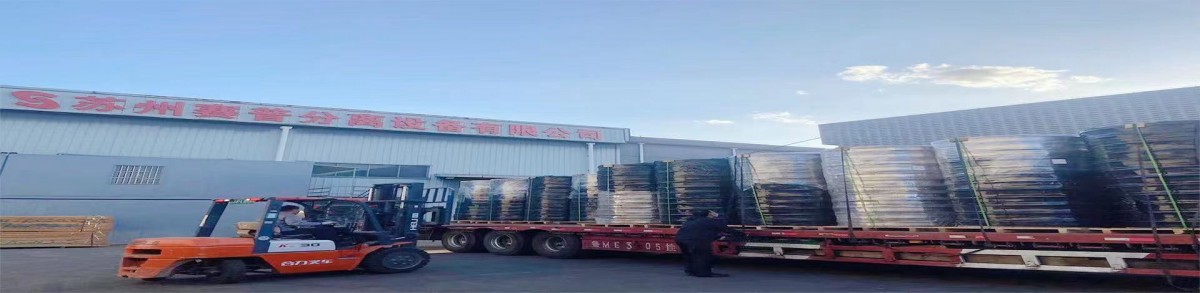
Suzhou Sipu Separation Equipment Co., Ltd.
March 4, 2022
