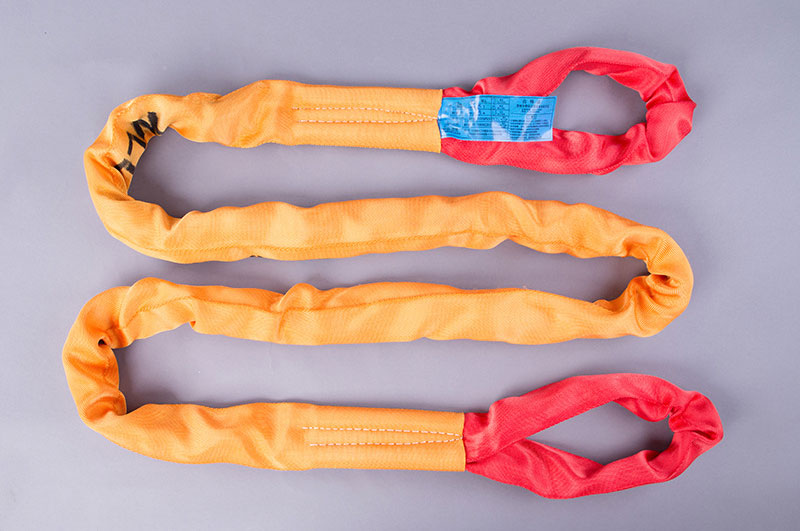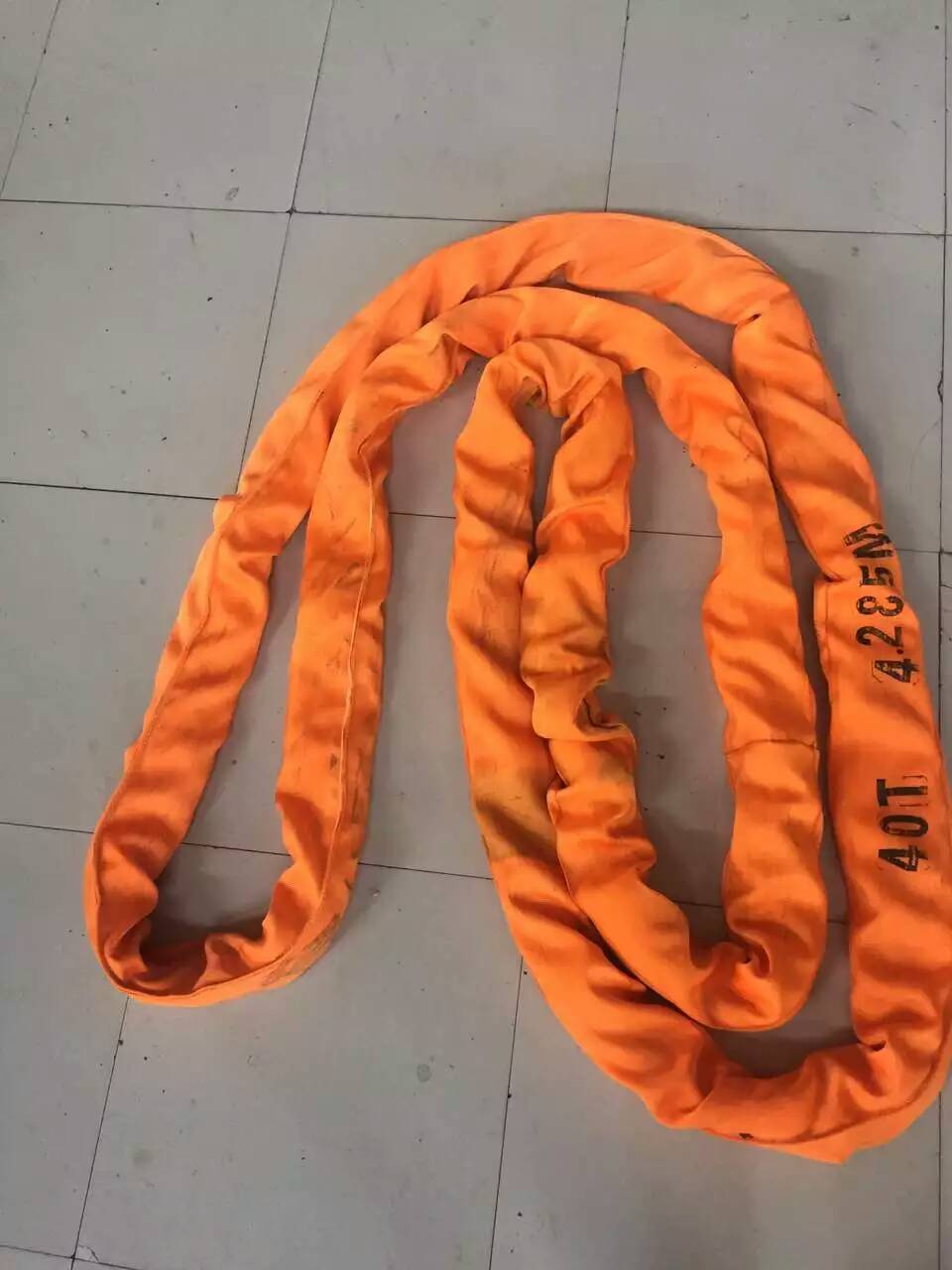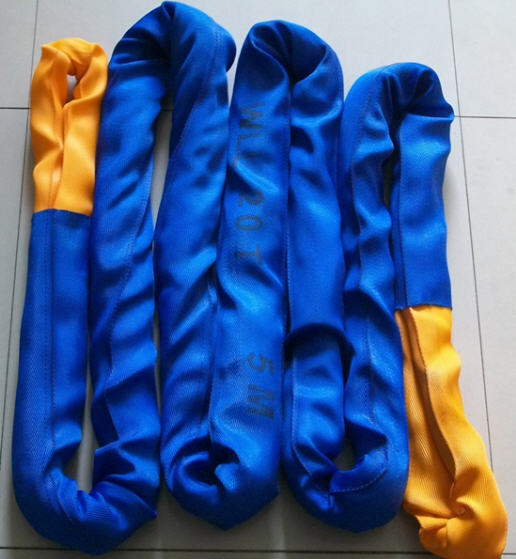


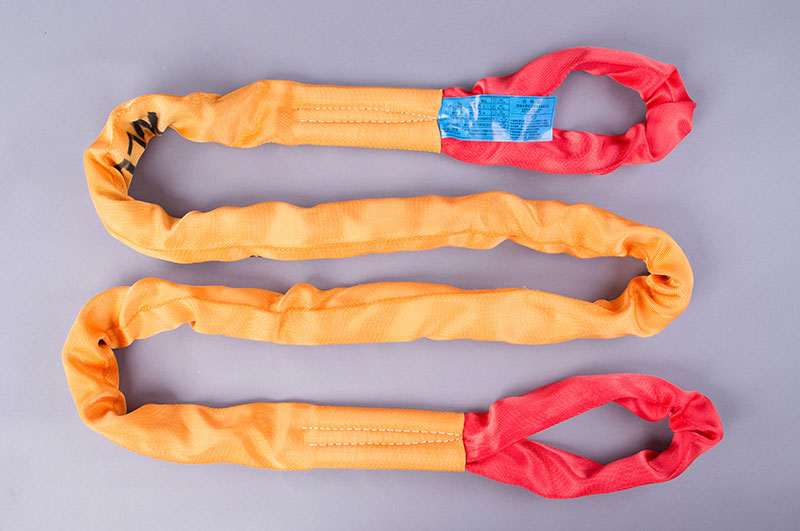
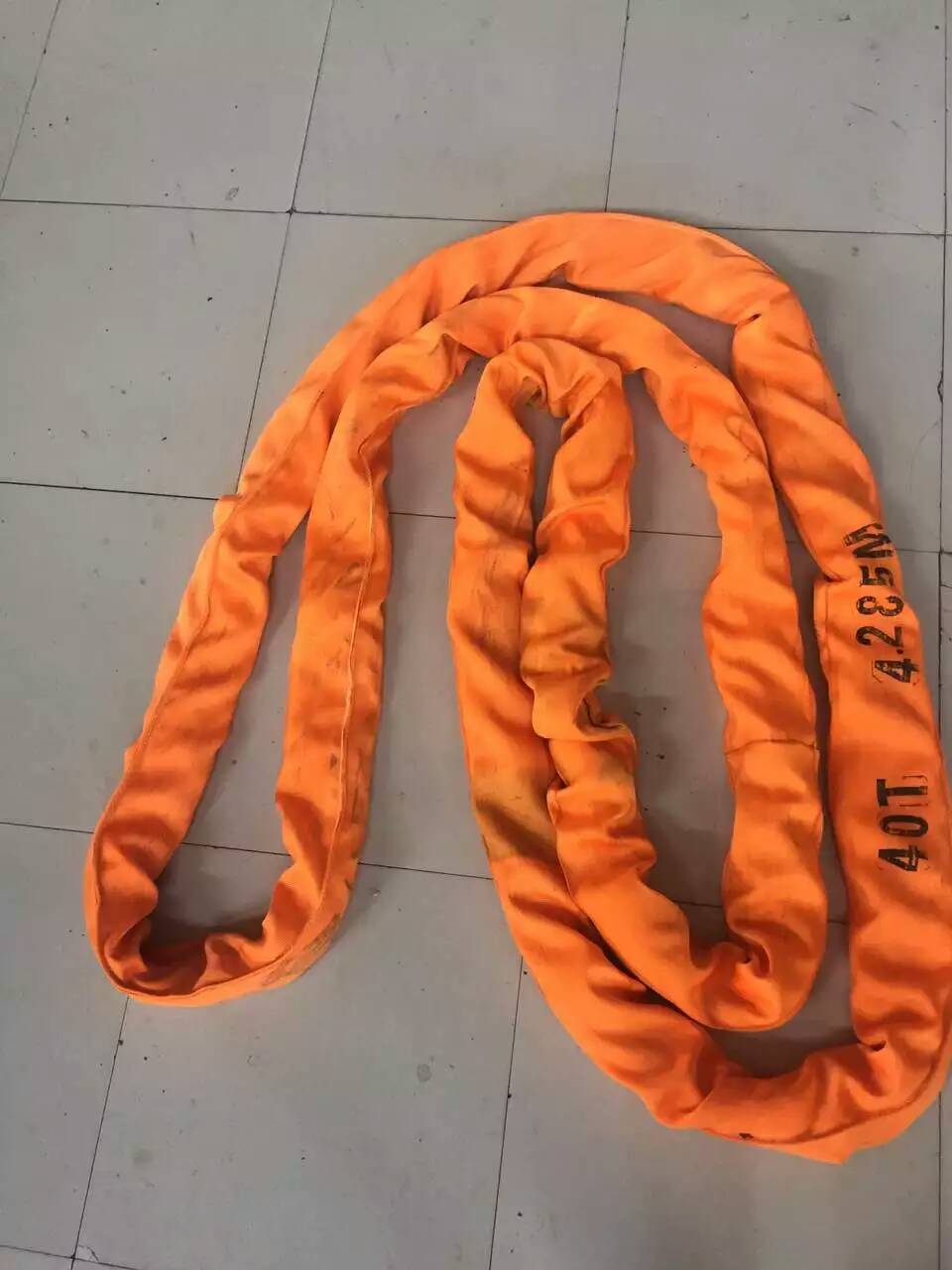
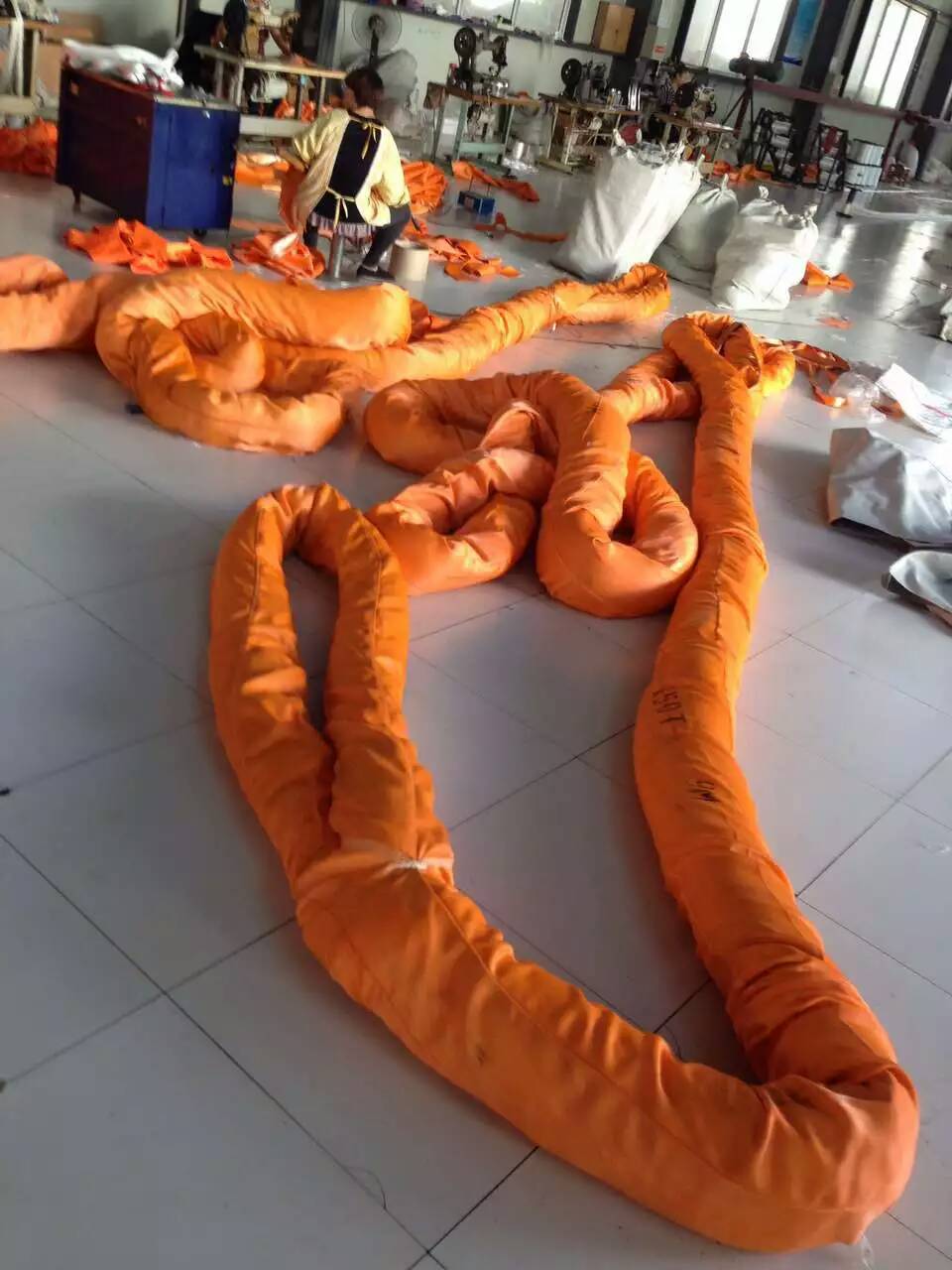
Extra-large tonnage flexible slings, with ring core and double-eye core, are the two main types of flexible slings. For these types of slings, core threading is a critical step in the production process, directly affecting the final quality of the slings. Below, we will guide you through the core threading process. I. Preparations (1) First, place the twisted beam on the beam stand, usually using a four-axis setup for core threading. (2) Adjust the core threading machine to the required length for the sling, typically exceeding the fixed length by 5-20 cm, depending on the tonnage of the flexible sling. II. Core Threading (1) Cut the belt skin to the required length, ensuring it is 400-800mm longer. (2) Thread the four-axis yarn onto the牵引钢丝, pass it through the belt skin, wrap it around the belt shaft, and braid the ends together, securing them with tape. (3) Use the foot pedal to initiate the threading process according to standard procedures. If the belt becomes tight, release it slightly to ensure a balanced threading. III. Finishing and Seaming (1) Straighten the threaded belt from end to end, avoiding twists, and insert the outer belt skin into the other end, sealing the belt. (2) The stitching length should be 200-300mm, the stitching line should be slightly indented, and backstitched. Leave a 5-10mm edge on the belt end, and do not sew right to the edge. (3) Always pay attention to hand and foot coordination during threading, and avoid hands being pulled into the belt shaft. (4) Sew product labels onto the flexible slings. The sewing requirements for flexible slings are very stringent, not only for critical steps like core threading but also for the handling of stitching threads. High-quality flexible slings are the result of exceptional sewing techniques, with numerous attention-to-detail requirements at each production stage, all of which must be executed strictly according to production standards.