
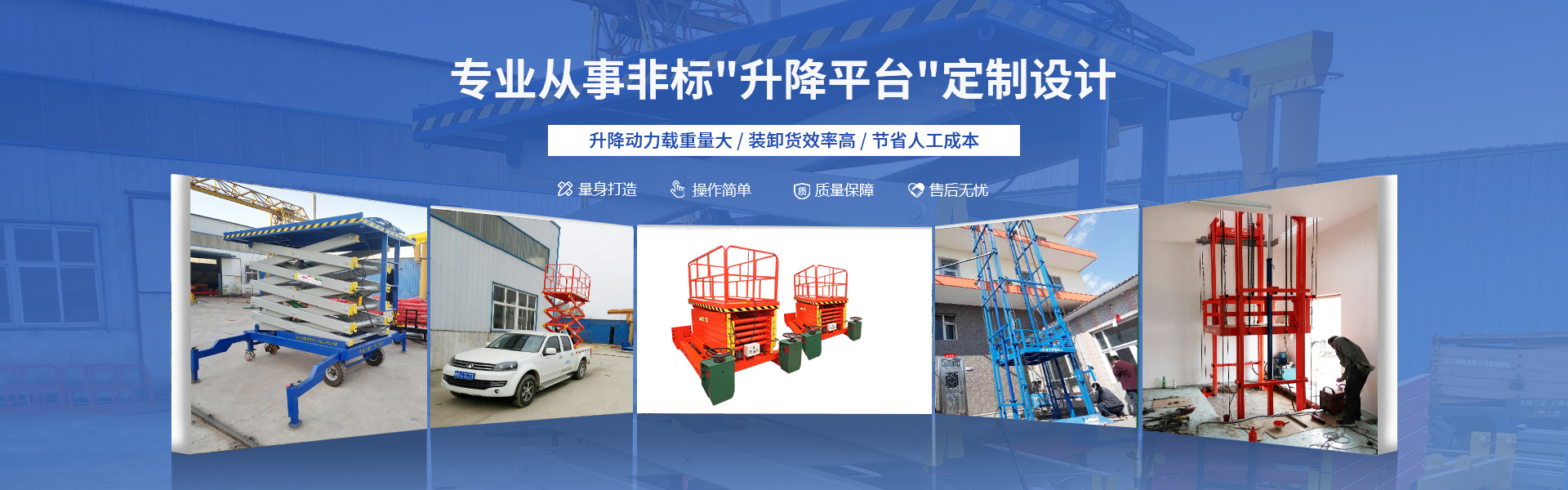
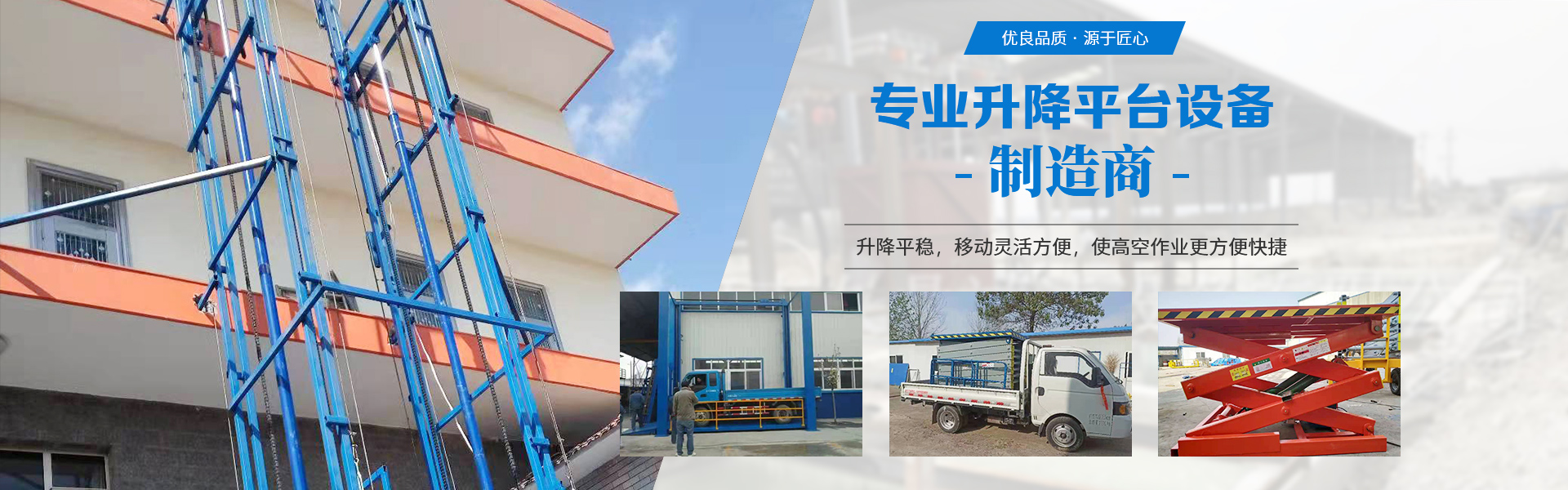
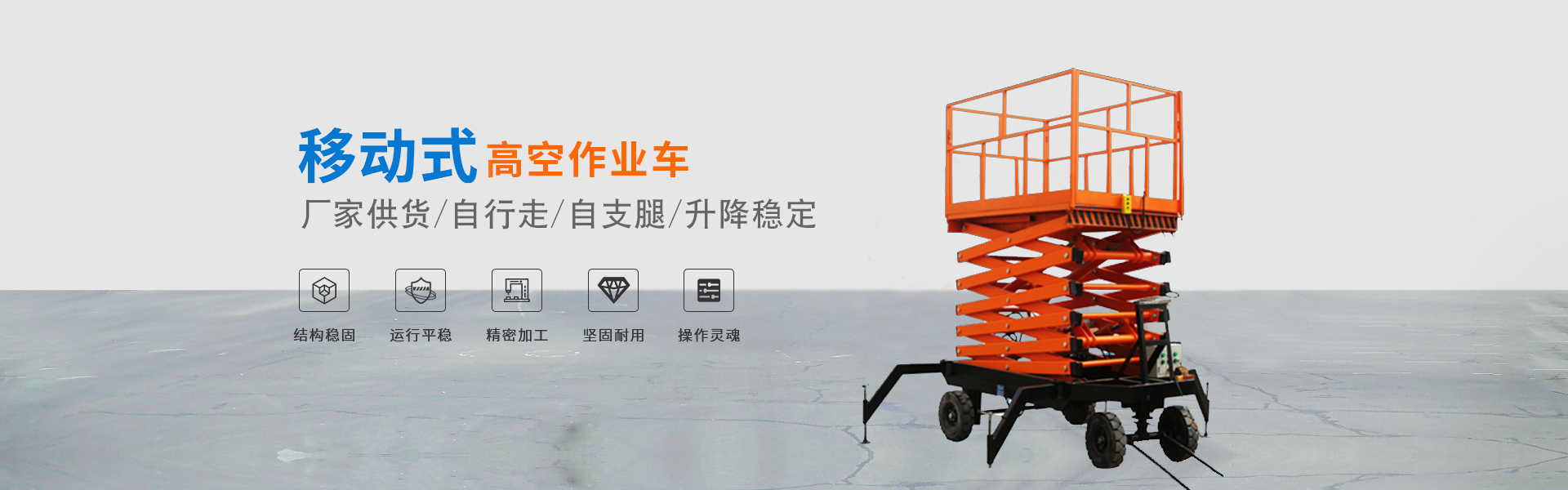

A hydraulic lifting platform is a versatile lifting and loading/unloading mechanical equipment. It is categorized into: four-wheeled mobile lifting platforms, two-wheeled towable lifting platforms, vehicle-mounted lifting platforms, hand-pushed lifting platforms, hand-cranked lifting platforms, AC/DC dual-voltage lifting platforms, battery-powered vehicle-mounted lifting platforms, with lifting heights ranging from 1 meter to 30 meters.
Lift platforms have become very common in our daily lives, bringing great convenience to our production and living. However, as with any thing, issues may arise, and hydraulic lift platforms are no exception. What are the problems that deserve our attention and can be effectively prevented?
In most cases, there are instructions noted on the equipment upon manufacture. The circuitry of lift platforms cannot be randomly disassembled; doing so could lead to unimaginable consequences. Additionally, during the maintenance of hydraulic lift platforms, proper support and securing must be ensured to prevent serious outcomes in the event of a slip. Moreover, hydraulic lift platforms are relatively specialized equipment. When performing maintenance or inspections on the hydraulic system, remember to relieve the pressure first to avoid oil being sprayed out due to pressure. Furthermore, certain mechanical parts require regular lubrication and inspection; this should never be overlooked. Some issues are hidden, and once problems arise, it's too late for regret.
Hydraulic lifting platforms can be customized to meet special specifications as per customer requirements. They are applied in various industries such as factories, automated warehouses, parking lots, municipal projects, ports, construction, renovation, logistics, power, transportation, oil, petrochemical, hotels, stadiums, industrial and mining enterprises, and for high-altitude operations and maintenance. The lifting system of the hydraulic lifting platform is powered by hydraulic drive, hence the name. These platforms are suitable for industries such as automotive, container, mold manufacturing, wood processing, chemical filling, and various industrial production lines. They can be equipped with different surface types (e.g., ball, roller, turntable, steering, tilting, telescopic) and various control methods (e.g., manual, interlocked, explosion-proof). They feature smooth and accurate lifting, frequent start-ups, and high load capacity, effectively addressing the challenges of lifting operations in industrial settings, making production work more effortless.
