



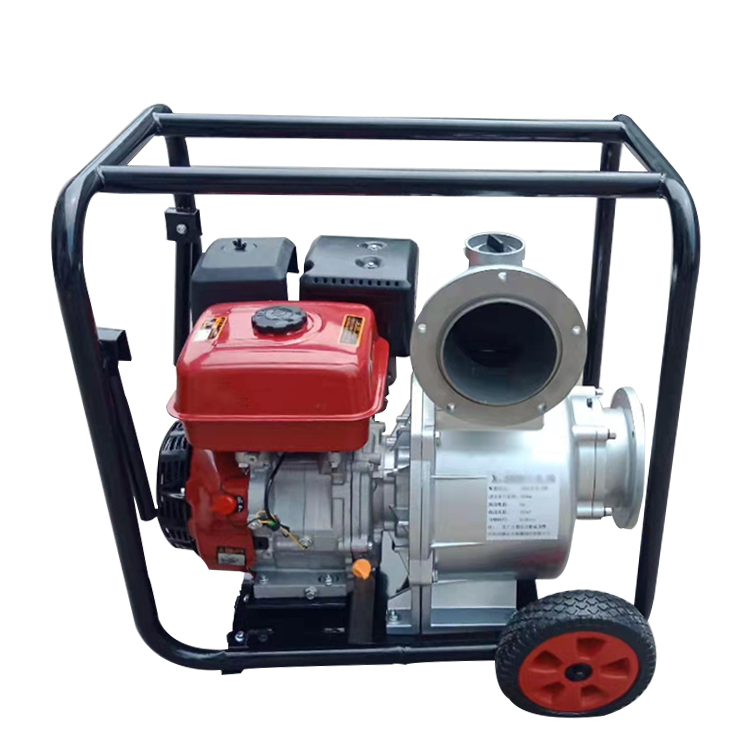
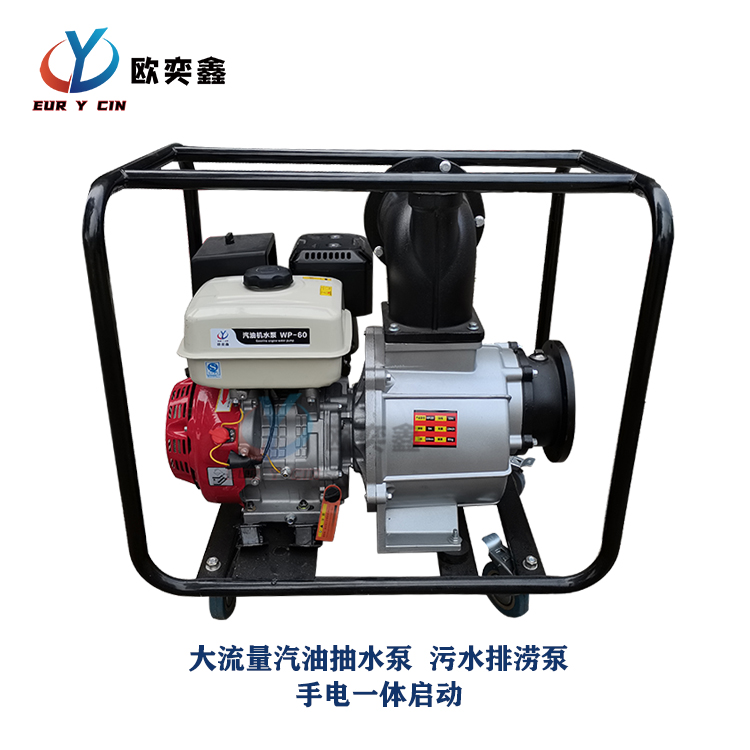
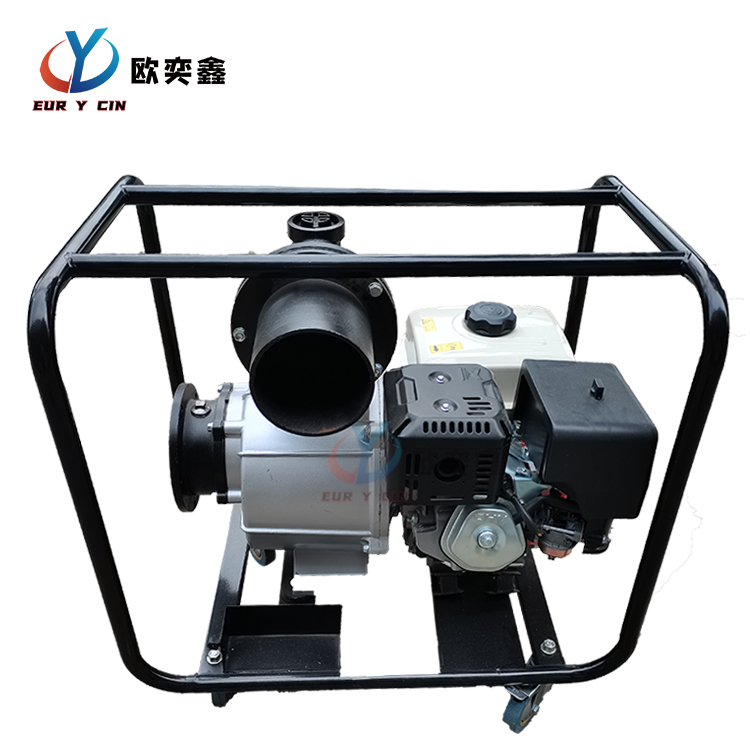
Portable Flood Pump Gasoline Water Pump 150mm 6" Pump EYC150QE
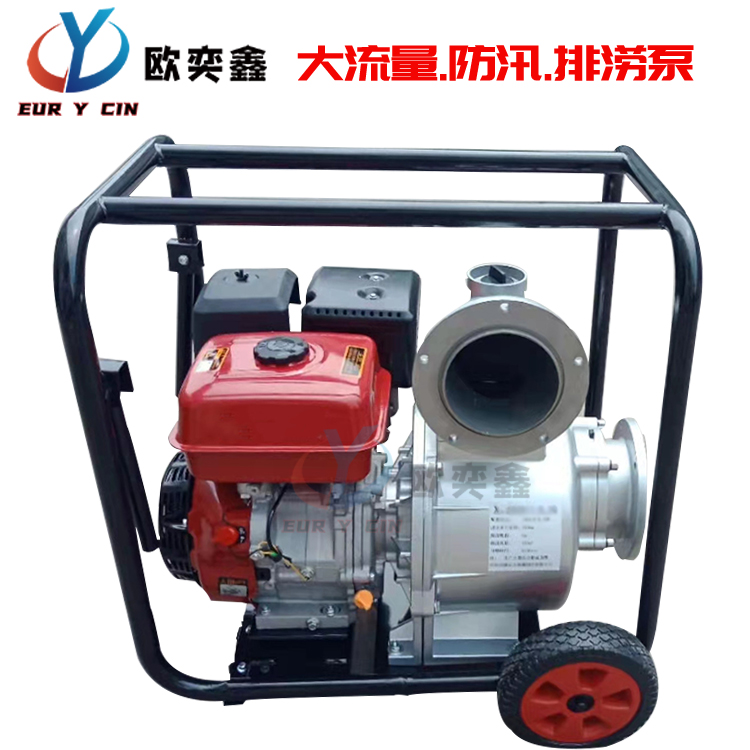
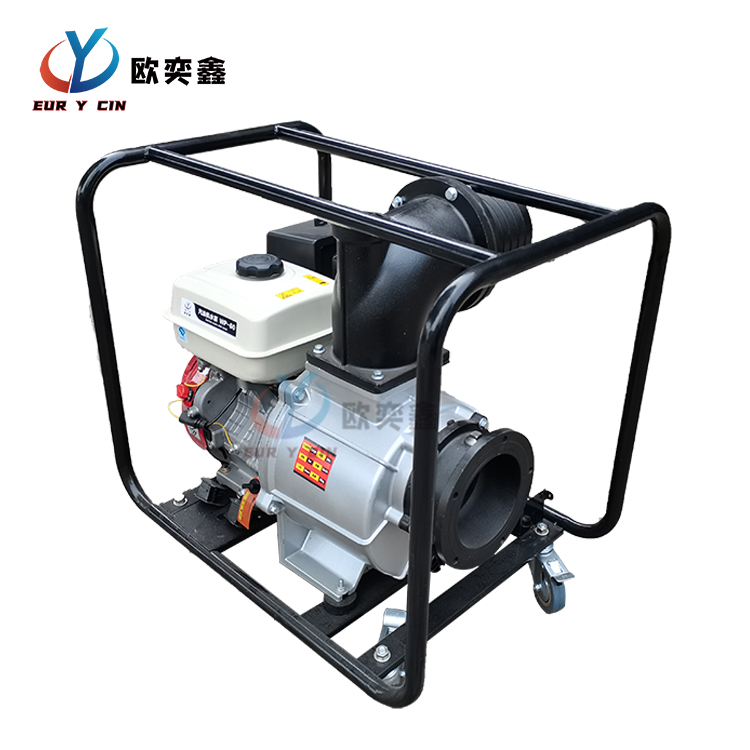
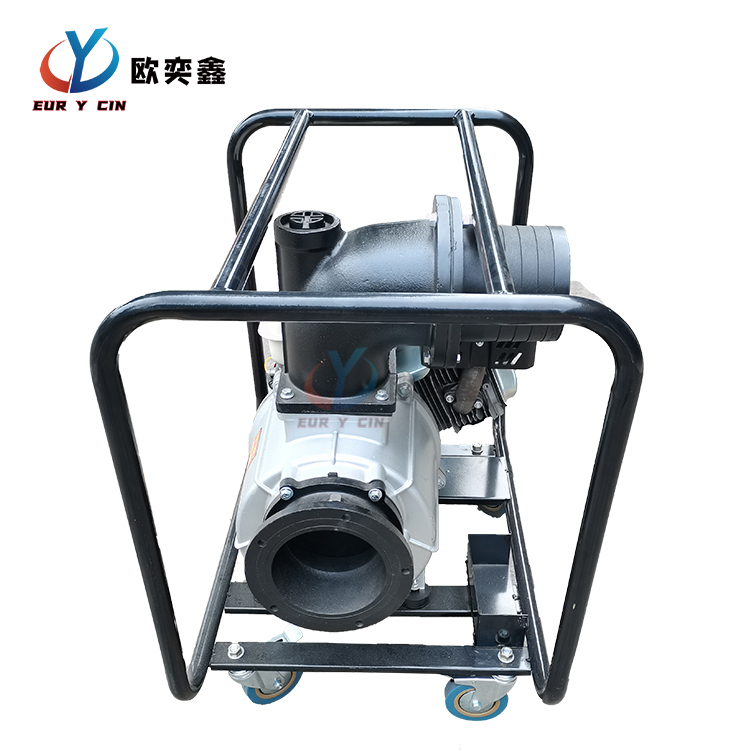
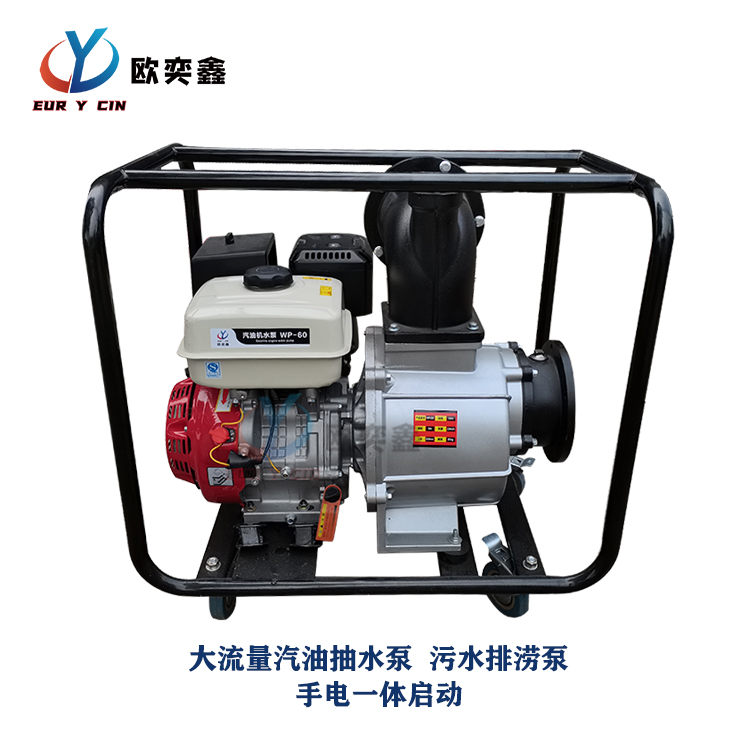
Portable Drainage Gasoline Pump 150mm 6" Water Pump EYC150QE
A gasoline engine water pump is a centrifugal pump. The working principle of a centrifugal pump is that when the pump is filled with water, the engine drives the impeller to rotate, generating centrifugal force. Under this force, water in the impeller channels is ejected outward and flows into the pump casing, causing the pressure at the impeller center to drop. This pressure is lower than the pressure in the inlet pipe, so water flows from the suction pool into the impeller due to the pressure difference. This allows the pump to continuously draw and supply water. Main applications: agricultural irrigation and drainage, industrial drainage systems, etc.
Gasoline engines are lighter and more compact than diesel engines, with lower manufacturing costs and less noise, as well as better cold-starting capabilities. However, they have lower thermal efficiency and higher fuel consumption rates.
A gasoline engine is an internal combustion engine that uses gasoline as fuel and is ignited by an electric spark. Typically, gasoline engines are reciprocating piston type, consisting of the main body, crankshaft and connecting rod mechanism, valve system, fuel supply system, lubrication system, and ignition system.
Typical Small Gasoline Engine System Composition:
(1) Crankshaft connecting rod system: Includes pistons, connecting rods, crankshafts, roller bearings, oil seals, etc.
(2) Engine System: Includes cylinder head, cylinder block, crankcase, muffler, protective cover, etc.
(3) Fuel System: Includes fuel tank, switches, filters, sediment cups, and carburetors, etc.
(4) Cooling System: Includes cooling fans, air deflectors, etc. Some backpack-type spray powder machines have cooling ports opened on the impeller housing behind the large fan, with the cooling air flow directed out by the air deflector, thus eliminating the need for a separate cooling impeller.
(5) Lubrication System: Two-stroke gasoline engines use a mixture of gasoline and lubricating oil for lubrication and fuel supply. Four-stroke gasoline engines have separate lubrication and fuel supply systems; the crankcase is equipped with an oil level gauge.
(6) Fuel Supply System: A four-stroke gasoline engine consists of intake and exhaust valves, rocker arms, push rods, tappets, and camshafts. A two-stroke gasoline engine does not have intake and exhaust valves; instead, it has intake, exhaust, and exhaust ports on the cylinder block, using the up and down movement of the piston to open or close the various ports.
(7) Starting System: There are two structures available. One consists of a starting rope and a simple starting wheel. The other is a spring-return starting structure, featuring a spring-locked gear and a protective cover, etc.
(8) Ignition System: Includes magneto, high-tension wires, spark plugs, etc. The magneto comes in two types: a contact-type with a breaker point and a non-contact-type electronic ignition circuit.
| 6-inch Gasoline Engine Water Pump | |
| Engine Model | EYC150QE |
| Pump Inlet and Outlet Diameter [mm] | 150 (6-inch) |
| Flow Rate (m³/h) | 150 |
| Flow Rate (m³/h) | 20 |
| Suction Time (s/4m) | 80 |
| Suction Head (m) | 8 |
| Speed (rpm) | 3600 |
| Fuel consumption rate (g/kw·h) | ≤390 |
| Dimensions (Length x Width x Height) (mm) | 775*500×700 |
| Net Weight (kg) | 65 |
| Engine Model | 190FE |
| Power Type | Single-Cylinder Air-Cooled Four-Stroke |
| Cooling method | Air-cooled |
| Fuel | Gasoline |
| Power [kW (HP)] | 11KW 15p |
| Fuel Tank Capacity (L) | 6.5L |
| Oil Capacity: L | 1.1 |
| Displacement (cc) | 420 |
| Startup Method | Manual start/Electric start |
| Flanged joints for import/export, filter screens, clamps, funnels, tool kits | |
