
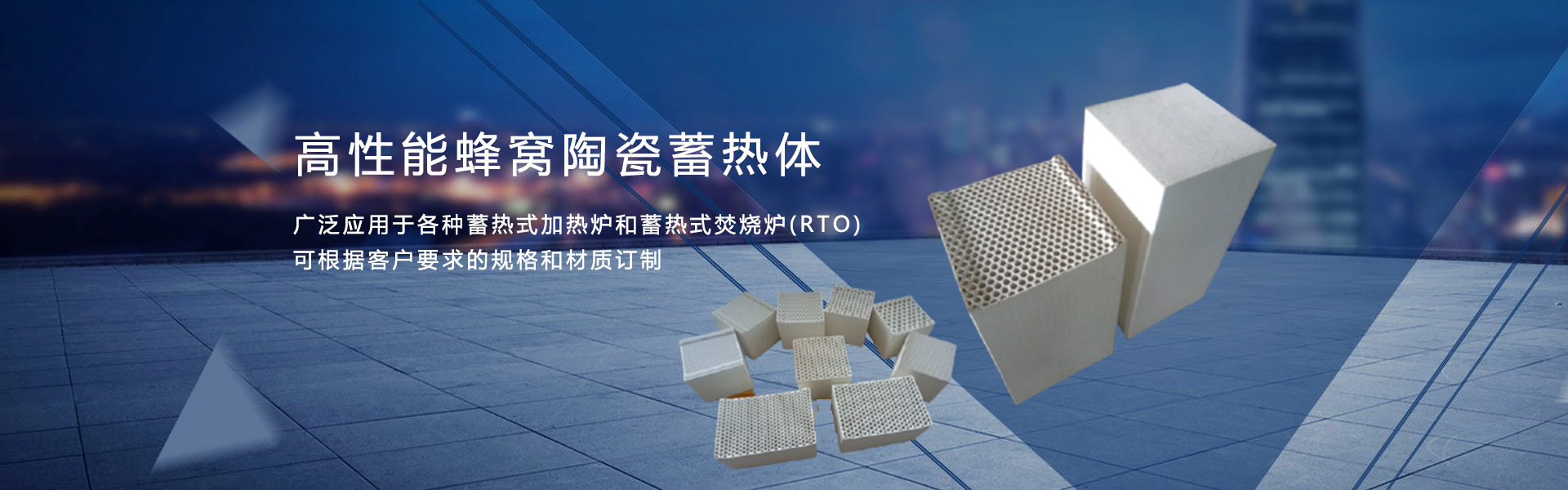


Cellular ceramic heat storage bodies are widely used in energy-saving technologies for industrial thermal equipment, enhancing efficiency, reducing energy consumption, increasing production, and improving quality. They are an important and effective means to address energy and environmental issues. The cross-sectional pores of these heat storage bodies mainly consist of square and regular hexagonal structures, with parallel straight channels. This design significantly reduces the resistance to airflow, greatly improving the heat exchange efficiency of the individual pores in the heat storage body.
The main functions of the heat storage bodies are summarized as follows:
1. Reduce exhaust gas heat loss, maximize fuel utilization, and minimize loss units.
2. Enhance theoretical combustion temperature, improve combustion conditions, meet the high-temperature requirements of thermal equipment, expand the application range of thermal energy, particularly the application range of blast furnace gas, and increase the utilization rate of calorific value.
3. Enhance furnace heat exchange conditions, boost equipment output and product quality, and reduce equipment investment.
4. Reduce the exhaust gas and harmful emissions per unit product of thermal equipment, minimize harmful gases, and improve the environment.
