

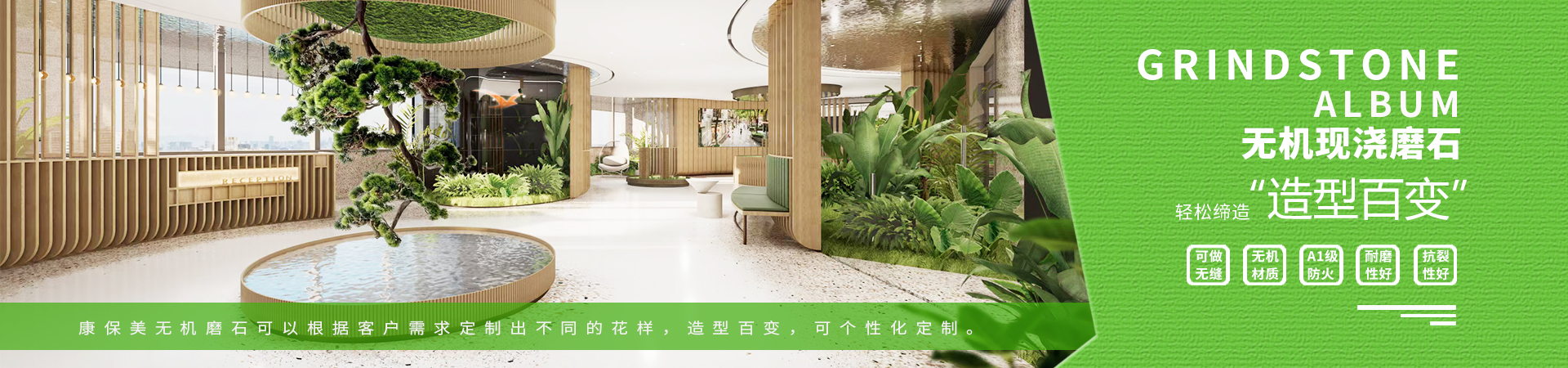

Flooring materials like tiles and marble typically last for about ten years, meaning a building may need to replace its flooring three or more times throughout its lifespan, which is both time-consuming and labor-intensive. The advent of inorganic terrazzo has changed this, offering the benefit of longevity that matches the building's lifespan while also meeting aesthetic requirements.
Many property owners inquire if it's possible to renovate on existing surfaces. Our general recommendation is: Renovation is advisable when the base layer is strong and free from damage; however, it is not recommended to renovate directly on a base layer that is insufficiently strong. Next, let's discuss if it's possible to renovate无机磨石 directly on old surfaces such as wood floors, marble, terrazzo, tiles, and metals.
Can inorganic terrazzo be used for refinishing wooden floors?
The answer is no! This is because it is a flexible material that may expand and contract with temperature changes. If inorganic abrasive stone material is laid on such a base, it is bound to crack due to expansion or contraction. Additionally, due to the moisture content in wood flooring, bubbles or pinholes may form, affecting the final coating surface.
Can inorganic grindstone be used for marble restoration?
The answer is yes! Marble surfaces are typically already polished and sealed, so they can be directly restored with proper surface grinding. However, it's also important to check for hollowed or cracked areas in the marble, as they must be removed to avoid affecting the final quality and appearance of the non-slip terrazzo.
Can non-porous terrazzo be refinished over existing terrazzo?
The answer is yes! But pay attention to the following points:
The grinding must meet standards to ensure the entire surface is able to bond with the new coating.
2. Since terrazzo is a composite material made of various materials, it is essential to ensure that all sealants that could conflict with inorganic terrazzo are removed from the surface.
3. If the terrazzo flooring is excessively worn, it is necessary to fill all cracks and pores before proceeding with the installation of the inorganic terrazzo.