

Traffic facilities refer to the tracks, tunnels, elevated roads, stations, ventilation pavilions, mechanical and electrical equipment, power supply systems, communication signals, and other facilities set up to ensure the safe and normal operation of urban traffic systems. According to the needs of traffic flow and the terrain and physical conditions, pedestrian overpasses (including underground pedestrian crossings) are required on roads, as well as fences, lighting facilities, sight guide signs, emergency contact facilities, and other similar installations. Below, the Henan Traffic Facilities Construction editor will introduce these to you:
Pedestrian Overpass
2. Fence
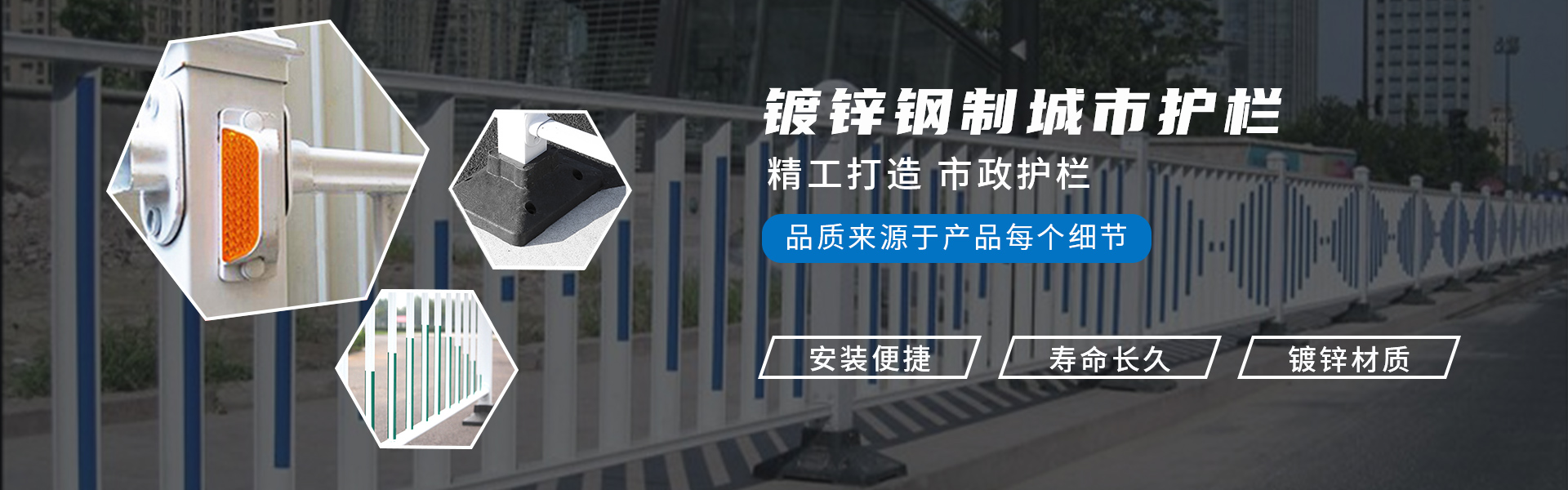
The vehicle veers off the road due to an error, thereby protecting pedestrians, residential areas, structures, etc., while also directing the driver's gaze. Additionally, it is used to deter pedestrians from crossing the road, separating pedestrians and bicycles from vehicles, and serving as a protective measure. Protective fences come in various forms, such as guardrails, cables, trusses, and pipes. The choice of fence design should be harmonious with the environment and consider its function; for the sole purpose of deterring pedestrians, options like pipes and chained nets can be used.
Lighting Facilities
To prevent traffic accidents during night driving and enhance driving comfort, continuous or partial lighting facilities should be installed on necessary roads. Lighting equipment can reduce traffic accidents and eliminate pedestrians' sense of insecurity, as well as provide drivers with the necessary visibility and eliminate their sense of insecurity.
4. Visual Guidance Sign
To indicate road edges and alignments, guide signs must be set up in specific sections to guide drivers' attention, such as snow stakes in areas with excessive snowfall. Additionally, guide signs should also be placed at the ends of median strips and at the fronts of diversions to mark their locations.
Road Reflectors
Reflection mirrors should be installed at locations prone to accidents, such as curves, narrow-radius sections, and areas with poor visibility, like intersections and toll plazas. Highway reflection mirrors come in circular and square shapes, usually employing convex mirrors. The mirror surfaces must have high reflection efficiency and be free of defects such as blurring, warping, bubbles, and ripples.
6. Highway Information Boards
To promptly notify road users of road, weather, and traffic conditions, as well as related traffic restrictions, variable message signs are placed at appropriate locations. These signs come in three types: Type A signs are used on major highways, featuring suspended designs, controlled by computer remote, with internal lighting and字幕; Type B signs are installed alongside the road, equipped with manually operated lighting and字幕; and Type C signs are used at traffic restriction sites, featuring insertable boards with clear and concise information for easy accurate understanding.
7. Highway Surveillance System
Traffic surveillance facilities should be installed at locations and road segments that may pose significant risks to pedestrian safety or are prone to traffic congestion. These facilities should monitor regular traffic flow and, in the event of an emergency, immediate countermeasures should be taken. Surveillance equipment typically includes standard industrial cameras, traffic flow sensors, and automatic recorders for traffic volume, density, and speed.
8. Parking lot
The parking lot serves as a place for parking vehicles and passengers to disembark, consisting of parking areas and lanes. The lanes connect to ramps and other access roads, guiding cars into the parking area while also providing sufficient space for turning around or reversing during parking. The connecting roads are designed according to the highway standards they serve and the local area, either as interchanges with rest facilities or as flat intersections, adhering to the respective design standards.
9. Bus Stop
Parking areas are divided into parking lanes and parking points. Parking lanes are designated for bus passengers to board and alight, separate from the main traffic lanes, serving as a buffer zone. They are set up along highways, with their horizontal alignment being either straight or curved sections with a radius greater than the standard and a gentle grade. Parking points are located on the outer lanes of the main traffic arteries for passenger boarding and alighting.
