

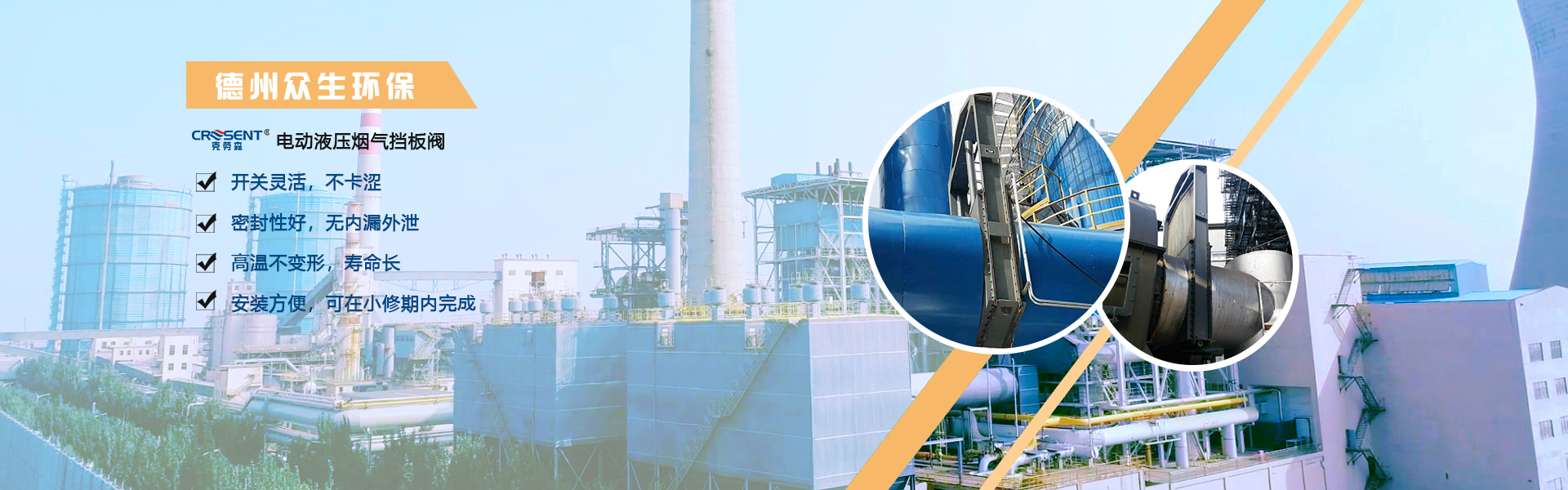

Entry plate door
The inlet damper, also known as the primary flue gas damper, is a type of damper situated between the boiler and desulfurization systems. Its function is to open the desulfurization system to channel flue gas into the FGD system, and to close the desulfurization system to prevent flue gas from渗入 and渗出 the FGD system.
2. Exporting Barrier Doors
The desulfurization system's flue gas outlet is connected to the chimney. The function of the exhaust flap door is to control whether the flue opens into the chimney and to prevent the leakage of flue gas from the flue.
3. Bypass Damper Door
The desulfurization system is equipped with a bypass flue, which houses bypass smoke damper doors. These doors serve to provide a bypass channel for flue gas during FGD system inspections, maintenance, or abnormal conditions, ensuring the safety of the desulfurization system. The opening and closing of the bypass flue in the desulfurization system are achieved through the smoke damper doors.
The smoke damper doors used for the inlet in smoke damper gates are mostly made of carbon steel due to the higher temperature of the smoke to be processed. In contrast, the smoke damper doors for the bypass are typically made of stainless steel and alloy steel.
The smoke damper door is primarily used in the inlet and outlet or bypass flues of flue gas desulfurization systems' absorption towers, or in flue gas denitrification and dust removal systems. It typically employs an electro-hydraulic damper structure, powered by hydraulic technology to drive the blade back and forth, achieving the function of isolating and shutting off flue gas.
