
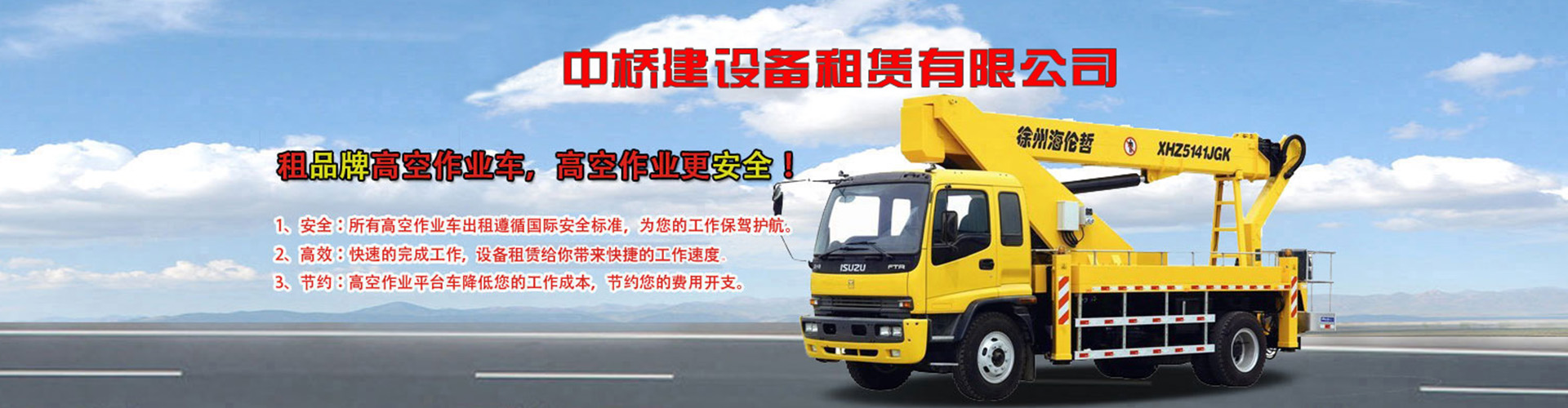
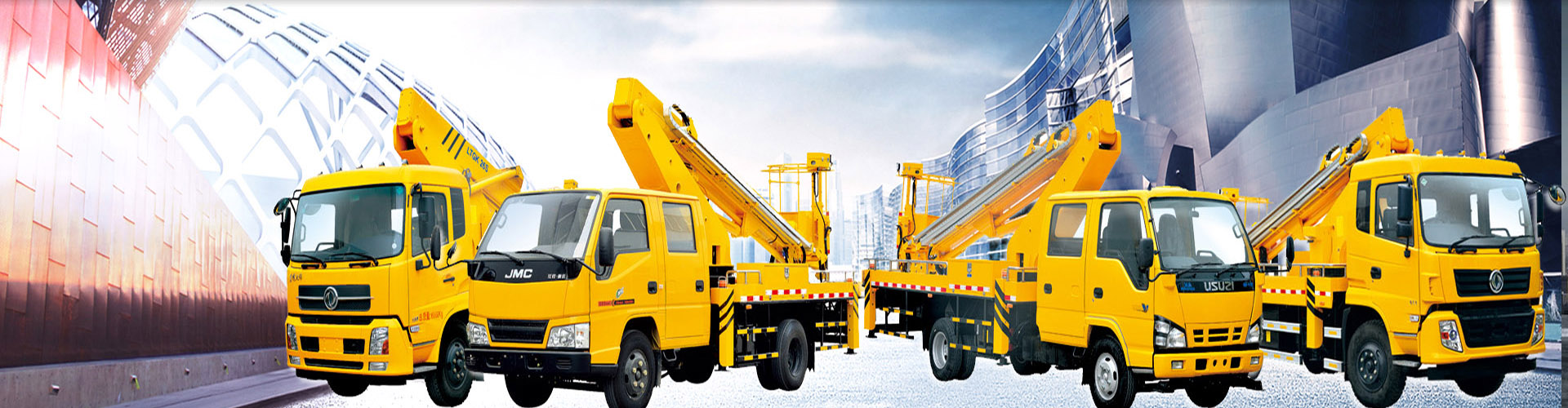

With the development of social economy and the advancement of science, elevated work equipment has garnered increasing attention. Elevating work platforms and scissor lifts, as representative equipment for elevated operations, play a crucial role in practical applications. So, what are the differences between elevating work platforms and scissor lifts?
First, let's briefly introduce these two types of equipment. An aerial vehicle is a vehicle designed for high-altitude operations, featuring a high working height and excellent obstacle clearance. It typically consists of a platform and a set of telescopic booms, allowing for movement in both horizontal and vertical directions to complete various high-altitude tasks. On the other hand, a lift vehicle is a device that elevates a载人 or载货 platform to a certain height using hydraulic cylinders or other power sources, usually requiring installation on a fixed base.
The differences between aerial work platforms and scissor lifts are primarily reflected in the following aspects:
Firstly, regarding the application environment. Aerial work platforms are commonly used in a wider range of settings, such as urban, rural, and industrial areas, suitable for various high-altitude operations in different scenarios. On the other hand, scissor lifts are primarily used in fixed indoor or outdoor locations like factories, warehouses, and parking garages, requiring installation and use tailored to the specific environment.
Next is the operational scope. The operation of the elevated vehicle is relatively limited, typically confined to the platform and restricted by height. In contrast, the scissor lift can perform a broader range of tasks after ascending, allowing for高空 work and can be equipped with various attachments to expand its operational scope.
Again, it's about the operation method. Aerial work platforms usually require operators to control them, which necessitates certain driving skills and experience. In contrast, scissor lifts are typically operated via remote controls or buttons, making the operation simpler and more convenient, and easier to master.
Additionally, the structures and appearances of aerial work platforms and scissor lifts also differ. Aerial work platforms typically consist of a platform and an extendable arm, featuring a larger and bulkier design. In contrast, scissor lifts usually comprise a passenger or cargo platform and a supporting base, presenting a smaller and more compact design.
In summary, although both aerial lifts and scissor lifts are equipment for high-altitude work, there are certain distinctions between them in terms of usage environment, operational range, operation methods, and structure and appearance. When selecting high-altitude work equipment, it's crucial to choose the appropriate one based on specific circumstances to enhance work efficiency and ensure safety.
