

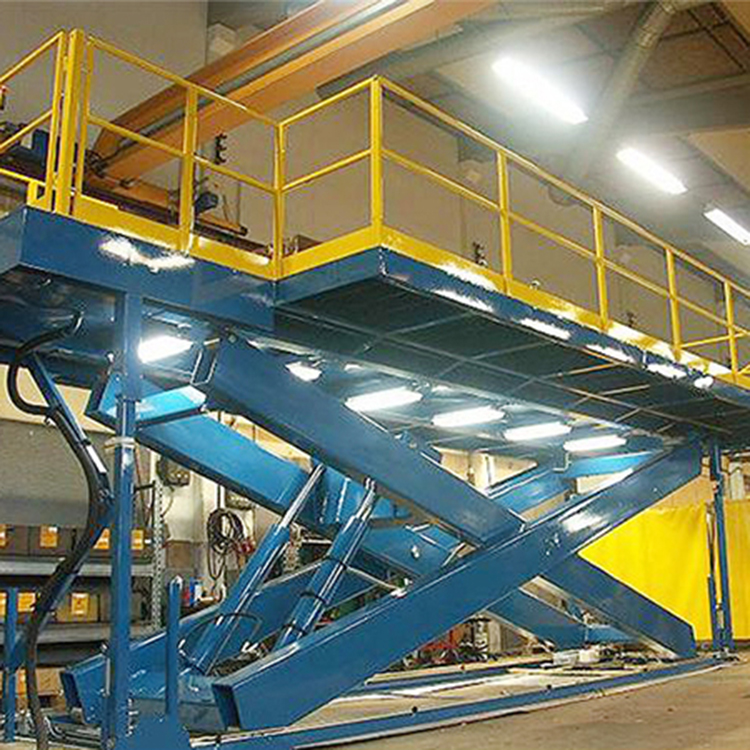

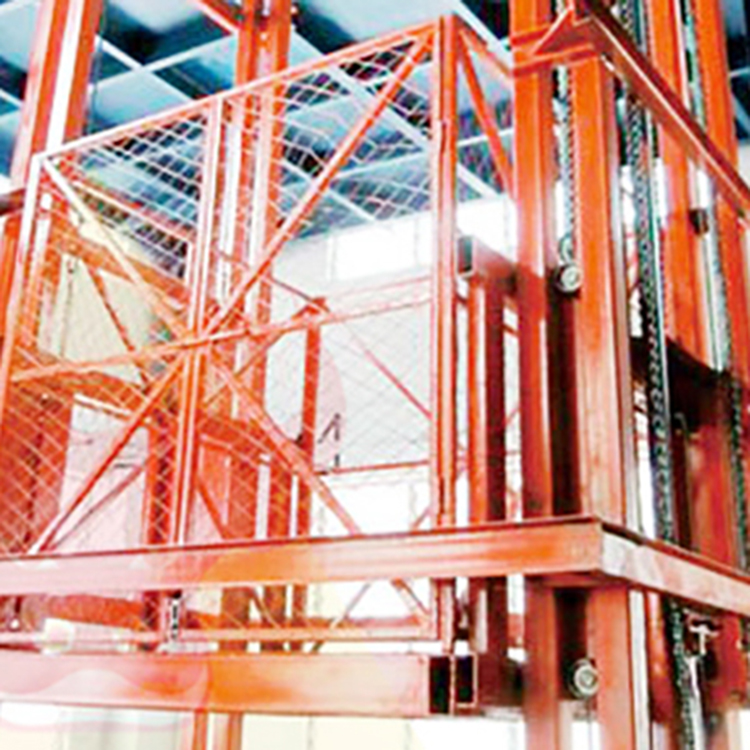
Hydraulic oil is pressurized by a vane pump and flows through a filter, explosion-proof solenoid directional valve, throttle valve, hydraulic check valve, and balance valve into the bottom of the cylinder, causing the cylinder's piston to move upwards and lift heavy loads. The oil returning from the top of the cylinder passes through the explosion-proof solenoid directional valve back to the oil tank. The rated pressure is adjusted via a relief valve, and the pressure gauge reading is observed to monitor pressure.
The cylinder piston moves downward (i.e., the heavy object descends).
Hydraulic oil enters the top of the cylinder through an explosion-proof solenoid directional valve, and the oil returning from the bottom of the cylinder flows back to the oil tank via a balance valve, a hydraulic check valve, a throttle valve, and an explosion-proof solenoid directional valve.
To ensure smooth descent of heavy loads and reliable braking safety, a balance valve is set on the return oil path. The balance circuit maintains pressure, ensuring the descent speed is not affected by the weight of the load. Flow is regulated by a throttle valve to control the lifting and lowering speed.
To ensure braking safety and prevent accidents, a hydraulic lock, i.e., a hydraulic non-return valve, has been added to safely lock automatically in case of an unexpected burst in the hydraulic lines.
Equipped with overload and sound-activated alarm systems to differentiate between overload conditions or equipment malfunctions.
Electrical control systems utilize explosion-proof buttons SB1-SB6 to control motor rotation and the reversal of explosion-proof solenoid directional valves to maintain lifting or lowering of the load. Time delays are adjusted through the "LOGO" program to prevent frequent motor startups, thereby extending its service life.
1. Lightweight, highly maneuverable, suitable for single-person operation.
2. Customized stay cleat system for smooth and easy lifting.
3. Compact structure with small transport dimensions, allowing for easy entry into standard elevator cabins and smooth passage through doorways and narrow passages.
4. Dual-protection tripod structure for enhanced safety during operation, and capable of ascending and descending close to the work surface.
The double-column aluminum alloy lifting platform is a brand new generation product with an overall design using high-strength aluminum profiles. Due to the high strength of the profiles, it minimizes the tilt and swing of the lifting platform. It features a dual-pole structure, with a large carrying capacity, spacious platform area, excellent stability, flexible operation, and easy movement. Its lightweight appearance allows for high lifting capability in a compact space.
The elevator is widely used in factories, hotels, buildings, shopping malls, stations, airports, sports stadiums, etc. It can be used for the installation and maintenance of power lines, lighting equipment, overhead pipelines, and single-person高空work requiring elevated operations, such as high-altitude cleaning.

