
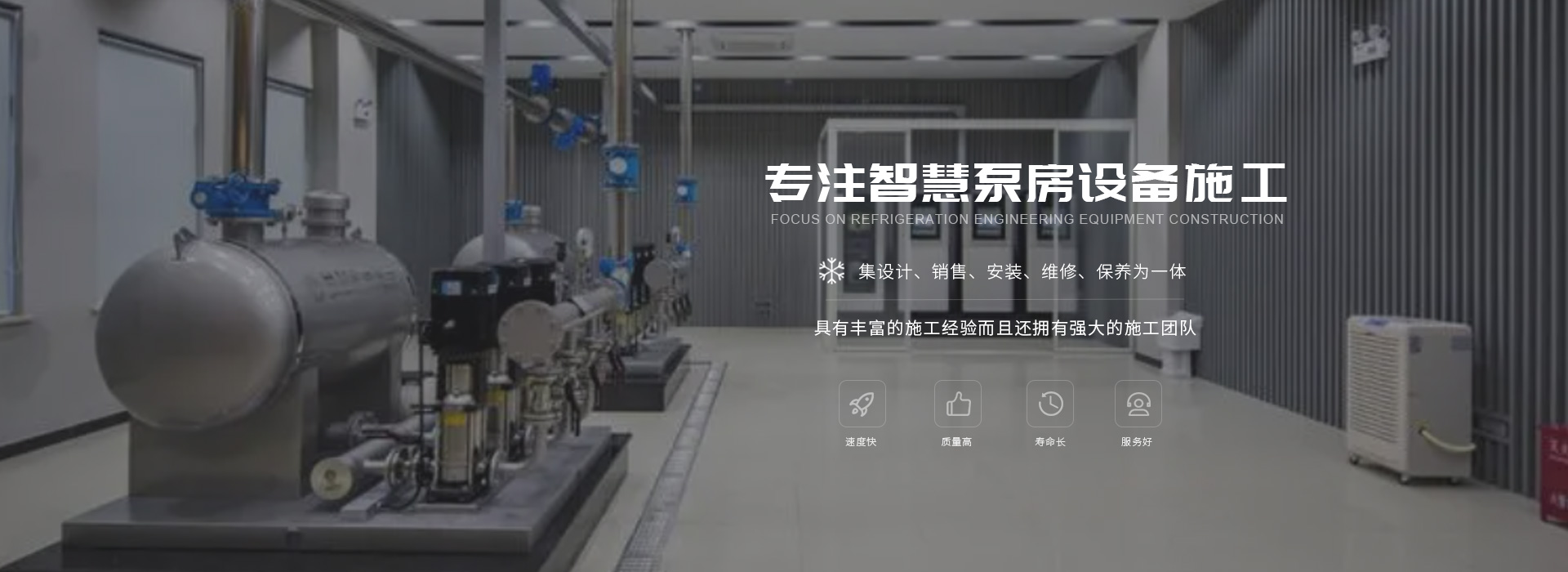

Firstly, the construction standards for intelligent standardized pump houses must consider the location and architectural structure. The site selection should take into account factors such as terrain elevation, surrounding environment, and pipeline layout, while the architectural structure must meet requirements for safety and stability, ease of maintenance, and aesthetics. Secondly, the selection and arrangement of internal equipment in the pump house are also crucial. Based on the pump house's purpose and process requirements, appropriate pumps and auxiliary equipment should be chosen, and arranged rationally to ensure the smooth operation and maintenance of the pump house.
Additionally, the construction standards for intelligent standardized pump rooms must also consider the design and application of intelligent control systems. By utilizing advanced sensors, automatic control equipment, and remote monitoring technology, intelligent monitoring, remote control, and fault diagnosis of pump room equipment can be achieved, enhancing the operational efficiency and reliability of the pump room. Furthermore, real-time monitoring and analysis of parameters such as energy consumption, water quality, and water pressure can be conducted, providing data support for the operation and maintenance of the pump room.
In addition, the construction standards for intelligent standardized pump rooms must also consider energy conservation, environmental protection, and safety reliability. By optimizing the design of the pump room, selecting energy-efficient equipment, and rationally utilizing renewable energy, the energy conservation and environmental protection goals of the pump room can be achieved. At the same time, strengthen the safety management of the pump room and develop emergency response plans to ensure the safety of equipment and personnel.
In summary, the construction standard for intelligent standardized pump rooms is a comprehensive project with many factors to consider. Only by scientifically and reasonably addressing aspects such as site selection, architectural structure, equipment selection, intelligent control systems, energy conservation and environmental protection, as well as safety and reliability, can the intelligent operation of pump rooms be achieved, providing better support for the construction and operation of urban water supply and drainage systems. Therefore, during the construction process of pump rooms, it is essential to fully consider the construction standard for intelligent standardized pump rooms to ensure sustainable development and operation. For business inquiries, please contact Mr. Zhou at 13548698077.
