

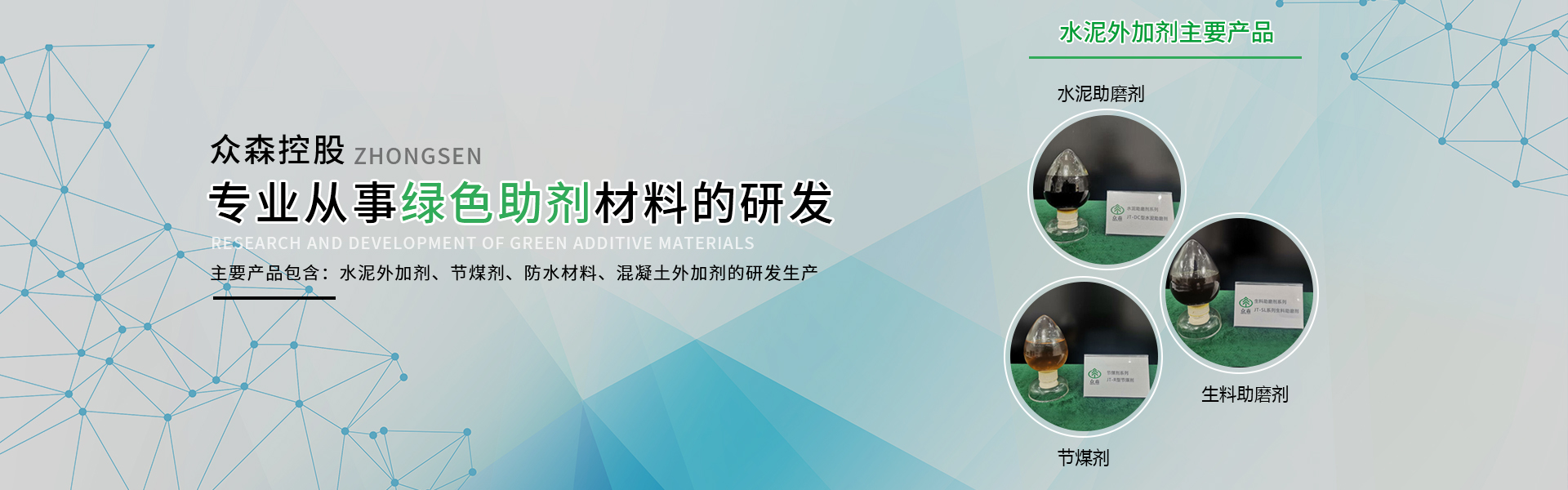


Cement grinding aids are gaining popularity among cement companies. What effects can be achieved by using cement grinding aids?
(1) Enhance grinding efficiency by adsorbing abrasive particles onto the surface, which reduces the surface free energy of the particles and decreases grinding resistance. This can save 4 to 12 kWh of power consumption per ton of cement, leading to a cost savings of 7 to 15 yuan per ton for the enterprise. Additionally, it can reduce CO2 and SO2 emissions, contributing to environmental protection and enhancing the utilization of industrial waste.
(2) Increase production capacity, which can raise the output of the mill by 10% to 25%, meet the market demand during the peak cement season, expand market share, and avoid customer loss due to insufficient cement production capacity during the peak season. Expand production scale without increasing equipment investment, and improve annual production capacity. If the annual production capacity remains the same, reduce grinding time, reasonably avoid high electricity prices and peak usage times, and schedule equipment maintenance efficiently.
(3) Enhance cement fluidity and dispersion; abrasive molecules form a protective layer on cement particles, making them less prone to wetting and reducing electrostatic attraction between particles, thereby improving cement fluidity and reducing handling time and costs, as well as pumping costs and blockage index. This is particularly beneficial for waterway, port handling, and long-distance road transportation. It also extends cement storage time, minimizing the hassle and costs associated with cleaning.
(4) Enhance cement performance by increasing the particle ratio of 3~32μm particles in cement, effectively improving the particle gradation and promoting the sphericity of cement particles. This boosts the roundness coefficient of cement particles, resulting in a 2~4MP increase in 3-day strength and a 4~8MP increase in 28-day strength. Make it more in line with national standards or, within the scope of national standards, rationally utilize weathered clinker or incorporate more admixtures to reduce production costs, lower energy consumption, minimize environmental pollution, and make greater use of industrial waste and secondary energy sources.
(5) Enhanced effects are noticeable, aiding in the production of high-standard cement. The produced cement blends well with various concrete admixtures without affecting the water demand of concrete, thereby improving the strength of concrete across all age stages.
(6) Reduce mill load, enhance powder selection efficiency, improve the utilization rate of mill accessories and equipment, lower maintenance costs per ton of cement produced, increase labor efficiency, and save office expenses.
(7) The product does not affect the durability of concrete, nor does it reduce its frost-thaw resistance or carbonation resistance. It does not impact the dry shrinkage rate of cement sand, contains no chloride ions, has low alkali content, and no ammonia release was detected. It offers performance indicators that can continuously enhance the strength of concrete in the later stages.
