
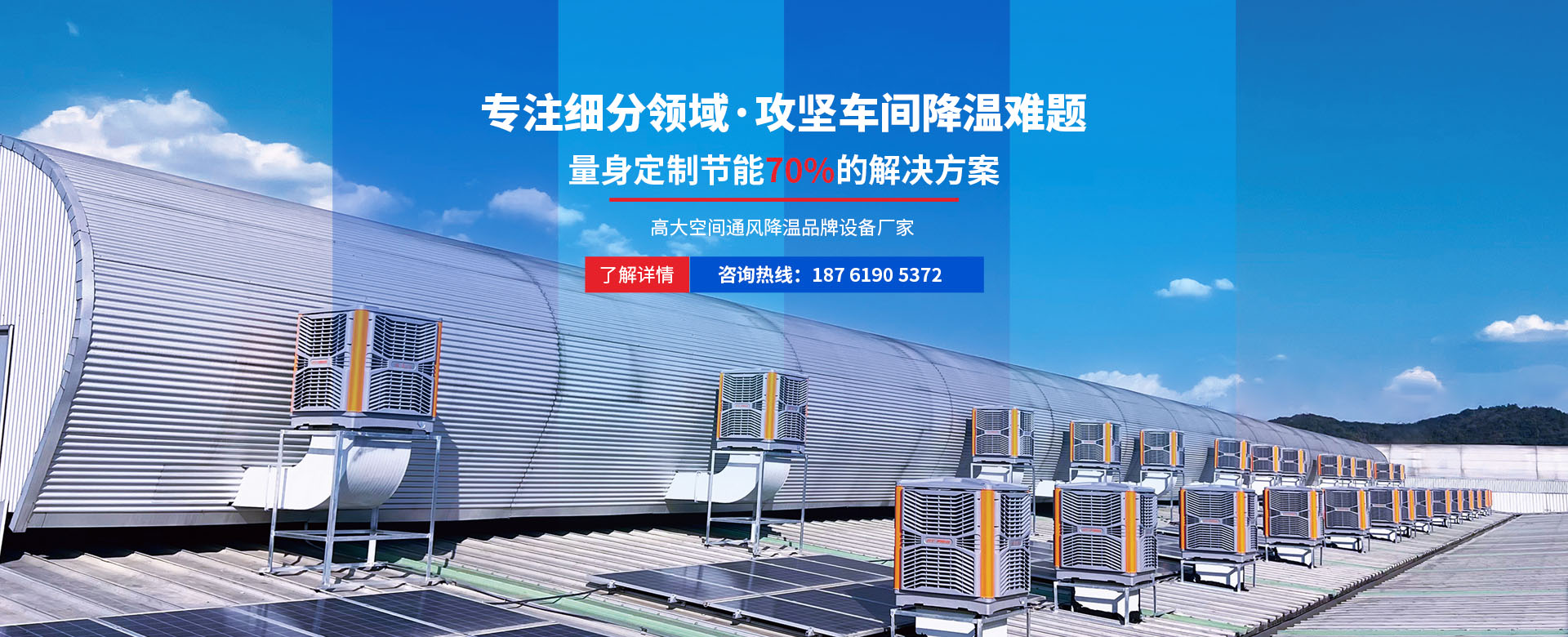



As science and technology continue to evolve, so does the demand for fan usage. Currently, the trend in external fan technology is towards larger capacity, higher efficiency, miniaturization at high speeds, and lower noise levels. Industrial energy-saving fans are developing along this trajectory.
Large wind turbine capacities continue to increase. As the scale of various industrial installations grows larger, there is an objective need for the capacities of different types of fans to also continually expand. Larger-sized turbines are expected to be in demand in the market over the next few years.
Low Noise Technology. The noise from fans is one of the main sources of noise pollution in industrial production. The large-scale and high-speed development of fans has further highlighted the noise issue. For low-frequency noise, fans primarily reduce noise by improving the structural design of the fan, lowering the inherent noise level. If the required standards are not met, measures such as adding silencers can be taken.
In summary, these technologies are both the future trend for the external fan industry and the technical focus for the internal fan sector.
The Impact of Industrial Energy-Saving Fan Blade Shape
The shape of the fan blades significantly affects the fan efficiency. The shape of the blades directly influences the vorticity intensity near them, thereby impacting the fan's efficiency. Therefore, improving the blade shape to achieve better streamline and appropriate bending angles not only helps reduce vorticity noise but also greatly enhances the fan efficiency.
Leaf Material Impact:
Tests indicate that the material of the fan blades has a certain degree of impact on noise levels. For instance, cast aluminum blades produce less noise than stamped steel blades; nylon blades generate less noise than metallic ones. Generally speaking, the higher the material's wear coefficient, the quieter the noise level.
Leaflet Count Impact:
Increasing the number of fan blades can enhance the airflow of the fan at a constant speed. Alternatively, achieving the same airflow can reduce the fan's speed, thereby lowering the noise level. However, when the number of blades exceeds six, adding more blades results in only limited airflow increase and can often have a negative impact on noise reduction.
Leaf Width's Impact:
Low-speed, wide-blade fans produce 4dB(A) less noise and consume 27% less power compared to high-speed, narrow-blade fans at the same airflow. Reducing the gap between the fan and the shroud can prevent air turbulence and lower fan noise. Tests show that when the gap is zero, the airflow increases by 27% and the noise decreases by 3dB(A). Reducing the speed to restore the airflow to its original level can further lower the noise by 2dB(A).
