
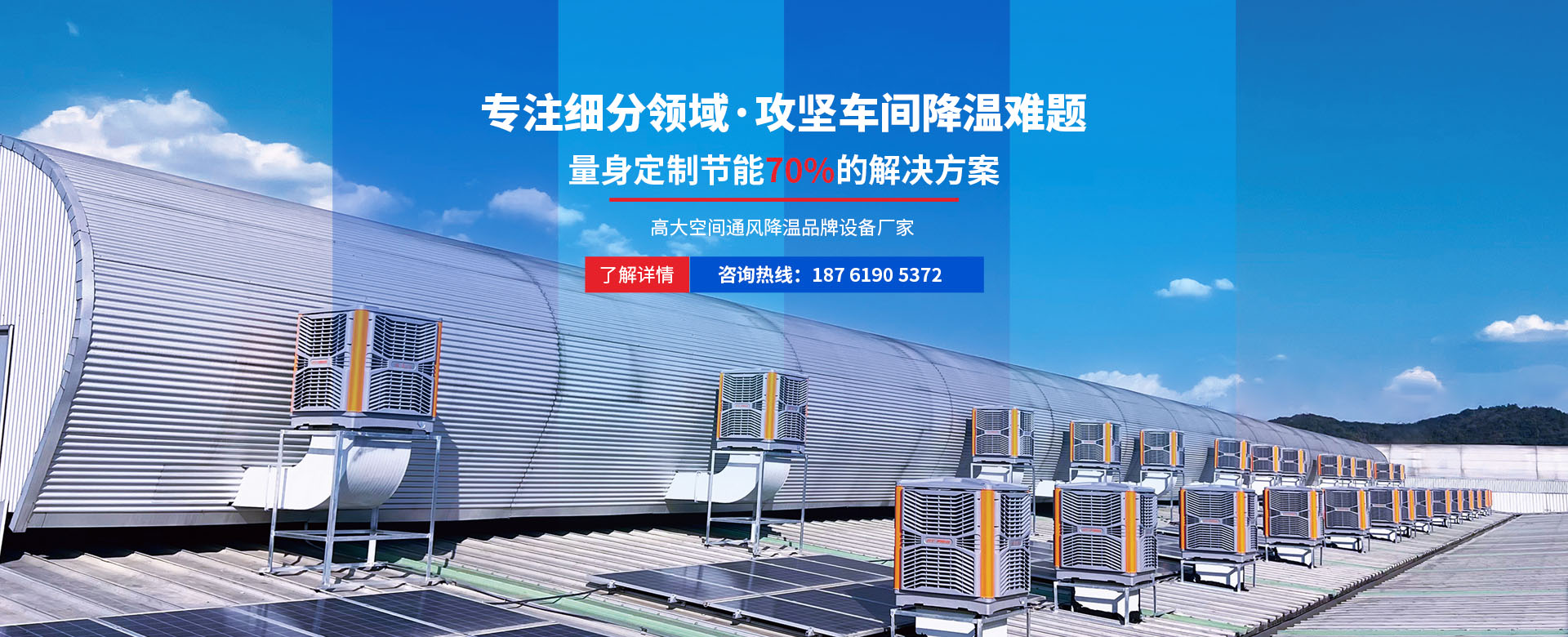



The installation of the cold air machine is extremely important and critical for the product itself, as it affects its subsequent use and maintenance. Therefore, it cannot be overlooked. Based on this, to ensure a smooth installation process, let's take a closer look to avoid any mistakes during operation.
The installation methods of coolers are typically floor-mounted, wall-hung, ceiling-mounted, and roof-mounted. Therefore, depending on the different installation types, there are three main air distribution methods: direct air supply, ducted air supply, and localized air supply.
Cold Air Fan Installation Method 1: Wall-mounted Installation
1. The welding and installation of the triangular bracket must be secure, with no signs of looseness. Additionally, the maintenance platform for the cold air unit should be able to bear a certain amount of weight.
2. The requirement for the main unit of the cold air blower is that it should be installed horizontally, and the flange on top should be consistent in height with the cross-section of the air delivery bend.
The wiring box on the main unit of the cold air blower should be easily accessible for maintenance and other tasks. Additionally, adequate moisture and rainproof measures should be taken to prevent water from entering.
Roof-mounted Cold Air Fan Installation Method
1. Joints between angle iron frames and reinforced concrete are typically secured with bolts, ensuring a sturdy connection that is less prone to loosening. For the installation of cold air machines, a level installation is recommended.
2. The opening size of the roof must not exceed the dimensions for the air duct installation; otherwise, issues may arise. For the air ducts, it is also necessary to perform waterproofing and other treatments to ensure safety.
3. If reinforcement is needed at the four corners of the cold air chiller, a support frame can be added to achieve this goal.
For the installation of coolers, the above provides technical guidance on two installation methods, so that everyone can have a reference and comparison during actual operations, thereby ensuring the smooth progress and completion of this important task. This way, the use of coolers can yield favorable results, reflecting their intended function.
