


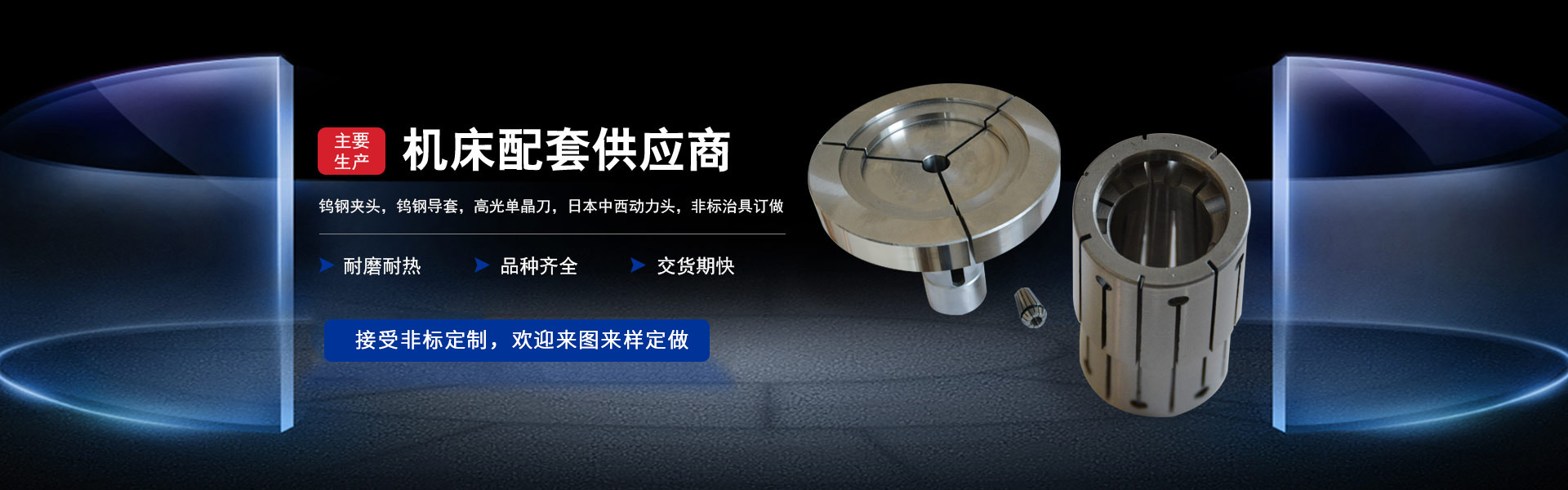

The workpiece size range provided by the collet is narrower than that of the chuck jaws. For certain machining tasks, the advantages it offers in terms of speed, accuracy, and productivity may be crucial.
What type of collet is more effective, and several factors should be considered when making a decision. When evaluating the choice between a spring collet or a chuck for a specific lathe machining task, all of the following factors should be taken into account:
1. Regarding the quality of collets, assuming the same spindle horsepower is used to drive both collet chuck and spring clamp, the heavier collet chuck requires more time to accelerate to the desired speed. This extended acceleration time will lengthen the working cycle and reduce productivity.
2. Centrifugal force is relevant, as it increases with the square of the rpm value. Therefore, it is crucial in high-speed cutting operations. For instance, doubling the spindle speed results in four times the centrifugal force. This force can pull the chuck jaws away from the center, often reducing the clamping force. However, with a spring chuck, centrifugal force does not cause significant impact. Thus, the clamping force remains more stable across the entire range of processing speeds.
Spring collet machining operations apply clamping force to the entire circumference of the part, rather than just the selected contact area, thus achieving excellent concentricity—a crucial factor for secondary machining projects. Secondary machining must consider accuracy related to primary machining, as spring collets offer strong accurate clamping capabilities, allowing them to be used for secondary operations even when chuck jaws are used for primary machining. Chuck jaws with hollow soft collets can achieve TIR (Total Indicator Reading) repeatability accuracy within the range of 0.0006 to 0.0012 inches, while the typical repeatability accuracy of spring collets is 0.0005 inches TIR or better. To further enhance secondary machining precision, the concentricity of the spring collet can be adjusted during installation.
The Spring Collet is particularly suitable for workpieces with diameters less than 3 inches. The Spring Collet imposes limitations on the length of the workpiece, particularly as it restricts the machine tool's axial (Z-axis) travel range due to its longer length compared to the chuck jaws. When the processing length of the workpiece requires nearly the full travel range of the machine tool, it is approximately time to use the chuck jaws.
