



Thick film integrated circuits and thin film integrated circuits are two different types of integrated circuits, with the main differences as follows:
Manufacturing Process
Thick Film Integrated Circuits: Utilizing processes such as screen printing, thick film pastes (like metal oxides) are printed onto ceramic or other insulating substrates. Subsequently, these are formed into circuit elements and interconnect lines through high-temperature sintering and other techniques.
Film Integrated Circuits: Employing physical vapor deposition techniques such as vacuum evaporation and sputtering, metal, semiconductor, and insulating thin film materials are deposited on substrates. Through micromachining processes like photolithography and etching, precise circuit patterns and components are formed.
Coating Thickness
Thick Film Integrated Circuits: The film thickness typically ranges from a few micrometers to several tens of micrometers.
Film Integrated Circuits: The film layer thickness typically ranges from a few nanometers to a few micrometers.
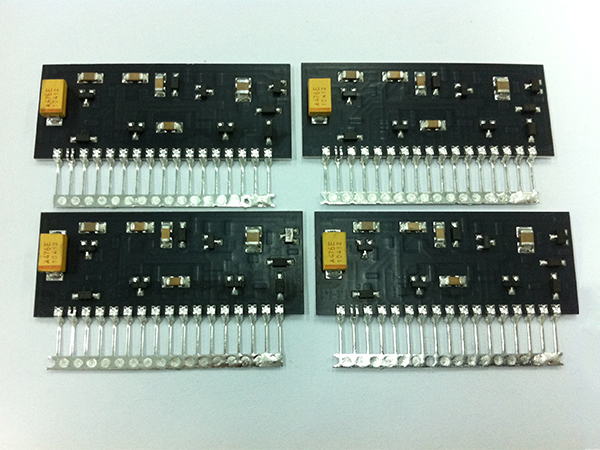
Component Precision and Performance
Thick Film Integrated Circuits: Components have relatively lower precision, such as resistance accuracy typically around ±5% to ±20%. However, they can withstand higher power, making them suitable for circuits that require high power but not necessarily high precision.
• Film Integrated Circuits: Offer high component precision with resistance accuracy up to ±0.1% or even better, featuring stable performance and excellent high-frequency characteristics, ideal for high-precision and high-frequency circuit applications.
Integration
Thick Film Integrated Circuits: Due to process limitations, the integration level is relatively low, typically used for simpler circuits with lower integration requirements.
• Thin Film Integrated Circuits: Enable higher integration, allowing a large number of transistors, resistors, capacitors, and other components to be integrated into a very small area, suitable for complex large-scale integrated circuits.
Cost
Thick Film Integrated Circuits: With relatively simple manufacturing processes and lower equipment costs, they hold certain advantages in application fields that are cost-sensitive and have high power requirements.
• Film集成电路:Manufacturing processes are complex, requiring high-precision equipment, and are relatively costly. However, they are widely used in high-performance, high-integration electronic products.
