


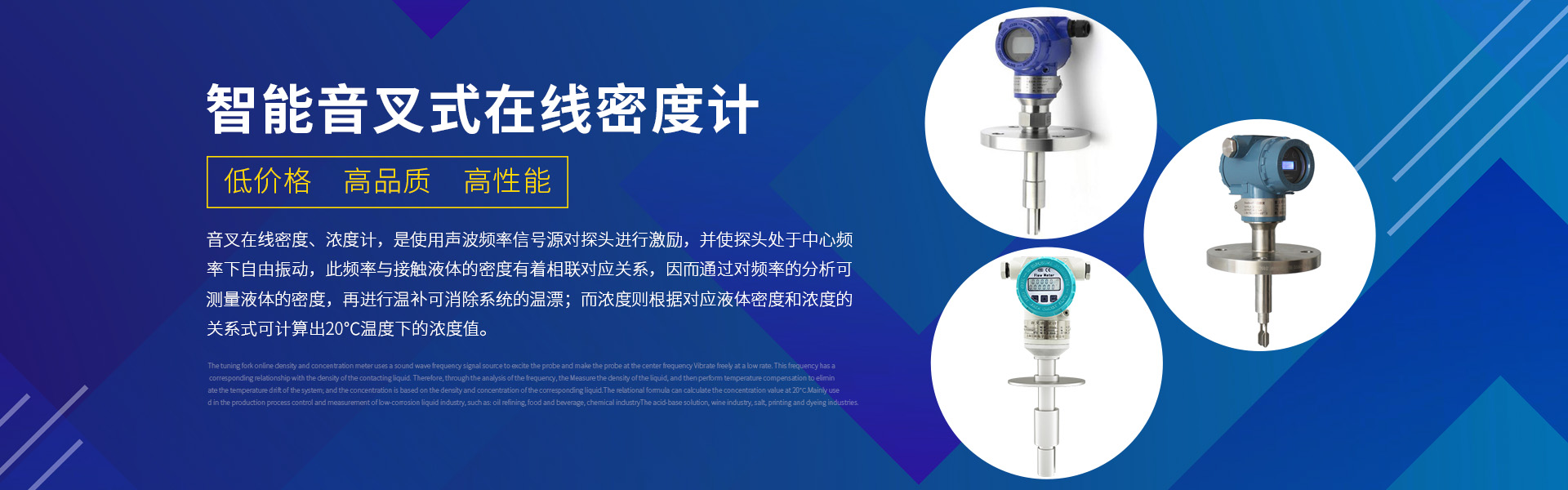

The proper installation of a tuning fork densimeter directly impacts the safe and smooth operation of the tuning fork level switch in the later stage, and also concerns the effective enhancement of production efficiency. This article provides a detailed introduction to the installation, wiring, and debugging of the tuning fork densimeter, to assist on-site instrument personnel in understanding the key points to consider during installation, and to minimize the occurrence of malfunctions and accidents during the operation of the level switch.
Before installation, please verify that the instrument model meets the environmental requirements on-site, such as process pressure, process temperature, and the chemical properties of the medium, to ensure the instrument can be used normally after installation.
In general, a tuning fork densitometer can be installed horizontally, vertically, or tilted at any desired location. However, if the medium being measured is particularly thick, it is necessary to install the tuning fork level switch vertically to minimize or avoid material adherence.
Install the tuning fork densitometer so that the fork face is aligned with the direction of the liquid's rise or flow. This ensures that material does not hang up or that measurement errors are not caused by the resistance of the medium against the fork.
Four: Avoid the Feed Inlet: When selecting the installation location for a tuning fork densimeter, it should be positioned to avoid measurement errors caused by installation near the feed inlet, which may even damage the instrument.
For pressure/vacuum applications, it is essential to ensure the integrity of the seal at process connections for containers or pipelines that are over- or under-pressure. Prior to installation, confirm that the sealing material meets the requirements for both the process temperature and pressure at the site.
Six: Moisture Protection: When instruments are installed outdoors or in humid environments, such as during rain or condensation, water and condensation will flow downwards. Therefore, before connecting the cables, please bend the cable lines downwards to prevent water or moisture from entering the instrument.
