


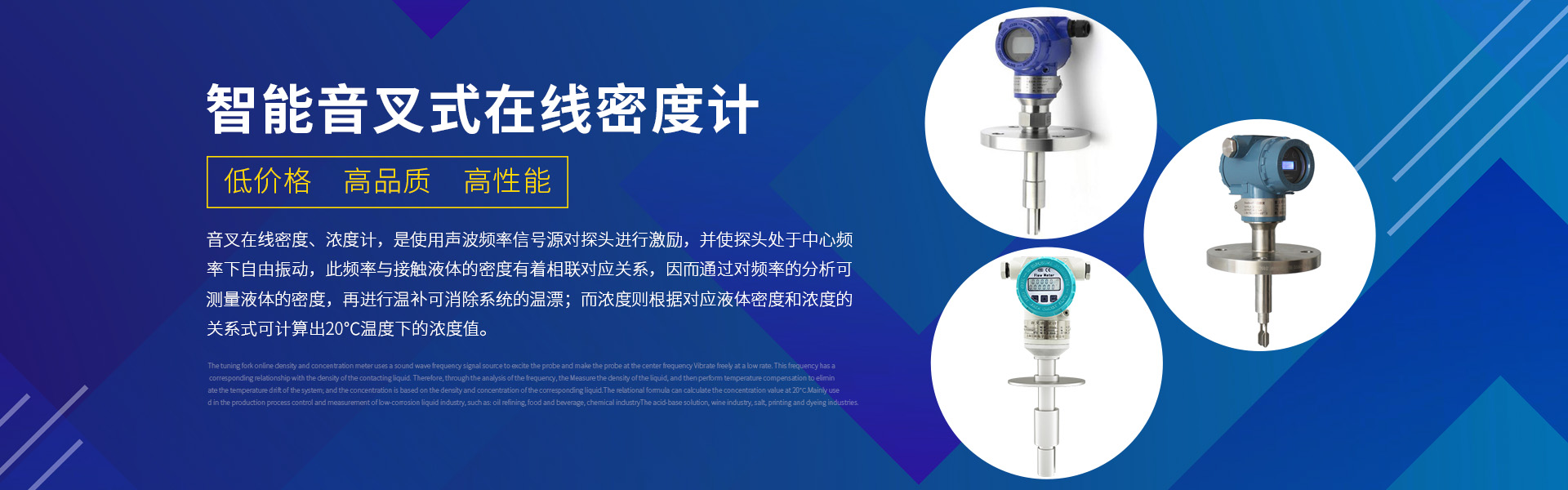

Digital density meters and densitometers are primarily composed of an U-shaped glass oscillating tube, an electromagnetic oscillator, a temperature controller, as well as an indicator unit and a data processing unit.
The principle of the oscillator tube method is: utilizing the oscillation frequency of a glass U-shaped tube based on electromagnetic induction, which involves placing a magnet on the U-shaped glass measuring tube and using an oscillator to induce oscillations. The oscillation period of the glass tube is then measured by an oscillator sensor. Each U-shaped glass tube has its own characteristic frequency or oscillates at its natural frequency.
When an object fills the glass tube, its frequency changes, and the frequency change varies with different substances, which is a function of the mass of the material inside the tube. As the mass of the substance is added, the frequency decreases, meaning the oscillation period T increases. During measurement, certain substances are chosen as standard materials. After measuring the frequency, the density value of the measured substance is calculated by the difference in oscillation frequency between the measured substance and the standard material.
