
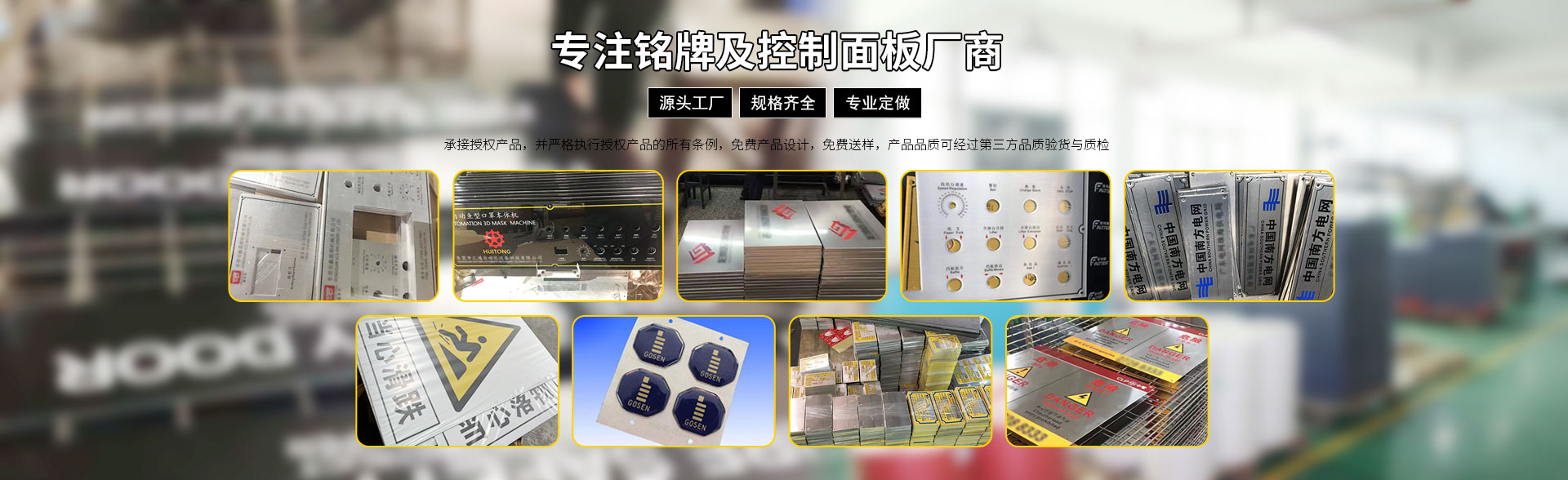



Metal nameplates are prone to corrosion and oxidation due to prolonged exposure to outdoor elements, which can directly affect the aesthetic appearance of the product surface. How can we prevent and mitigate the corrosion of metal nameplates? Next, we will explain the methods for preventing corrosion of metal nameplates one by one: Corrosion Prevention Methods for Metal Nameplates.
Choose corrosion-resistant inks
1. Utilizing corrosion-resistant screen printing imaging inks, which can be categorized into three types of corrosion resistance: a. Acid resistance; b. Alkali resistance; c. Acid and alkali resistance.
2. Utilizing ultraviolet imaging inks, also known as photosensitive blue ink, metal-sensitive photoresist, and photosensitive inks, these inks are characterized by UV imaging, precise graphics, and strong corrosion resistance. Printing methods include screen printing and spray gun application.
Layer Corrosion Protection Treatment
Metal nameplates are manufactured using a full coating of anti-corrosion protective paint, which can be cut, scraped, or etched using manual, mechanical, or computer-controlled cutting tools. The protective layer of the areas to be etched is removed, resulting in an anti-corrosion protective layer and graphic design. The coating methods include spraying, pouring, brushing, dipping, inverting, centrifugal casting, or film lamination.
2. Directly spray, brush, or silkscreen the above corrosion-resistant coating onto metal nameplates.
The patterns composed of photosensitive films obtained through chrome-plating printing technology are treated with chemical hardening or high-temperature hardening.
4. The graphic is composed of a mixture of photosensitive film, ink, and red powder, obtained through the chrome adhesive ink process. This photosensitive chrome adhesive film, when melted with ink, red powder, or toner, forms a graphic film that is acid-resistant. It is used as an etching protective layer, for metal etching, and in the production of printing plates or emblem-making components. Due to its less than ideal appearance and wear resistance, this thin film is rarely used directly on emblem graphics and thus falls under the category of process-based etching protective layers.
