
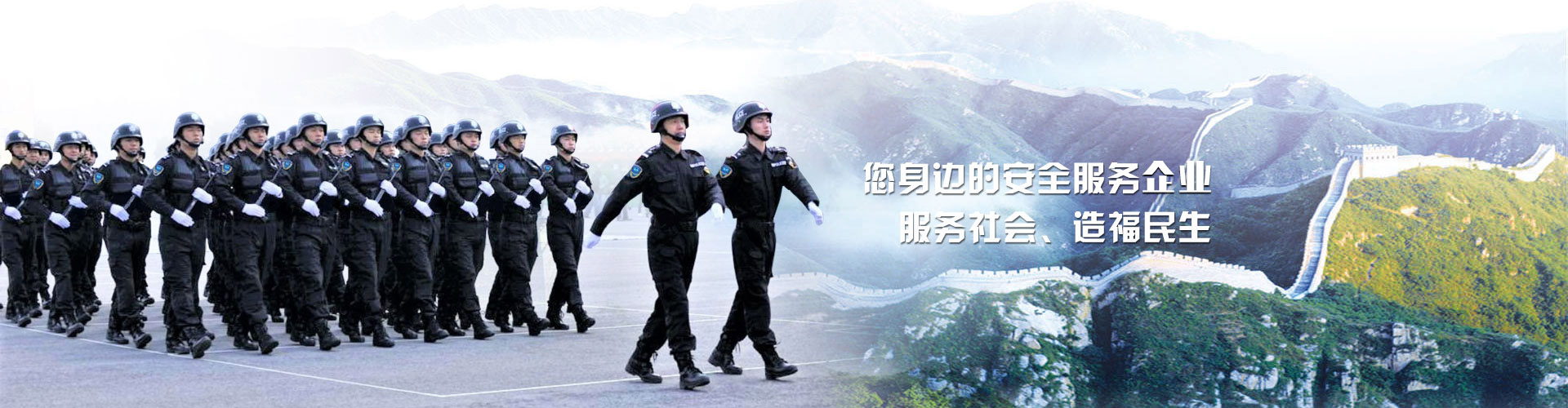



The bodyguard industry has long held the belief that bodyguards would rather die than make a mistake.
Bodyguards are often associated with headphones, stoic expressions, well-tailored suits, martial arts skills, and stepping in to protect their clients. This perception, largely stemming from the personal bodyguards of heads of state and other VIPs, is further reinforced by films like "The Bodyguard of Zhongnanhai" and "Bodyguard." Moreover, the individuals they protect are typically either extremely wealthy or of high status, which adds an aura of mystery to the term "bodyguard" itself.
In contrast, while the modern bodyguard industry in China is still in its infancy, the profession itself has ancient roots. Ancient security firms that protected merchants and their goods served as the prototypes for today's bodyguard companies. However, with the advent of "trains" and "fast guns," these firms declined and gradually faded from the historical stage. It wasn't until January 1, 2010, that the Administrative Regulations for Security Service Industry in China, officially came into effect, categorizing "bodyguard services" under the security service scope and stipulating that individuals with relevant qualifications could establish security companies. Thus, the private bodyguard industry finally began to operate under the legal sun.
Currently, there are over 170 security guard companies in China, according to incomplete statistics, which can be described as a flourishing industry in terms of numbers. However, the industry is fraught with problems in terms of quality, with some companies promising high salaries for security guard training while actually defrauding students of their tuition fees, and others providing security services that are actually the handiwork of organized crime.
The chaotic state of the bodyguard market is awaiting a benchmark from a notary system to unify the disarray, as unified standards and fair competition are the foundation for a healthy and upward industry. The bodyguard industry is facing several challenges: inconsistent quality among bodyguard companies, mixed abilities among bodyguard members, and a resulting scarcity of high-quality bodyguards. Unfree competition in the bodyguard market is also an issue, as the services of bodyguards do not form a systematic structure. Additionally, within the domestic market, the public often confuses bodyguards with enforcers and henchmen.
Therefore, in line with the sustainable development of the entire market, we hope that all industry professionals can set an example and collectively maintain the health of the market!
