


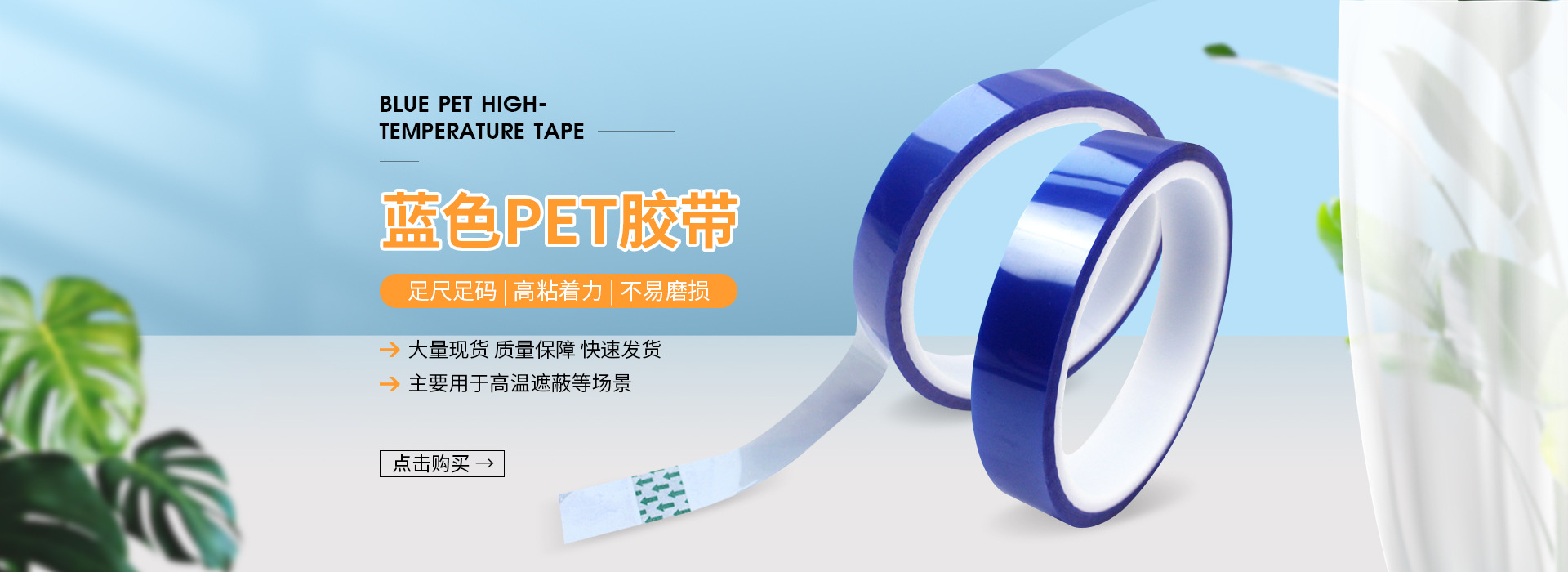

What's the difference between high-temperature tape and regular tape?
Different temperature resistance properties
Compared to standard tape, high-temperature tape boasts superior temperature resistance. Generally, standard tape can only be applied at room temperature and is prone to deformation and peeling in high-temperature conditions. In contrast, high-temperature tape demonstrates excellent heat resistance in high-temperature environments, capable of withstanding harsh conditions such as high temperatures and pressures.
2. Different materials
Regular tape is typically made from materials like PVC, PE, and PP, whereas high-temperature tape uses more specialized materials, such as PTFE, silicone, glass fiber, and aluminum foil. Due to the difference in materials, there is a significant variation in performance between the two.
3. Varying Purposes
Due to their varied performance and material characteristics, high-temperature tape and regular tape have different applications. Regular tape is widely used in daily life for sealing boxes, packaging, labeling, etc., whereas high-temperature tape is primarily applied in industrial production and scientific research fields, such as welding, electronic component encapsulation, and sealing materials.
The application fields of high-temperature adhesive tapes are quite extensive, encompassing the following aspects:
Suitable for sealing and packaging in various high-temperature environments.
2. Suitable for component encapsulation and insulation in the electronics industry.
High-temperature insulation and corrosion resistance for aerospace and automotive manufacturing industries.
High-temperature tape has demonstrated exceptional performance in heat resistance, corrosion prevention, insulation, and mechanical properties, becoming one of the key materials in various fields.
