


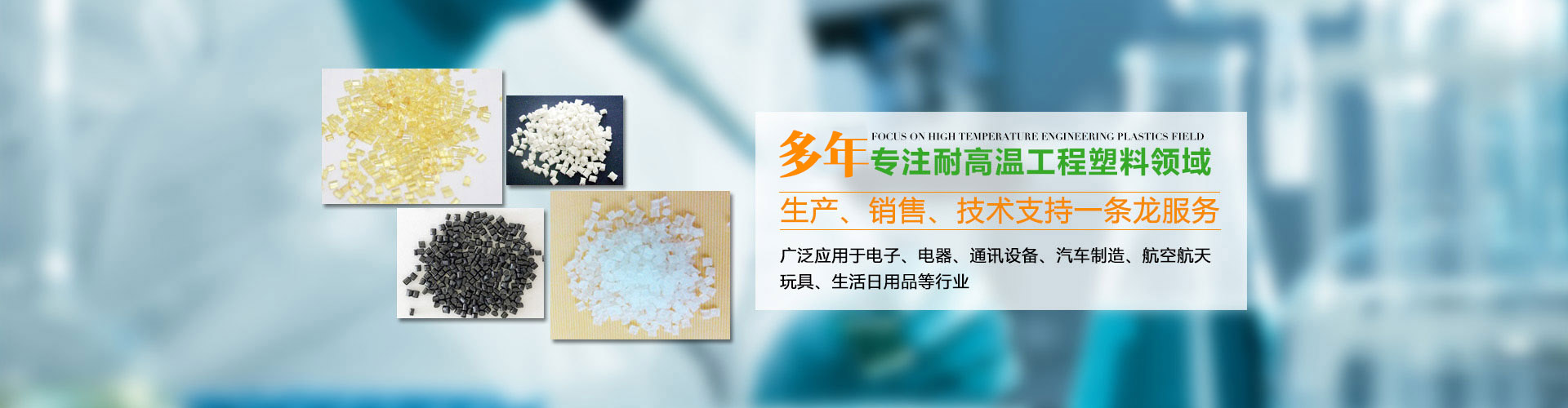

Polyphenylsulfide (PPS), also known as polyphenylene sulfide, is an excellent thermoplastic specialty engineering plastic with outstanding features such as high-temperature resistance, corrosion resistance, and superior mechanical properties. PPS is a sulfur-containing aromatic polymer; linear PPS becomes thermosetting plastic after cross-linking at above 350°C, while branched-chain PPS is thermoplastic.
PPS Performance
PPS is a thermoplastic crystalline resin with a crystallinity of approximately 65%, appearing in white or amber hues. The density of pure PPS is 1.3 to 1.35 g/cm3, but the PPS used in applications is typically modified grades, such as glass fiber reinforced, inorganic filled, and carbon fiber reinforced, with the modified density increased to 1.60 to 1.68 g/cm3.
(2) PPS boasts high strength, rigidity, and dimensional stability, maintaining good rigidity even under high humidity conditions. It also exhibits exceptional fatigue resistance and creep resistance: its water absorption, oil absorption, molding shrinkage, and linear expansion coefficient are all very low.
(3) PPS contains sulfur atoms in its structure, with an oxygen index ranging from 46% to 53%. It can burn on fire but does not drip, and extinguishes itself upon removal from the flame, demonstrating excellent flame-retardant properties.
(4) PPS boasts excellent heat resistance with a melting point ranging from 275 to 291°C, a heat deflection temperature of 135°C, and can reach up to 260°C after glass fiber reinforcement. Its decomposition temperature is 400°C.
(5) PPS boasts excellent high resistivity and low dielectric constant, with its electrical insulation properties changing little with temperature. It maintains good electrical insulation even under high temperature and humidity conditions.
(6) PPS boasts excellent chemical resistance, withstanding corrosion from most acids, bases, and salts, except for strong oxidizing acids such as concentrated sulfuric acid, nitric acid, and "aqua regia." It remains insoluble in any organic solvent at temperatures below 200°C.
(7) PPS is an inert material with non-toxic oral intake, but during processing, if the temperature exceeds 370°C, PPS may undergo a small amount of thermal decomposition, releasing trace amounts of harmful gases such as SO, COS, CO, and CS.
Polyphenylsulfide (PPS), also known as polyparaphenylene sulfide, is a high-performance thermoplastic specialty engineering plastic with outstanding characteristics, including high-temperature resistance, corrosion resistance, and superior mechanical properties. PPS is a sulfur-containing aromatic polymer; linear PPS becomes thermosetting plastic after cross-linking at above 350°C, while branched-chain structure PPS is thermoplastic.
