



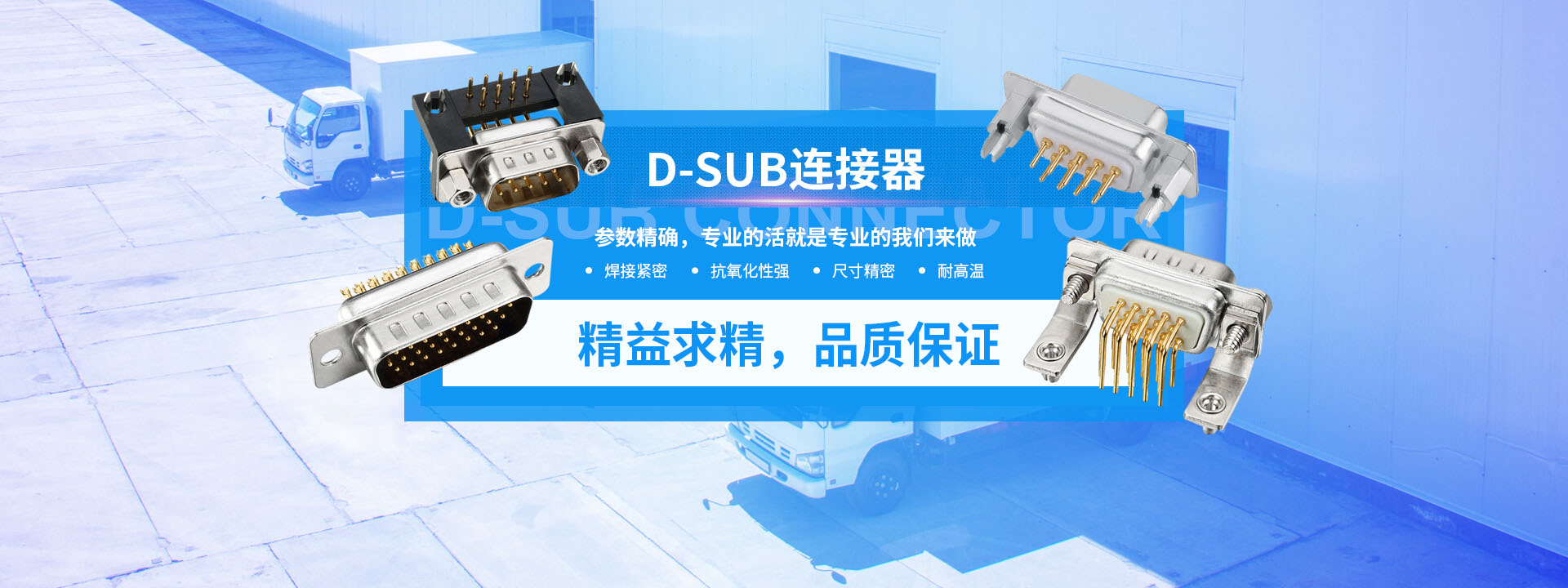

D-sub connectors have been widely used for many years. Developed by Cannon in 1952, they are now part of the CanT family. D-sub connectors have been used as multiplexers in many applications, but they are perhaps best known for their use in RS-232 serial connections. In fact, D-sub connectors have been used for serial connections on most computers over the years, and various types of D-sub connectors can still be found on most computers today.
D-sub connectors were initially known as sub-miniature connectors and are still commonly referred to as D sub-miniature connectors today. Although small when first introduced, they are no longer considered true sub-miniature connectors.
D-sub connectors typically include two or more parallel connection lines.
The connector features a metal shell in D format. This not only provides mechanical strength to the connector but also offers some limited screening: the metal shells of the plug and socket contact to provide screening. Additionally, panel mount connectors are typically secured to the panel using nuts with additional threads, which allow the connector to be tightly mounted to prevent loosening.
Additionally, specific connectors can offer shielded backshells, which can be connected to cable screens, or if they are plastic, they can provide protection. The original numbering system for D-type or D-sub connectors uses "D" as a prefix (naming the series), followed by the choice of A, B, C, D, or E based on the shell size.
Connector Coding Example: "25 pin D-type connector" can be represented as "DB-25P," and "9 pin socket" as "DE-9S." This original series of D-type connectors feature pin numbering of 9, 15, 25, 37, and 50 pins, with an additional 19-pin configuration. Common pin configurations include: A = 15 pins, B = 25 pins, C = 37 pins, D = 50 pins, E = 9 pins.
D-sub connectors come in various sizes and pin configurations. The pin layout for D-sub connectors is depicted across rows 2-5. The space between pins is referred to as the connector's density. D-sub connectors have three densities: standard, high precision, and dual precision. In common two-row pin types (such as 9, 15, 25, and 37-pin connectors), the pin spacing is approximately 0.108 inches (2.74mm), and the row spacing is 0.112 inches (2.84mm), as shown in the illustration. Using more rows of pins can achieve higher pin counts and increased pin density.
