

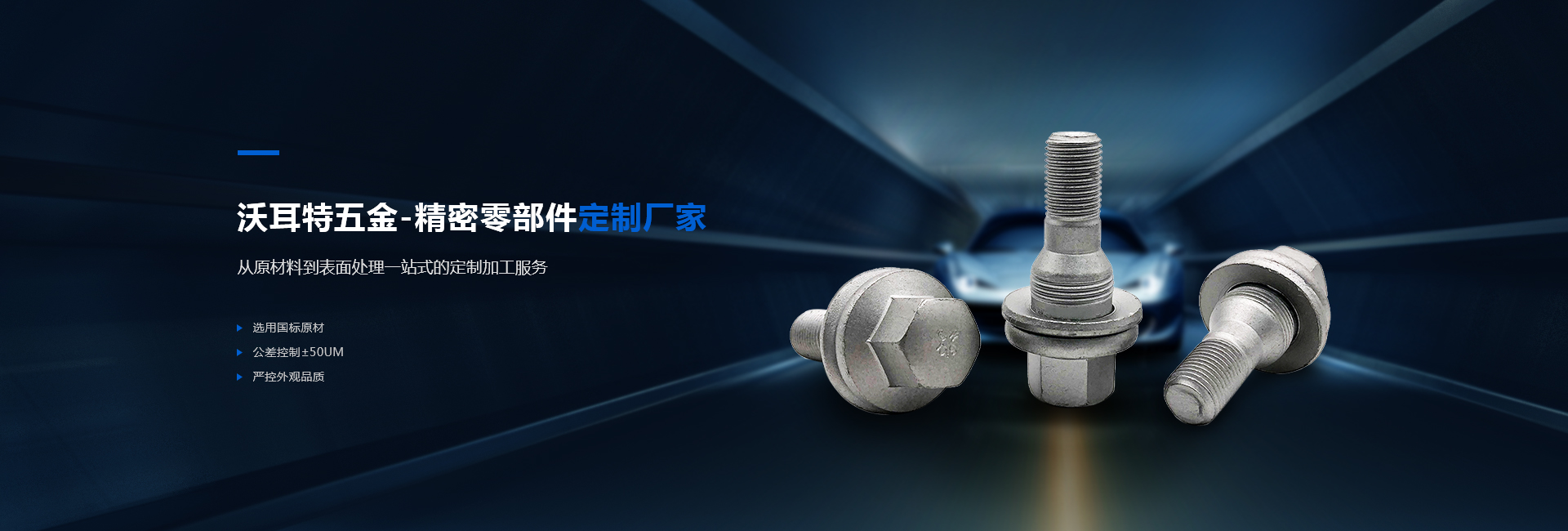


Reaming screws are used on thin plates or sheet metal, their working principle is to press the outer diameter of the reaming screw into the plate under external pressure, causing plastic deformation around it. The deformed material is squeezed into a guiding groove, thereby achieving a locking effect. The production process is similar to that of other screw production techniques.
The principle involves pressing flowered teeth into pre-drilled holes in sheet metal. Typically, the diameter of these pre-drilled holes is slightly smaller than the outer diameter of the rivet screws. Through the application of pressure, the outer diameter of the rivet screws is forced into the plate, causing the edges of the hole to undergo plastic deformation. The deformed material is then forced into a guiding groove, thereby creating a locking effect.
Materials include stainless steel, carbon steel, copper, and aluminum. The heads are typically flat (with round and hexagonal shapes, etc.), and the shafts are fully threaded. The underside of the head features splines that serve as anti-loosening devices.
Press-fit screws are categorized by material as high-speed steel press-fit screws, stainless steel press-fit screws, and copper, aluminum press-fit screws, each suitable for different environments. Sizes typically range from M2 to M6, with M4 to M6 being the most common. There is no unified national standard for press-fit screws; only industry standards exist. They are commonly used in industries such as electronics, communications, electrical appliances, enclosures, cabinets, sheet metal, and more.
