


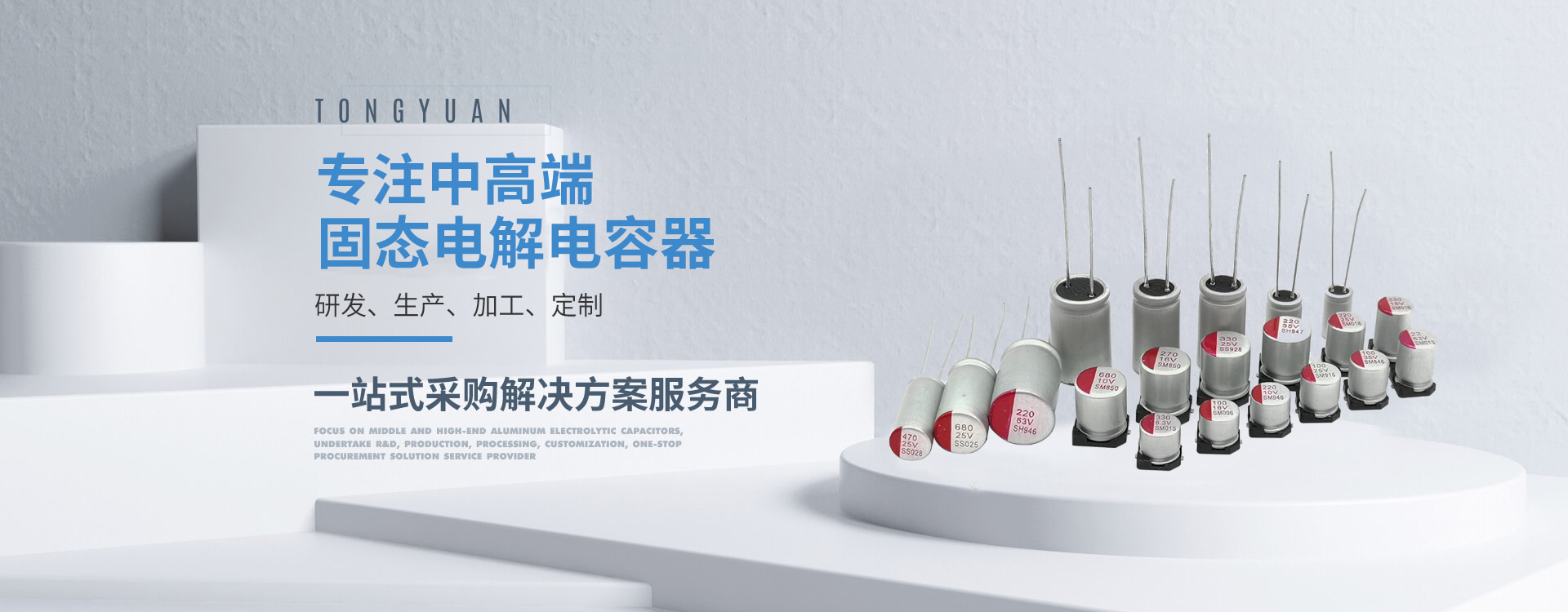

Electrolytic capacitors generally have a high capacitance. If a large capacitance non-polar capacitor is to be made, its volume becomes quite large. However, most polar capacitors use electrolyte as the dielectric material. Typically, polar capacitors have a higher capacitance per volume but a smaller size. Moreover, since the voltage in this circuit is unidirectional, polar capacitors can be utilized effectively.
In short, to achieve large capacitance and small size, some special materials and structures have been utilized, leading to various electrolytic capacitors with polarities. Common polar capacitors include aluminum electrolytic capacitors, tantalum electrolytic capacitors, and so on.
When using in electronic circuits, the positive and negative poles must not be reversed. In power circuits, when outputting positive voltage, the positive pole of the electrolytic capacitor is connected to the power output terminal, and the negative pole is grounded; when outputting negative voltage, the negative pole is connected to the output terminal, and the positive pole is grounded. When the polarity of the filter capacitor in the power circuit is reversed, the filtering effect of the capacitor is greatly reduced, causing fluctuations in the power output voltage on one hand and, on the other hand, the electrolytic capacitor components equivalent to resistors heat up due to reverse power supply. When the reverse voltage exceeds a certain value, the reverse leakage resistance of the capacitor becomes very small, resulting in the capacitor bursting and being damaged due to overheating shortly after being powered on.
