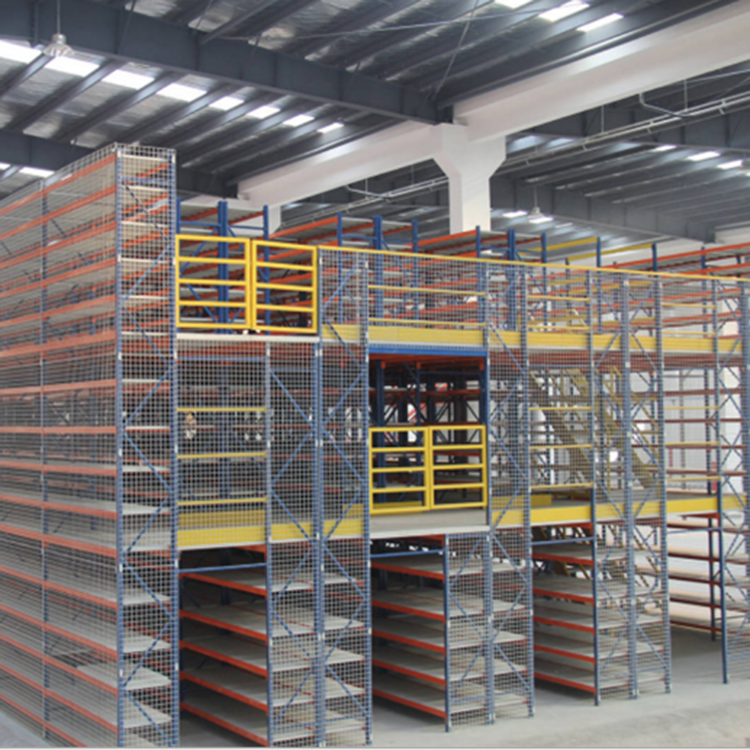


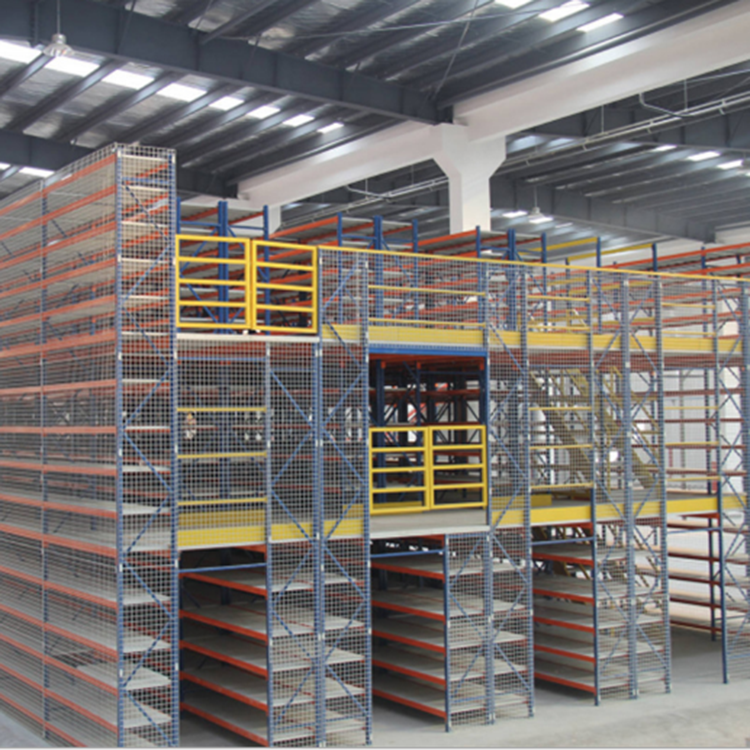
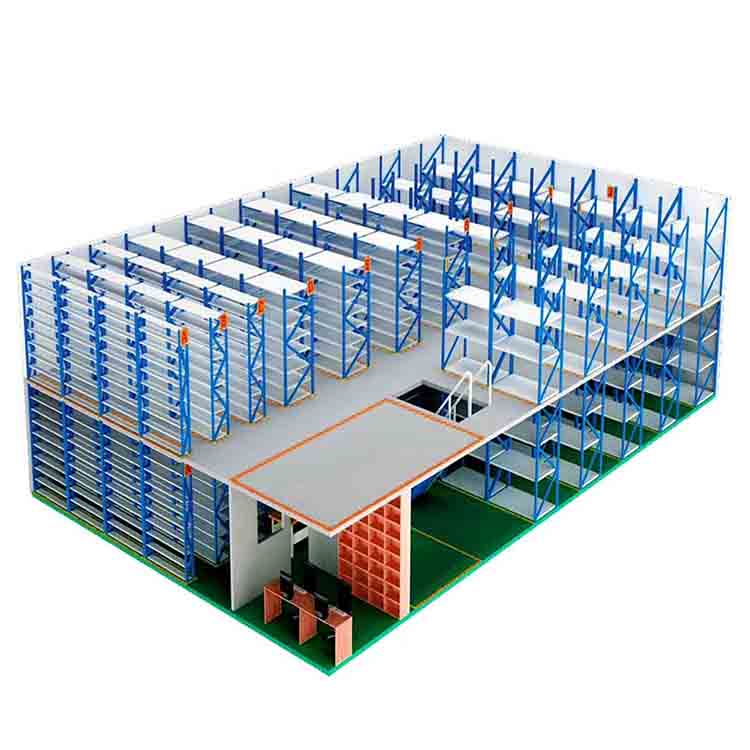
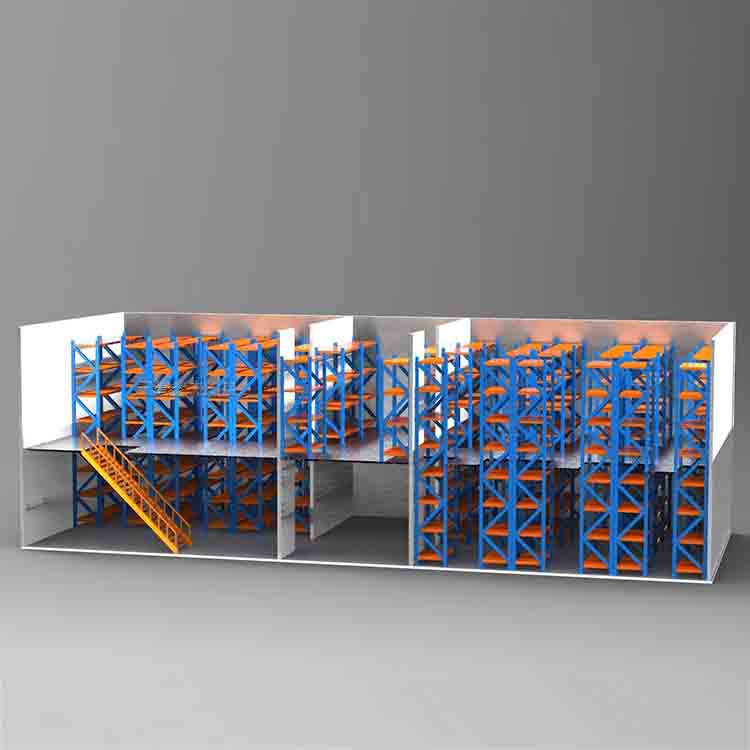
Mezzanine shelving features:
Typically, medium-duty shelf-style racking or heavy-duty beam racking is used as the main structure, accompanied by forklifts or hydraulic lifting platforms for loading and unloading goods between floors. Multi-level mezzanine racking maximizes warehouse space. The mezzanine racks are designed with人性化 logistics in mind, featuring attractive aesthetics and a spacious structure. Easy to install and dismantle, they can be flexibly designed on-site, suitable for storing various types of items.
The attic shelving system features an assembled structure, eliminating the need for on-site welding, offering an overall aesthetic and spacious appearance. Compared to concrete or steel structures, the bottom-level shelves inherently support the upper floors, providing advantages such as lower costs and higher space utilization.
Rack panels for mezzanine shelves are available in flat steel, patterned steel, perforated steel, etc., to meet various requirements such as fire prevention, ventilation, lighting, and more. For moving goods between floors, options include forklifts, hydraulic lifting platforms, and goods elevators; for same-level transportation, typically small hand trucks are used.
Mezzanine racking typically supports 300KG to 1000KG per square meter, with columns made of round tubes for strong load-bearing capacity and minimal steel usage; the primary and secondary beams can be selected based on load requirements.
Mezzanine shelves are widely used in situations where the storage space is high, goods are small, manual handling is involved, and the storage capacity is large, enabling full utilization of space and saving storage area. They can be designed as single or multi-layer mezzanines, typically 2-3 layers, based on the actual site and specific requirements. Suitable for categorizing and storing series products of enterprises in the automotive parts, electronic components, etc., with a load-bearing capacity of ≤500kg per layer.