
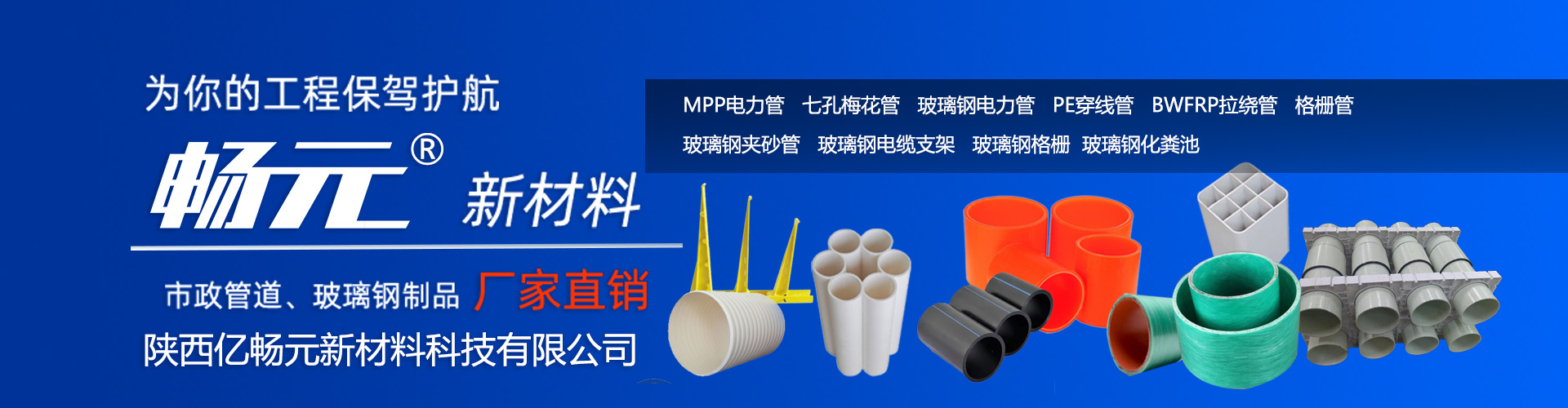

MPP power pipes, also known as MPP top pipes or pull-in pipes, have extensive applications in the field of power transmission. Their advantages and disadvantages can be summarized as follows:
Advantages:
High EfficiencyThe MPP power pipe features low conduction resistance and high switching speed, which aids in more efficient conversion of electrical energy and reduces energy loss.
High reliabilityIt boasts high breakdown voltage and low leakage current, ensuring stable operation and long-term reliability.
Outstanding electrical performanceMPP power conduits possess excellent insulation and electrical properties, effectively isolating high-voltage currents within power lines, ensuring stable and safe power transmission.
Good mechanical strengthManufactured from polymeric modified materials, the product boasts exceptional mechanical strength and impact resistance, capable of withstanding various forces and pressures within high-voltage power systems, ensuring the stability and reliability of the pipeline.
Corrosion ResistanceOur products exhibit excellent corrosion resistance to common chemicals and corrosive media, enabling long-term use under harsh environmental conditions, thereby reducing pipeline damage and maintenance costs.
Thermal resistance and cold resistanceMPP power pipes offer excellent heat and cold resistance, adapting to both high and low-temperature environments without deforming, thus maintaining the stability and reliability of the pipelines.
Easy installationConnecting with connectors is simple and quick, saving construction time and labor costs.
Environmentally friendlyMPP power pipe materials are recyclable, meet environmental standards, and reduce environmental impact.
Flaw:
Voltage requirements are highThe working voltage of MPP power pipes is relatively high, typically ranging from dozens to hundreds of volts, which requires its control circuit to have corresponding voltage handling capabilities.
Poor weather resistanceUnder certain extreme weather conditions, the performance of MPP electrical pipes may be affected.
Prices are relatively high.Compared to other types of electrical conduits, MPP electrical conduits may be slightly more expensive.
Thermal stability issuesIn some cases, MPP power pipes may face challenges regarding thermal stability.
Limited bending performanceThe bending properties of MPP power pipes are relatively limited, which may not be suitable for all installation scenarios.
Recycling and processing difficultiesDespite the recyclability of MPP pipe materials, some difficulties may arise during the actual recycling and processing process.
In summary, MPP power pipes offer significant advantages in the field of power transmission, but there are also some issues to be aware of. In practical applications, it is necessary to select the appropriate type of power pipe based on specific usage scenarios and requirements.
