


Thermosiphon heat sink working principle
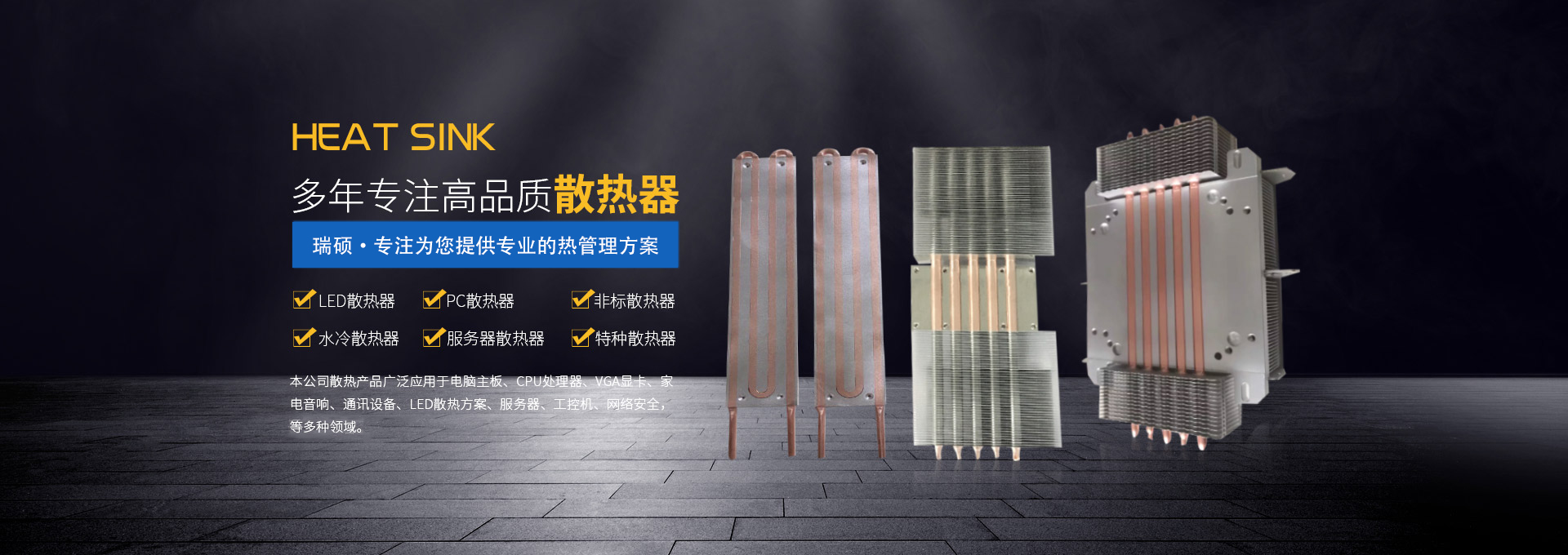
During operation, the heat pipe radiator absorbs heat generated by the heat source (power semiconductor devices, etc.) in its evaporation section, causing the liquid in the absorbent core tube to boil and vaporize. The steam, carrying heat, then moves from the evaporation section to the cooling section of the heat pipe radiator. After transferring heat to the cooling section, the steam condenses back into a liquid. The condensed liquid is then returned to the evaporation section through the capillary action of the absorbent core in the tube wall, repeating the cycle to continuously dissipate heat.
Advantages of Heatpipe Heat Sinks
Heat pipes in heat sink radiators offer the advantage of fast heat transfer rates, which, when installed in the sink, can effectively reduce thermal resistance and enhance heat dissipation efficiency. They possess high thermal conductivity, up to hundreds of times that of pure copper, earning them the nickname "thermal superconductor." A well-engineered and well-designed heat pipe CPU cooler boasts robust performance unattainable by conventional all-air cooling systems without heat pipes. The majority of current CPU coolers utilize heat pipe technology. The heat transfer efficiency of heat pipes is related to their diameter, structure, and manufacturing process. Among the better heat sink coolers, most use 6mm heat pipes, with some employing 8mm variants. A research institute has provided a set of reference values: a 3mm heat pipe can transfer only 15W of heat in 2.8 standard heat transfer cycles, whereas a 5mm heat pipe achieves a significant 45W heat transfer in 1.8 cycles, three times that of the 3mm pipe! An 8mm heat pipe product can transfer up to 80W in just 0.6 cycles. Such high heat transfer rates require excellent heat sink design and fan coordination to ensure proper heat dissipation.
Heat pipe heat sinks are only applied in a small portion of consumer electronics, such as computers, CPUs, and graphics cards. Their application in industrial power electronics is equally extensive, including in the new energy and power supply industries, where high-power devices like IGBTs and SVGs can utilize heat pipe heat sinks for cooling.
