


Heat sinks play a crucial role in the composition of heat sinks. In addition to the active cooling provided by fans, the quality of a heat sink largely depends on the heat sink's own heat absorption and thermal conductivity capabilities.
Pure aluminum heat sinks
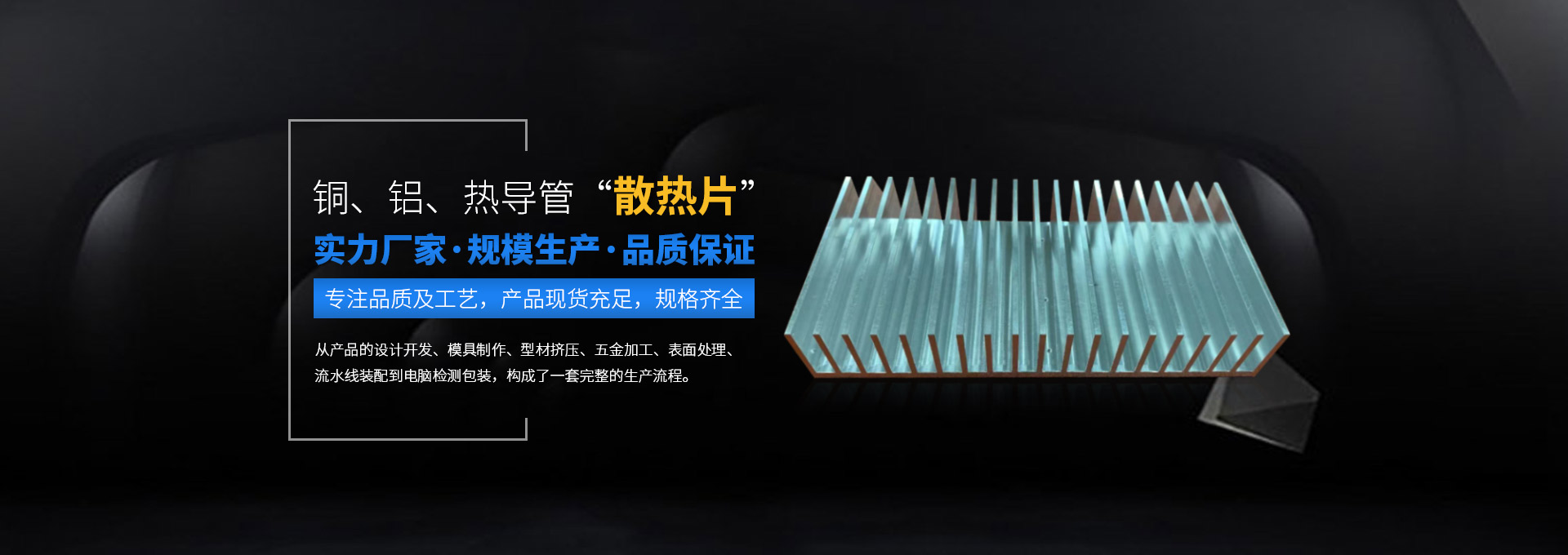
This heat sink is one of the most commonly used, crafted entirely from pure aluminum. Aluminum, being a metal abundant in the earth's crust, boasts low cost and high thermal capacity. Although it absorbs heat slowly, it dissipates it quickly, with the cooling effect proportional to its structure and craftsmanship. The more heat sinks and the better the bottom polishing, the better the cooling performance. However, it is limited by its manufacturing process, typically using aluminum extrusion technology, where the narrowest possible groove spacing is 1.1 millimeters. The cooling principle is simple: the heat sinks on the cooler increase the surface area for contact with air, and the fan then accelerates the air flow to carry away the heat from the heat sinks. This type of heat sink is also priced low, offering less cooling efficiency compared to the following types of coolers.
Pure copper heat sink
This heat sink differs from aluminum ones by using pure copper, as copper has a natural advantage over aluminum: its thermal conductivity is 412 w/mK, nearly doubling that of aluminum's 226 w/mK. However, copper also has a drawback: its high thermal capacity, meaning these heat sinks absorb heat quickly but dissipate it slowly, resulting in significant physical heat accumulation within the copper plates. To achieve optimal results, they require high-power, high-speed fans. Despite being easier to work with due to its good ductility, manufacturing processes for copper heat sinks can be more complex, featuring designs like foldable and interlocking types, allowing for higher density and a larger surface area compared to aluminum ones. This helps compensate for the slower heat dissipation due to high thermal capacity. However, the unit and manufacturing costs of pure copper are significantly higher than aluminum, directly leading to the high price of these heat sinks. Despite the higher cost, their heat dissipation performance is much better than that of aluminum ones.
