
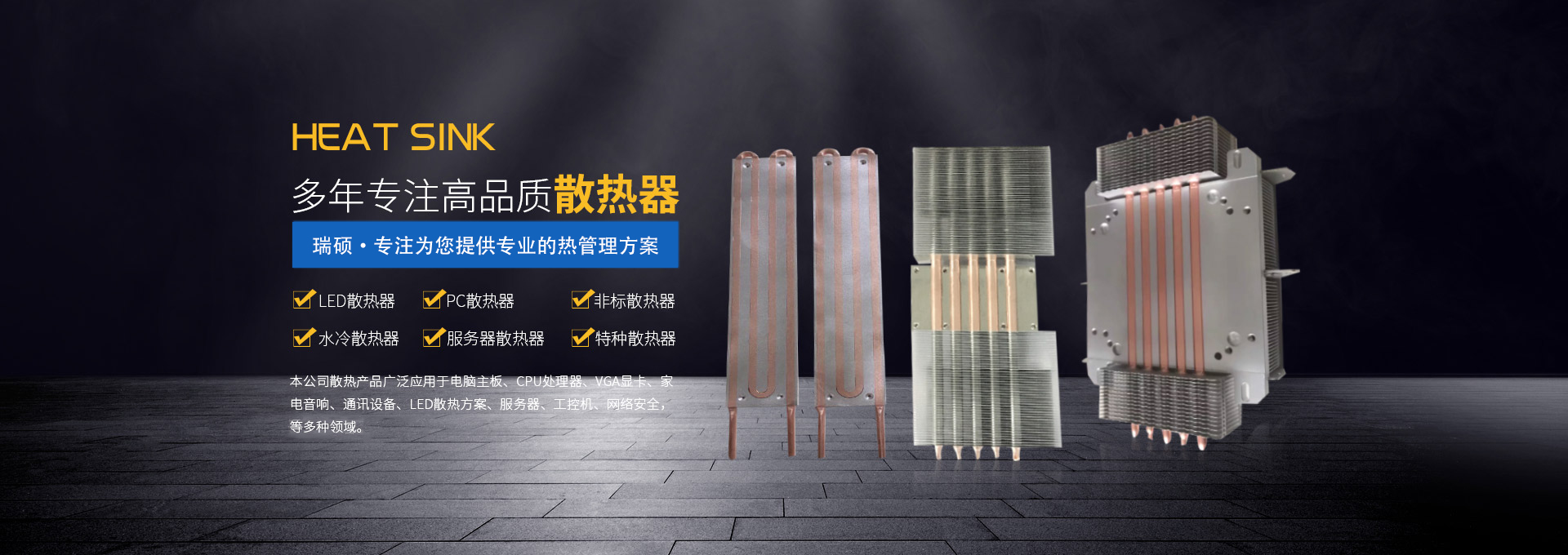



The material of the heat sink refers to the specific material used for the heat sink. Each material has different thermal conductivity, ranked from high to low as follows: silver, copper, aluminum, and steel. However, using silver for heat sinks would be too expensive, so a better option is to use copper. Although aluminum is much cheaper, its thermal conductivity is obviously not as good as copper (about 50% more than copper).
Currently, the most commonly used materials for heat sinks are copper and aluminum alloys, each with its own pros and cons. Copper has excellent thermal conductivity but is expensive, difficult to process, and heavy (many pure copper heat sinks exceed the weight limit for CPUs), with a smaller heat capacity and a tendency to oxidize. Pure aluminum is too soft to be used directly; it requires aluminum alloys to provide sufficient hardness. The advantages of aluminum alloys are their low cost and light weight, although their thermal conductivity is much lower than that of copper. Some heat sinks combine the best of both worlds by embedding a copper plate into the base of an aluminum alloy heat sink.
For regular users, aluminum heat sinks are sufficient to meet their cooling needs.
In terms of heat sink materials, each material has different thermal conductivity. Ranked from highest to lowest thermal conductivity, they are: silver, copper, aluminum, and steel. However, using silver for heat sinks would be too expensive, so a better option is to use copper. Although aluminum is much cheaper, its thermal conductivity is significantly lower than copper (about 50% of copper's conductivity).
Radiators, also known as heat radiators, are used for heating in northern regions during winter.
Heat sinks play a crucial role in the composition of radiators. In addition to active cooling provided by fans, the quality of a radiator largely depends on the heat absorption and thermal conductivity capabilities of the heat sinks themselves.
