
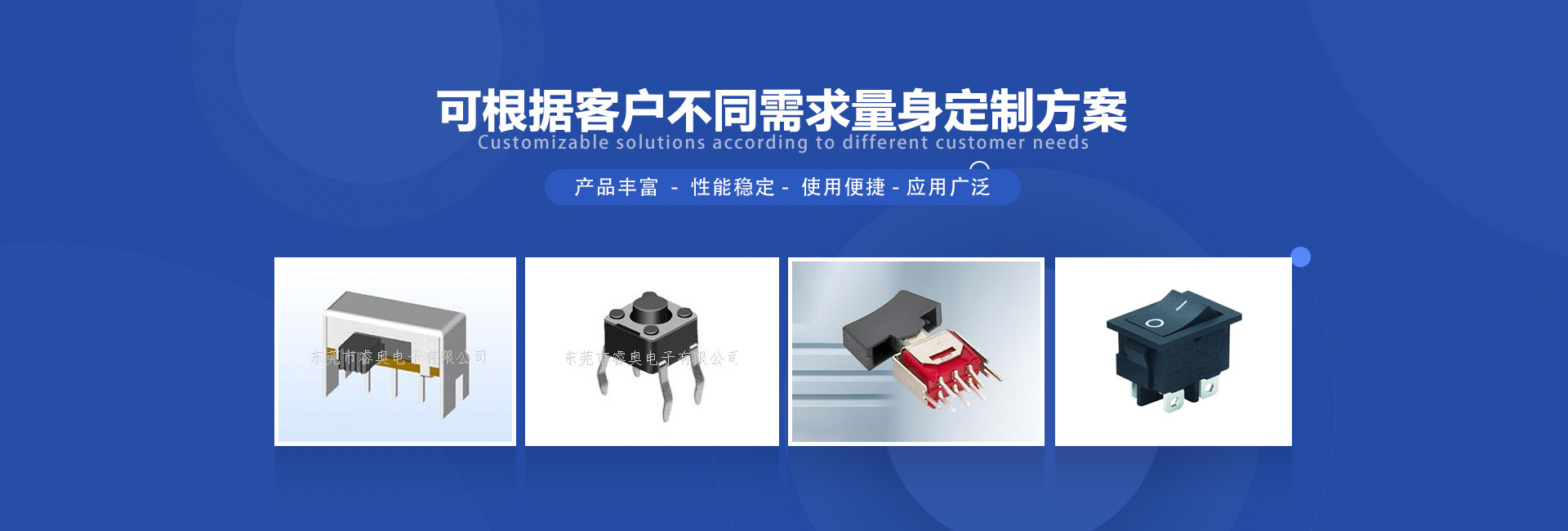


Key factors affecting the quality of touch switches include: protective features, conductivity reliability, solderability, lifespan, tactile feel, production technology, and installation dimensions. Next, let's explore how to choose the right touch switch.
Firstly, to reduce contact resistance, a touch switch can be used, as the pins of the touch switch are typically made of brass or phosphor bronze, which are generally plated with silver. This directly affects how well the switch can be soldered and the contact resistance, so great attention should be paid to this when selecting.
Next, the reliability of the touch switch is determined by the structure of the contact points; a larger contact area is preferable, while a smaller one is less desirable.
Once again, lifespan and feel are determined by the spring and stroke of the touch switch. Shorter stroke and quieter sound will extend the lifespan, while the opposite will shorten it.
Additionally, the level of production technology determines the quality. This, in turn, relies on the management capabilities of the manufacturer HanRong Company, the quality awareness of the employees, and the ability to ensure quality, among other factors.
Rigorous factory inspections are an indispensable factor in ensuring quality. For instance, whether touch, appearance, and resistance are inspected randomly or thoroughly—these seemingly trivial details all contribute to its quality.
By mastering these five points, you'll easily be able to assess the quality of touch switches and understand the key factors for selection.
