
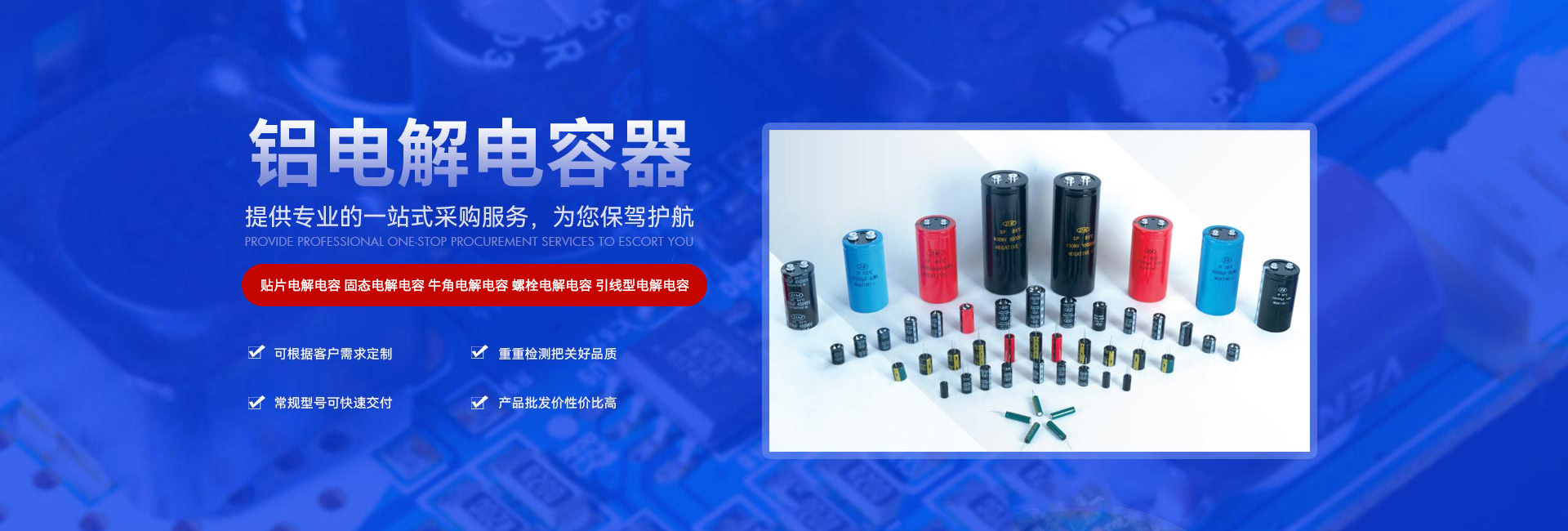
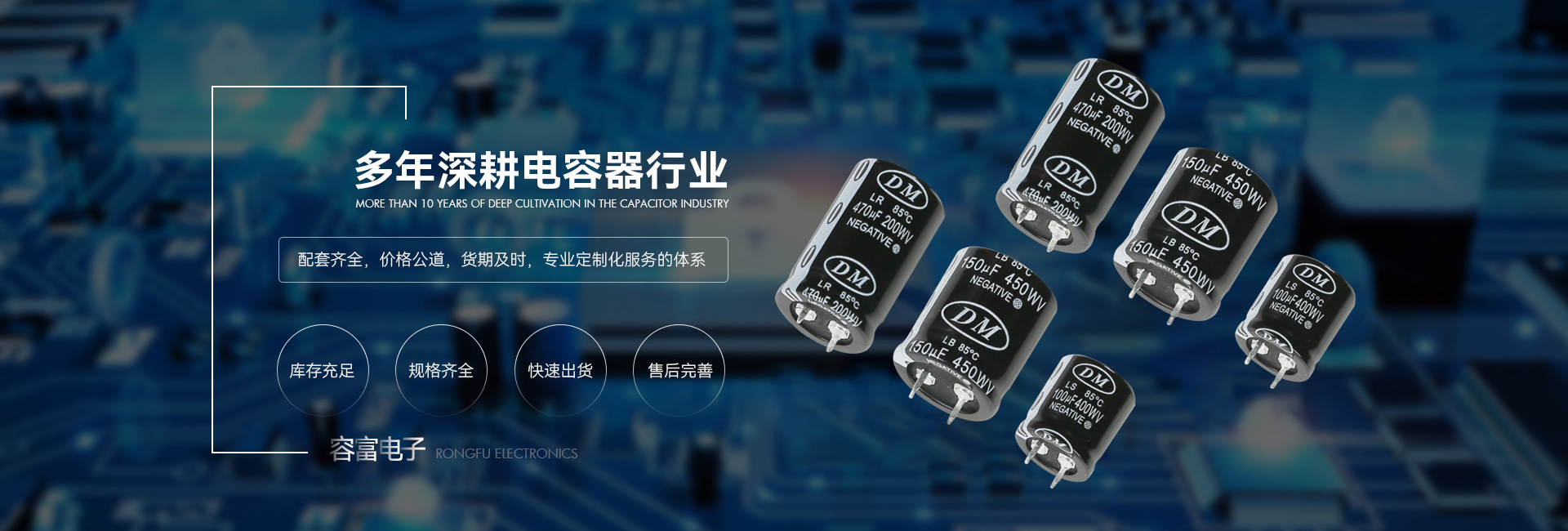


High-frequency electrolytic capacitors are a type of capacitor that is characterized by their ability to operate at high frequencies.
The working principle of high-frequency electrolytic capacitors relies on the conductivity of the dielectric (electrolyte) to achieve the electrical properties of the capacitor. When a DC power source is applied to both ends of the electrolytic capacitor, the electrolyte molecules are decomposed into ions, forming an electric field between the plates. Consequently, the capacitance of the electrodes increases with the concentration of the electrolyte. The higher the capacitance value of the electrolytic capacitor, the greater its capacity to carry current and the faster its response speed.
High-frequency electrolytic capacitors, known for their ability to operate stably at high frequencies, are commonly used in electronic devices that demand a high frequency response from capacitors.
Communication Equipment: In wireless communication devices, high-frequency electrolytic capacitors are used in filtering, coupling, and bypass circuits to ensure stable transmission of signals within the high-frequency range.
Radio Frequency Circuits: In RF circuits, high-frequency electrolytic capacitors are commonly used as part of filters, matching networks, or resonant circuits to optimize circuit performance.
Power Circuits: Stable capacitors with good frequency response are required in power circuits to provide ripple suppression, energy storage, and smoothing functions, with high-frequency electrolytic capacitors meeting these requirements.
Audio Equipment: High-frequency electrolytic capacitors in audio amplifiers, audio filters, and other equipment can help eliminate noise and enhance sound quality.
Industrial Control Equipment: High-frequency electrolytic capacitors can be used to stabilize circuits and prevent interference caused by high-frequency noise in industrial automation and control systems.
