
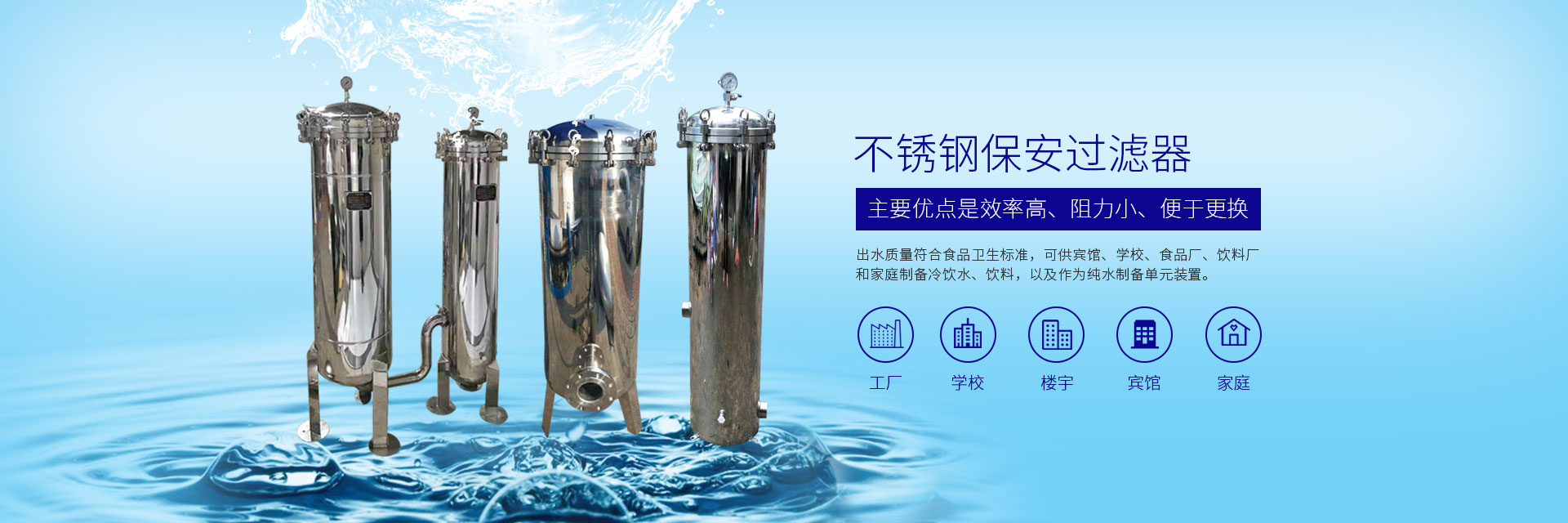
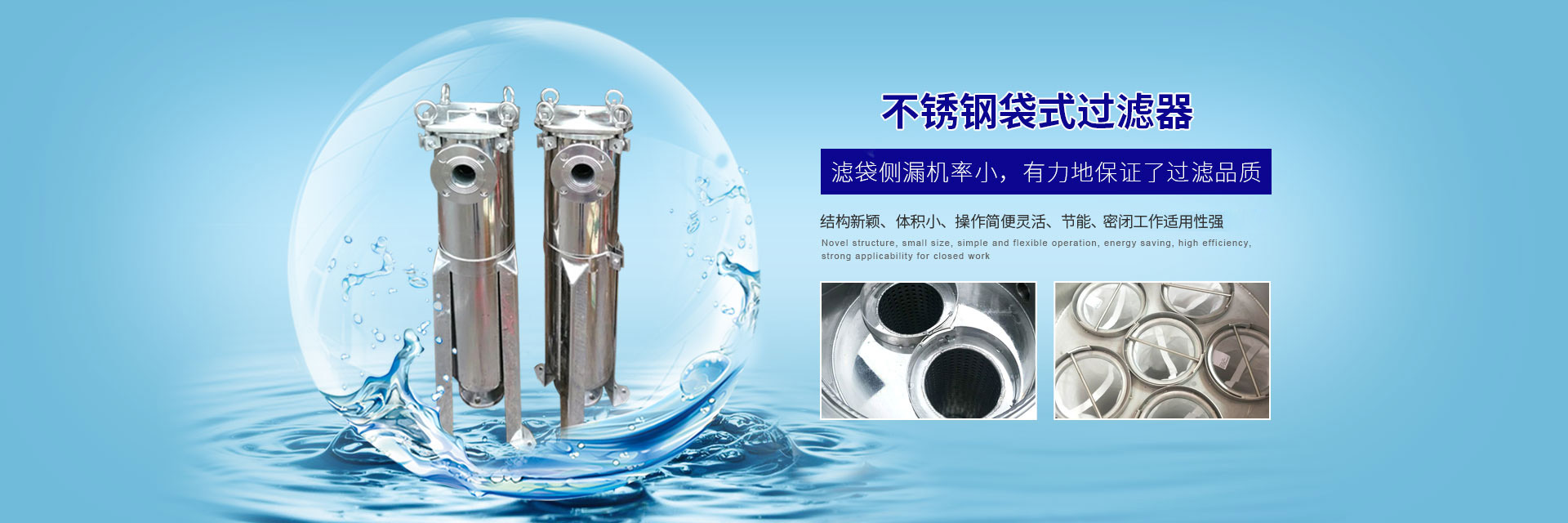
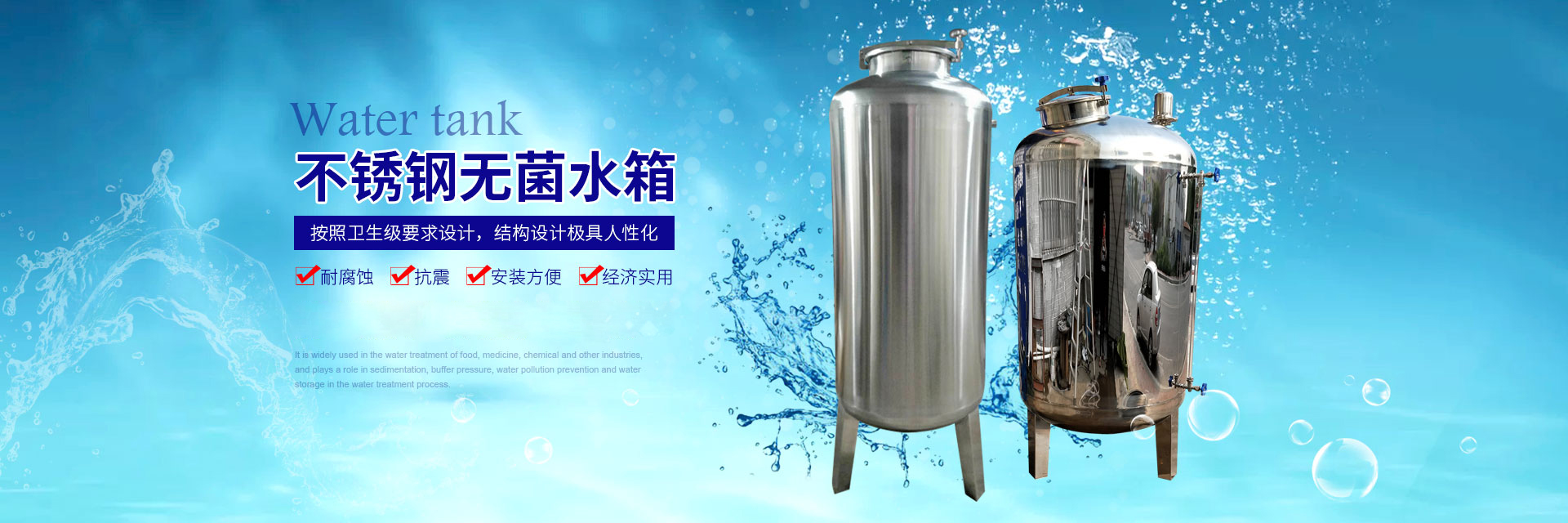

As water becomes increasingly important in people's lives, water treatment equipment is also being applied in various fields. Due to the differing requirements for raw water and water quality, the treatment equipment used varies greatly. Understanding the process functions of the equipment allows for flexible application of its diverse effects to treat the required water quality. This article will discuss the process flow of security filters:
The security filter boasts a straightforward manufacturing process, capable of continuously processing raw water filtration for 24 hours. Raw water enters the chamber through the inlet at the top. Inside the chamber, filter cores are vertically fixed within the shell. The water entering the chamber is separated at the top of the filter cores, flowing along the cylindrical cores to the inner wall. The entire filtration process is the movement of water from the inner wall of the filter cores to the outer wall.
The filter cores are made of special PP cotton, with uniformly sized pores. The size of the pores varies with different filtration precision levels. As the raw water passes through the filter core, solid impurities larger than the pore diameter are trapped on the inner wall of the core, achieving the filtration effect. The filtered water then flows through the bottom of the device and exits through the outlet, ready for use.
The Security Filter, although it provides uninterrupted water supply 24/7, we need to regularly replace the filter cores to ensure the filtering effect. After the filter cores block a certain amount of impurities, they can cause water flow obstruction, which we refer to as the filter cores becoming saturated. At this point, the pressure gauge on the top of the equipment will display a pressure higher than the normal value. We then need to pause the water supply and quickly replace the cores to restore the water supply, which usually takes only a few minutes to complete the operation.
