
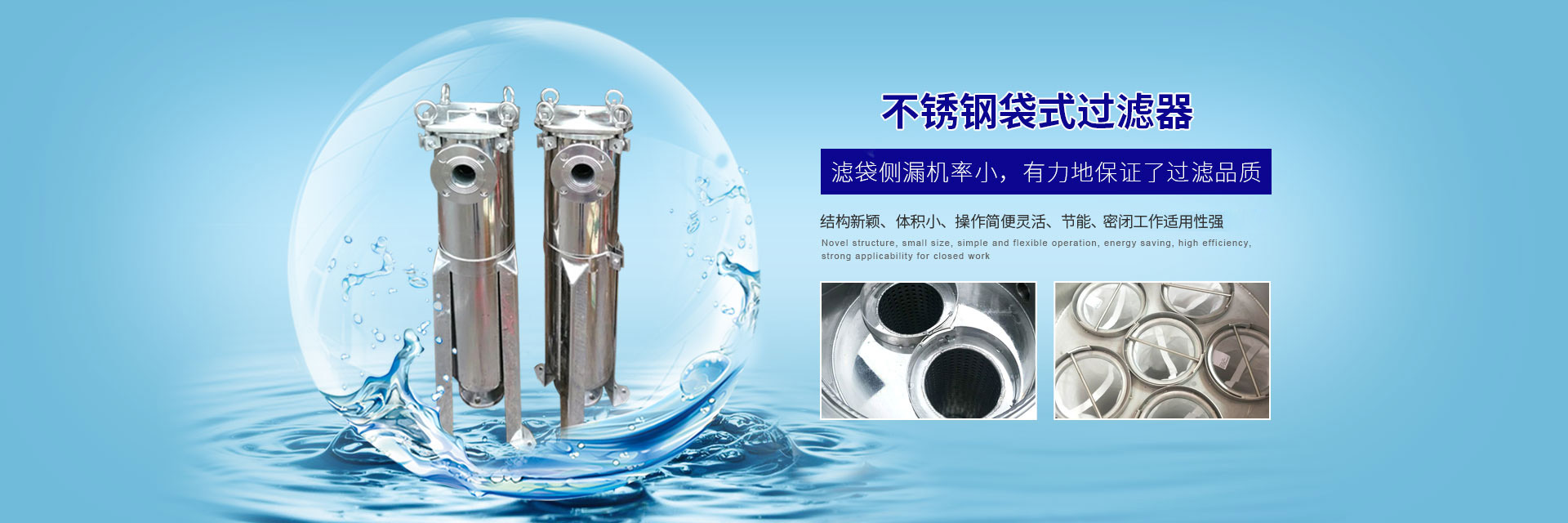

Bag filters are a very common water filtration device available on the market today. They are easy to operate and perform well, making them a preferred choice for many businesses. However, many people still have little knowledge about bag filters, and their filtration process is not well understood. Below, we'll give a brief introduction on how bag filters work in filtering water.
Baghouse filters are categorized into single-bag, multi-bag, and sandwich-type filters. The multi-bag filter is suitable for high-flow filtration. Available in sizes from 2 to 24 bags, it offers a complete range of specifications with inlet and outlet flange diameters ranging from φ40 to φ450MM, and flow rates of 90-1000 m3/h per unit. Quick-open designs are available for easy filter bag replacement. It is also ideal for applications where filter bags are to be replaced after extended use. Due to their larger size and heavy top covers, multi-bag filters can be challenging for a single worker to handle. To reduce labor costs and meet customer needs, these filters are equipped with arm devices.
Filtering Operation:
Bag filters are extremely easy to operate. Simply install the filter bag with the desired fineness grade into the filter cylinder, check that the O-ring seal is intact, then tighten the ring bolt on the filter cylinder cover, and you're ready to go.
After the pump is started, the pressure gauge on the filter machine slightly rises, with the initial pressure around 0.05 MPa. As the operating time extends, the filter cake inside the cylinder gradually increases. When the pressure reaches 0.4 MPa, the machine should be stopped, and the cylinder cover opened to inspect the filter bag's retained cake. The filter bag can be replaced and reused after cleaning (the filter bag is generally reusable after cleaning).
The pressure of the filter machine is generally set between 0.1-0.3 MPa for optimal performance. It can be adjusted through the return line or the回流 valve on the pump. Excessive filter pressure can damage the filter bag and the protective mesh, so extra caution is required.
Primarily used in paints, beer, vegetable oils, petroleum products, textile chemicals, photographic chemicals, electroplating solutions, milk, mineral water, hot solvents, latex, industrial water, syrups, resins, inks, industrial wastewater, juices, edible oils, waxes, etc.
Bag filters are a popular choice in the filtration industry, helping various enterprises address their wastewater discharge concerns. We believe that after reading this article, you now understand how bag filters work. For more information on bag filters, please follow our website.
