
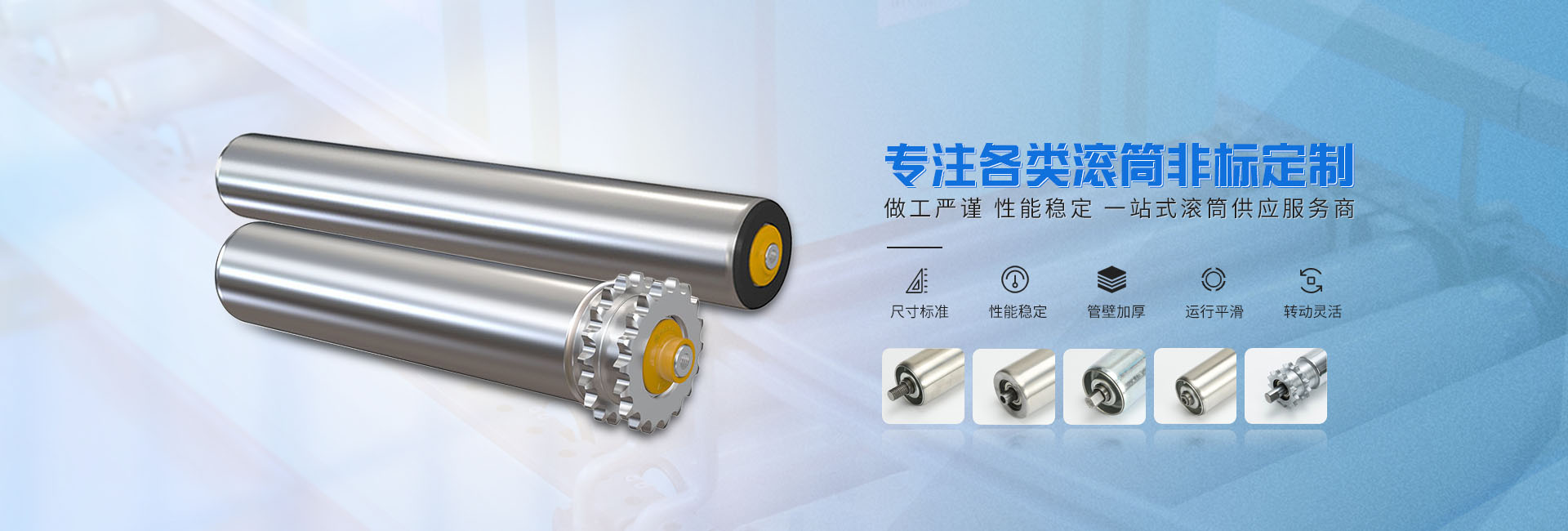


An inertia drum belt conveyor, which comes in two lengths: the longer version features cylindrical, conical, and sloped surfaces, with the cylindrical being the most common. The shorter version can reduce the spacing between the wheels and is lighter in weight. The drum can be tilted slightly under normal conditions. I will briefly introduce the professional knowledge about these aspects below.
When handling heavier objects, the route must be longer. To make the belt conveyor more energy-efficient, the inclination should be selected between 1% and 1.5%. For objects to roll automatically, the inclination needs to be increased to between 2% and 3%. If the route is less than 10 meters and the object weighs less than 200 Kg, a level route can be used. During automatic rolling, the speed will be faster, making it difficult to control, so the route should not be too long. That's the way of the powered roller, if you can imagine it, you can achieve it.
In fact, this non-powered drum is highly practical in manufacturing facilities, as it's very easy to filter and can be integrated into complex freight logistics systems, enabling numerous unexpected processing techniques. Additionally, its construction is relatively simple and reliable, making it convenient for both operation and maintenance. In terms of specifications, it can be customized according to customer requirements, with lengths and widths adjustable. The designs are highly personalized, taking into account the transportation challenges from all angles.
If you're wondering what the powered roller is suitable for, that's exactly what this section is about. It's capable of transporting a variety of small boxes, bags, trays, and other individual items. However, small objects and tray materials, or many irregularly shaped items, need to be placed on a trolley or into plastic bins for transportation. Don't think that this conveyor belt is only for small gadgets; in fact, it can also handle larger or heavier items, as it can withstand significant impact forces.
