
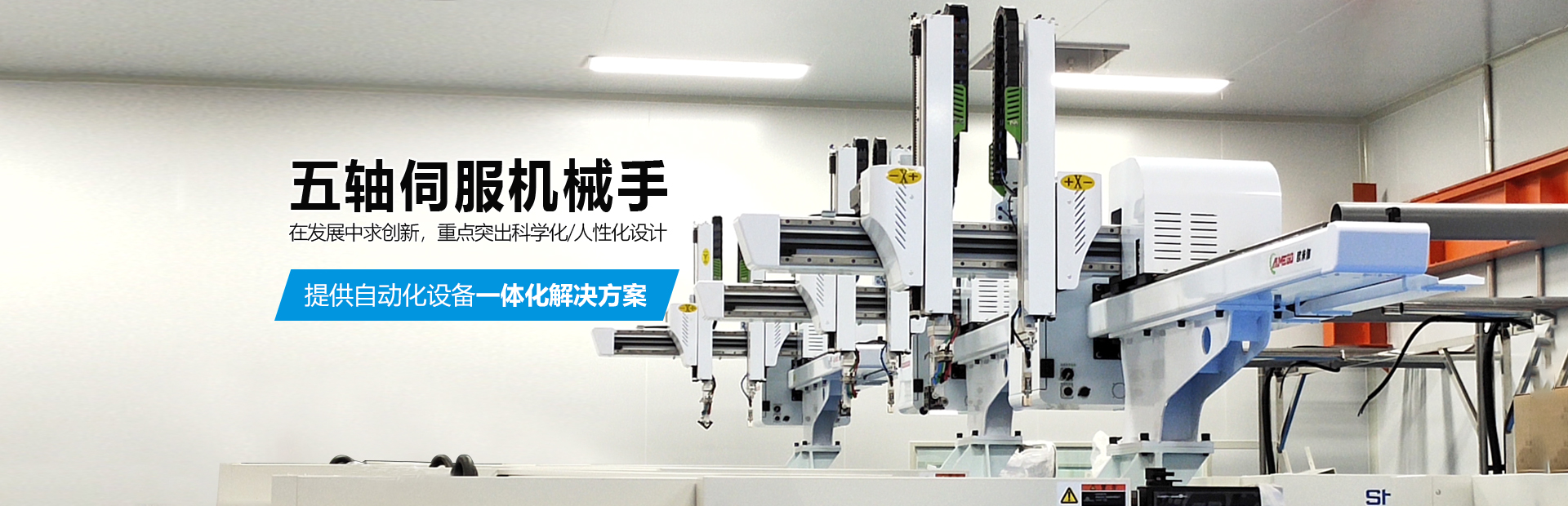


When installing or using the injection molding robot, to better utilize the injection molding robot, it is necessary to pay attention to certain must-know precautions during the installation process. So, what are the precautions to be aware of during the installation of the injection molding robot?
The installation process for injection molding robot arms typically includes: housing components, gripping mechanisms, tilting mechanisms, rotating mechanisms, and counterweight systems.
The rotation of the injection molding machine's mechanical arm around the Y-axis is called the rotation action, which is driven by a hydraulic motor to rotate the pivot bearing, thereby moving the front component. The rotation of the injection molding machine's mechanical arm around the Z-axis is known as the pitch action, achieved by altering the relative position of the overall center of gravity and the lifting point. In summary, the six degrees of freedom of the injection molding machine's mechanical arm relative to the hub can be clearly identified, along with the corresponding actuating mechanisms.
All parameters and data settings for the injection molding robot can be configured and modified on a computer, then downloaded to the robot's control system for execution, or directly set on the hand-held controller.
When the injection molding machine malfunctions, it locks with the robotic arm. This means that if the robotic arm encounters an issue, the injection molding machine will cease its operation. Similarly, if the injection molding machine experiences a fault, the robotic arm will halt its motion.
The materials used in injection molding robot arms are generally durable and of good quality, with sufficient rigidity, ensuring they do not deform during normal operation. In the event of a malfunction (such as incomplete movement, unremoved products, or product drops), the injection molding robot arm will immediately sound an alarm and stop, simultaneously displaying the fault location on the controller's touch screen for quick troubleshooting by operators.
Proper installation of the automated robotic arm is crucial to minimize malfunctions and provide a solid foundation for the stable and high-precision operation of the injection molding machine's robotic arm, which is also some fundamental skills that operators must master.
