
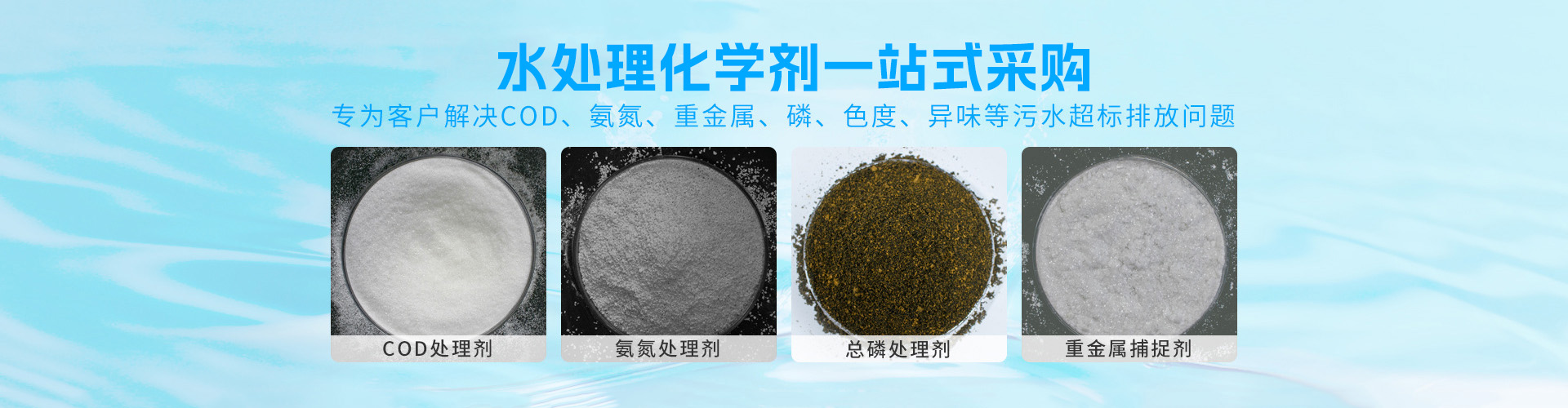
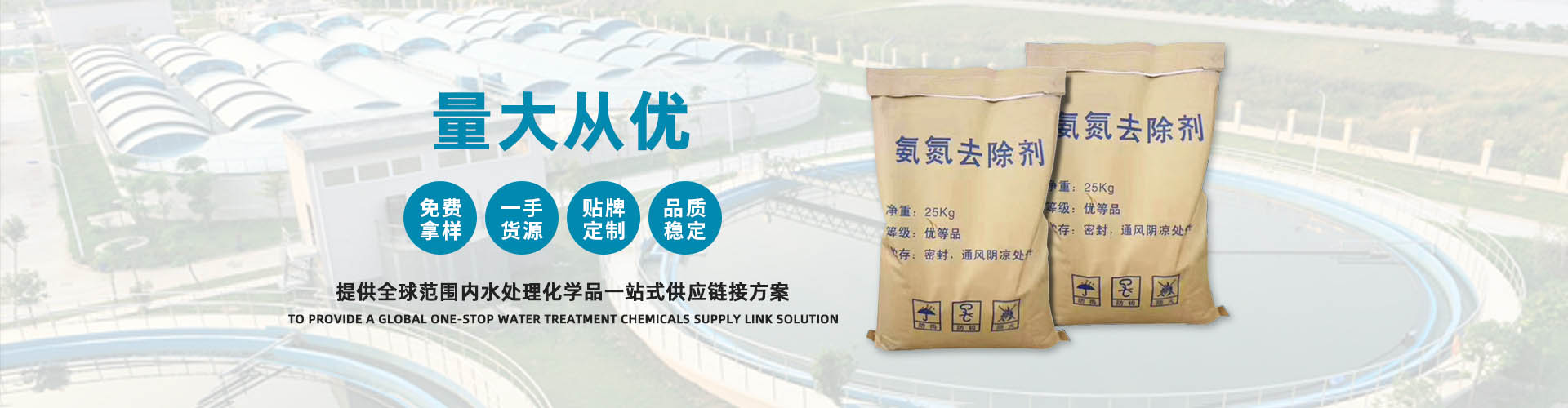

Wastewater Treatment Agents, a type of chemical specifically used for treating wastewater. The commonly used wastewater treatment agents are flocculants, which are divided into two main categories: inorganic flocculants and organic flocculants. Inorganic flocculants are high-valent metal salts, such as aluminum sulfate, ferric sulfate, ferric chloride, and inorganic acids and bases. Wastewater treatment agents can be categorized into several types based on their applications.
Flocculants, also known as coagulants, are used as a means to enhance solid-liquid separation, applied in initial sedimentation tanks, secondary sedimentation tanks, flotation tanks, and processes such as tertiary treatment or deep treatment.
Flocculant Aid: Enhances the effectiveness of flocculants, reinforcing coagulation performance.
⑶ Conditioner: Also known as a dewatering agent, it is used to condition the remaining sludge before dewatering, including some of the flocculants and coagulants mentioned above.
Demulsifier: Sometimes referred to as destabilizing agents, primarily used for the pretreatment of oily wastewater containing emulsified oil prior to air flotation. Its types include some of the flocculants and flocculating aids mentioned above.
Defoamer: Primarily used for eliminating excessive foam during aeration or stirring processes.
pH Adjuster: Used to adjust the pH levels of acidic and alkaline wastewater to neutral.
Redox Agents: Used for the treatment of industrial wastewater containing oxidizing or reducing substances.
Disinfectant: Used for disinfection before the treated wastewater is discharged or reused.
Although there are many types of these treatment agents, their roles vary depending on the application, leading to different names. For instance, Cl2 is called a flocculant when used to enhance the coagulation treatment of wastewater, an oxidant when used to oxidize cyanides or organic matter in wastewater, and a disinfectant when used for disinfection processes.
Here are the different categories of wastewater treatment agents based on their applications. We hope this information is helpful to you. Additionally, due to the common phosphorus deficiency in papermaking industry wastewater, it leads to an unbalanced nutrient status of microorganisms in the biochemical process. Although industrial phosphates or industrial phosphoric acid are added to supplement phosphorus nutrition in the industry. If you have any other questions, feel free to call for consultation; our editor is dedicated to serving you.
