
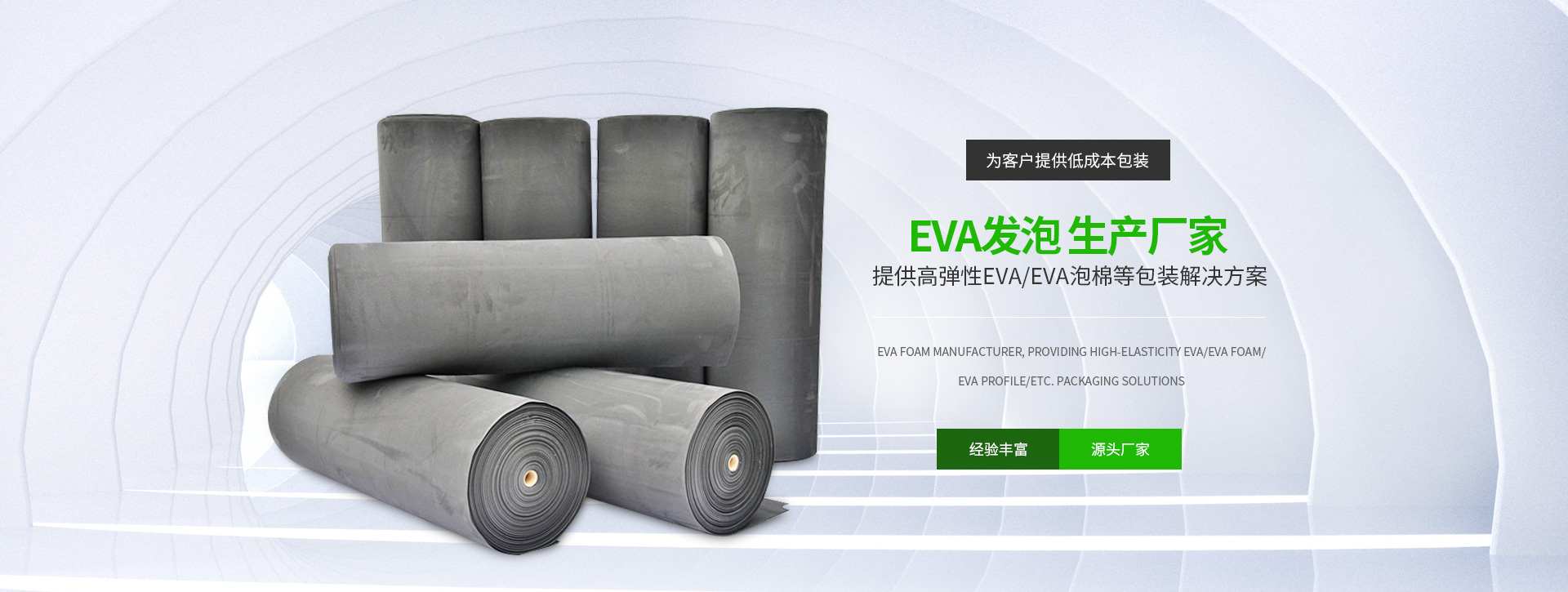



EVA foam is a high polymer copolymer, known in Chinese as Ethylene-Vinyl Acetate Copolymer. It is not a foam material in its non-foamed state, appearing as white, translucent granules. The properties of EVA vary depending on the ratio of ethylene to vinyl acetate in the copolymer. According to Wikipedia, typically, EVA with less than 5% vinyl acetate content is mainly used for products like films, wire and cable coatings, LDPE modifiers, adhesives, etc.; EVA with 5% to 10% vinyl acetate content is used for elastic films; EVA with 20% to 28% vinyl acetate content is primarily used for hot melt adhesives and coated products; and EVA with 5% to 45% vinyl acetate content is used for products such as films (including agricultural films), sheets, injection and molding products, foamed products, hot melt adhesives (hot melt adhesives), etc.
High foaming, compared to low foaming, is a foaming method with a higher expansion ratio, also known as secondary foaming. It involves cross-linking the fully mixed material under heat and pressure in a mold, with some foaming agent decomposing to produce partial foaming. The mold is then cooled to a certain temperature and removed, followed by a secondary heating and foaming process under atmospheric pressure. The expansion ratio can reach 30 to 45 times (as cited from Baidu Encyclopedia). High foaming typically uses physical foaming agents.
