
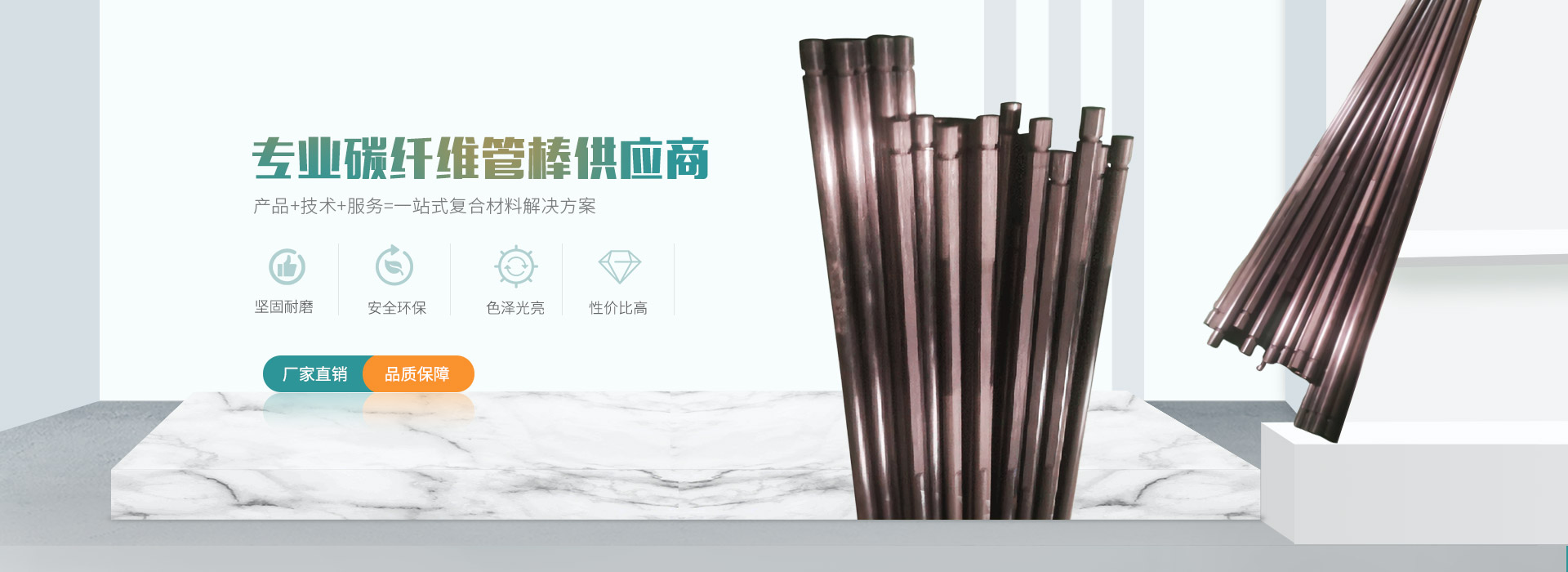

Carbon fiber tubes, also known as carbonized fiber tubes or carbon tubes, are produced by pre-immerging carbon fiber composites into polyethylene glycol-based polyester resin, followed by heating, curing, and drawing (twisting). During the manufacturing process, various shapes can be produced through different molds, such as carbon fiber round tubes of different specifications, square tubes of different sizes, sheet materials of various dimensions, and other profiles. Additionally, the surface can be packaged and beautified with 3K wrapping during production.
High Tensile Strength: The strength of carbon fiber is 6-12 times that of steel, reaching over 3000 MPa.
2. Low density and lightweight; its density is less than one-fourth that of steel.
Carbon fiber tubes boast high strength, long lifespan, corrosion resistance, lightweight, and low density, and are widely used in equipment such as kites, model aircraft, lighting支架, PC device shafts, etching machines, and sports equipment. They exhibit excellent properties including stable dimensions, conductivity, thermal conductivity, low thermal expansion coefficient, self-lubrication, and energy absorption and vibration resistance. They also feature high modulus ratio, fatigue resistance, creep resistance, high-temperature resistance, corrosion resistance, and wear resistance.
The drawback is its conductivity (Ωcm—1.5×10⁻³), but it boasts excellent tensile strength (with a tensile strength of 400 kg/mm2 when calculated by the 12,000 denier unit).
The amount of carbon fiber content in carbon fiber tube production directly determines its mechanical performance and value. Carbon fiber tubes are characterized by their light weight, strength, and high tensile strength, but they require special attention to electrical insulation during use.
